


Good nutrition will not replace treatment, but it gives a man’s body and mind the raw material to heal while treatment does its work. Regular meals, enough fluids, steady movement, and a clinician’s eye on possible deficiencies all help restore energy and mood, and they can make cravings easier to read. Below is a plain guide to what to eat, how often, how to begin exercising, and when to ask for professional help.
TL;DR
- Substance use often leaves the body short on nutrients and fluids, and hunger can feel like a craving.
- Eating at regular times, with protein, fat, and fiber at each meal, steadies energy and mood.
- Drink fluids through the day, and let a health care provider decide on supplements and lab tests.
- Start exercise with an easy, enjoyable activity such as walking, after checking with a medical professional.
- Nutrition and exercise work best alongside clinical care, not in place of it.
Table of Contents
- What Substance Use Does to the Body’s Nutrition
- Regular Meals Come First
- What to Put on the Plate
- Fluids, Digestion, and the Gut
- Exercise in Recovery
- When Mental Health and Busy Schedules Complicate Things
- When to Ask for Specialized Nutrition Support
- Our Perspective on Food, Faith, and Healing
- Care That Looks at the Whole Man
- FAQ
- Sources
What Substance Use Does to the Body’s Nutrition
A man who has been drinking or using drugs for a long time has usually not been eating well. Meals get skipped, food is replaced by alcohol or whatever is within reach, and the body pays for it. MedlinePlus notes that substance use can harm nutrition through irregular eating and a poor diet, and can affect metabolism, organ function, and mental well-being. Some substances cause specific nutrient deficiencies.
The damage is not only about what was eaten. University of Utah Health reported in 2021 that drugs and alcohol can disrupt metabolism and organ function, so the body cannot properly absorb and use nutrients, which often leads to vitamin deficiencies.
Those gaps touch the mind as well. A 2017 review notes that nutrient deficiencies in people with substance use disorders may be associated with anxiety, depression, osteopenia, and osteoporosis. The same authors describe poor nutritional status as something that harms physical and psychological health and may impede recovery and the ability to resist substance use.
In plain terms, a man in early recovery may feel tired, foggy, low, or on edge for reasons that have as much to do with an empty tank as with his history. That is not a reason for alarm. It is a reason to treat food as part of the work.
Hunger That Looks Like a Craving
One practical detail from MedlinePlus is worth remembering: hunger may be mistaken for drug cravings. A man who has gone hours without eating can feel restless and driven, and the mind reaches for the old answer. Eating on a schedule helps him tell the two apart, and that alone can take some pressure off a hard afternoon.
Regular Meals Come First
Before anyone talks about superfoods or supplements, the most useful habit is simple: eat at regular times. MedlinePlus recommends regular mealtimes with nutritious meals and snacks, and says balanced nutrition can improve mood and health.
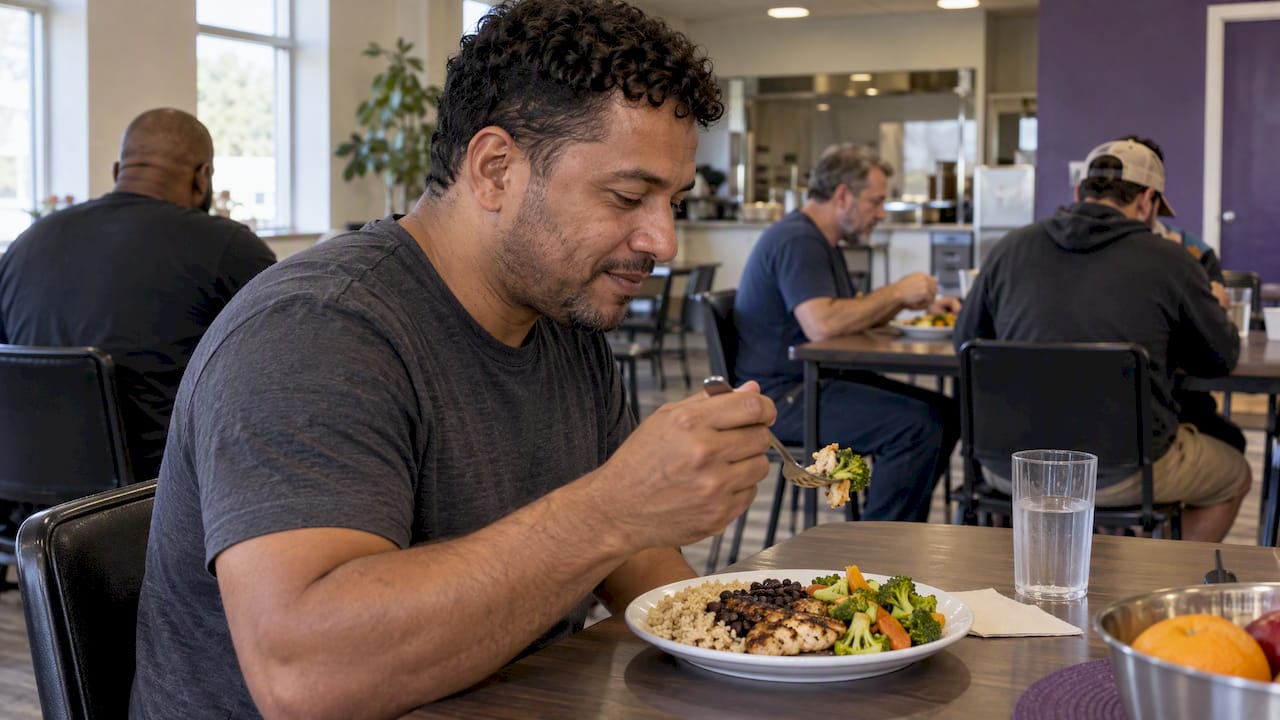
The University of Minnesota’s C.O.P.E. project suggests eating every 3 to 4 hours to stabilize blood sugar and provide steady energy for daily tasks. For many men that means three meals and two snacks, which fits easily around a work day or a program schedule.
A sample day might look like this:
- Breakfast within an hour or two of waking: eggs, oatmeal with nuts, or yogurt with fruit.
- A mid-morning snack: a handful of almonds, cheese and an apple, or peanut butter on whole-grain toast.
- Lunch: grilled chicken or beans, a whole grain, and vegetables.
- An afternoon snack: hummus and carrots, or a boiled egg and a piece of fruit.
- Dinner: fish, lean beef, or lentils with vegetables and a starch such as brown rice or sweet potato.
The point is not perfection. It is rhythm.
What to Put on the Plate
Protein, Fat, and Fiber at Each Meal
A 2021 resource from ISSUP suggests a PFF model, protein, fat, and fiber, as an easy framework for teaching a balanced diet that supports recovery goals. If a meal or snack has all three, it is likely to hold a man longer than a sugary or starchy choice alone.
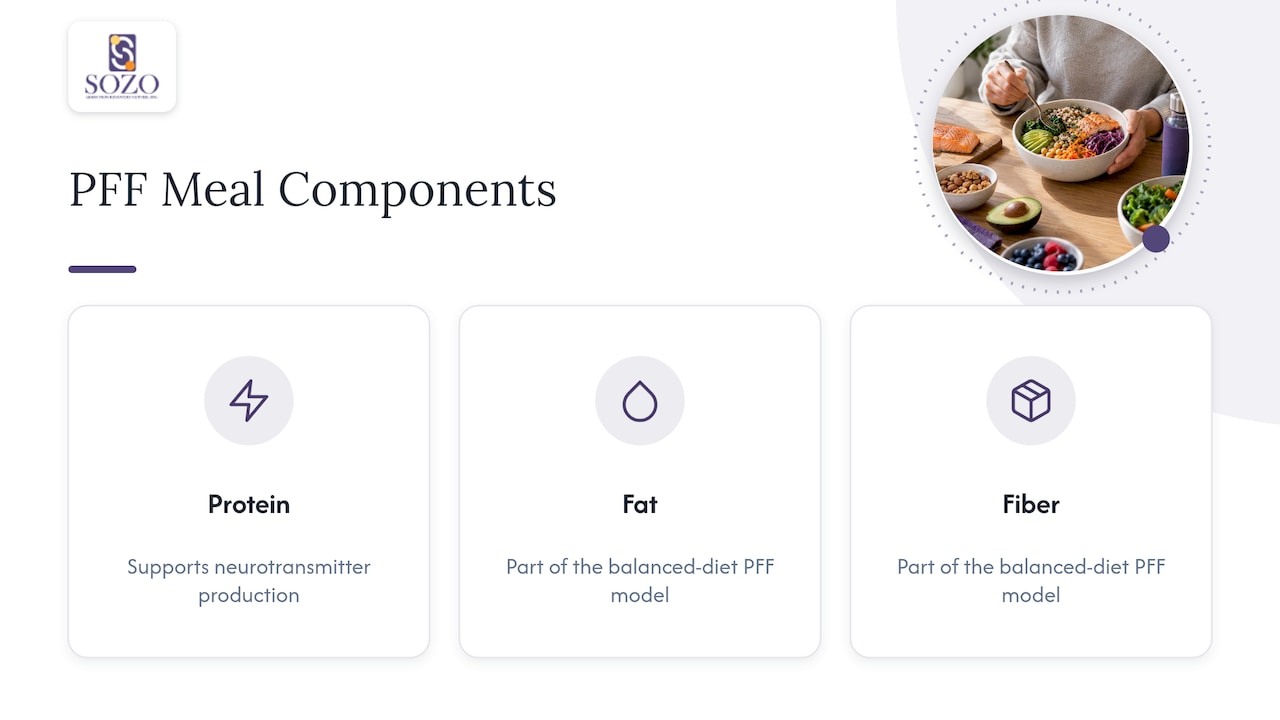
The same ISSUP resource notes that in the United States, people in recovery are often encouraged to aim for 60 to 90 grams of protein a day, spread across three meals and two snacks, to support the production of neurotransmitters, the chemical messengers the brain uses to regulate mood. Individual needs differ with body size, kidney and liver health, and activity, so a physician or registered dietitian should set the actual target.
What About Sweets?
Many men hear in meeting rooms that sweets help in early sobriety, and the habit has a long history. A 2025 review notes that Alcoholics Anonymous literature has suggested sweets during early abstinence, but recent evidence supports a healthy diet and advises against extreme or restrictive dietary plans. A cookie now and then is not a problem. Living on sugar and caffeine is a pattern worth changing gently.
The same review frames nutritional therapy as a physiological healing process rather than a punishment, aiming for balance between extreme restriction and excess. That is a good way to hold it. A man does not need a strict diet to prove anything. He needs steady food that helps him feel like himself again.
A Simple Grocery Starter List
- Protein: eggs, chicken, fish, Greek yogurt, beans, lentils, nuts
- Fiber and whole grains: oats, brown rice, whole-grain bread, fruits, vegetables
- Healthy fats: olive oil, avocado, nuts, seeds, fatty fish
- Easy snacks: cheese sticks, hummus, fruit, trail mix without candy
Fluids, Digestion, and the Gut
Dehydration is common during recovery from substance use. MedlinePlus advises getting enough fluids during and between meals. Water is the simple choice, and keeping a bottle within reach makes it automatic.
Early recovery can also bring stomach trouble, including constipation, diarrhea, nausea, and vomiting, according to MedlinePlus. These symptoms usually deserve a conversation with a nurse or physician, especially if they last or if a man cannot keep food down. Heavy drinking can also involve the liver, and MedlinePlus says lab tests for protein, iron, and electrolytes may be needed when liver disease accompanies alcohol problems. It also says supplements should be taken only if a health care provider recommends them. B-vitamin deficiencies are among the concerns it lists, which is one more reason to have a provider check rather than guess at a store shelf.
Researchers are also looking at the link between digestion and mood. The 2025 review above says future work could explore psychobiotic treatments to support the gut-brain axis. For readers curious about how gut health and the brain connect, that is an area where discussion with a qualified medical provider is the right starting point. For now, the dependable basics remain fiber, fluids, and regular meals.
Exercise in Recovery
Food fuels the body, and movement teaches it to feel good again. SAMHSA reported in 2024 that regular physical activity can reduce symptoms of depression and anxiety, improve cognitive functions such as memory and attention, and help manage cravings in substance use recovery. It also points to lower rates of chronic disease and reduced stress.
For a man who has spent years numbing stress, a walk can be the first healthy way to release it. It is a weight set down, if only for half an hour.

How to Begin Safely
SAMHSA’s guidance offers a sensible path:
- Talk with a medical professional first, especially if you have underlying health concerns. Early recovery, and any liver, heart, or blood pressure problem, can change what is safe.
- Start with low-intensity activity you enjoy, such as walking.
- Add time and effort gradually.
- Mix aerobic activity, strength work, and flexibility so the routine stays interesting and you keep at it.
A realistic first month might be ten-minute walks after meals, then twenty minutes most days, then a simple bodyweight or light weights session twice a week. Stretching or yoga at the end of the day can help with sleep and tension. Many men find that exercise with other people, a walking group or a pickup game, adds fellowship to the benefits.
Eat before you work out, drink water, and stop and tell someone if you feel dizzy, faint, or have chest pain.
When Mental Health and Busy Schedules Complicate Things
A man with depression, anxiety, or trauma alongside addiction may find that appetite and motivation swing hard. Some days he has no desire to eat. Other days he eats everything in sight. When that is the case, the goal shrinks to something manageable: eat something with protein every few hours, keep fluids close, and walk when able. The C.O.P.E. team’s advice to eat regularly to stabilize blood sugar and provide energy for thinking and tasks fits well here, because it requires no special plan.
For men managing work and family while in outpatient care, a few habits help:
- Prepare food on one day for the week: a pot of beans, a tray of roasted vegetables, hard-boiled eggs.
- Keep portable snacks in the truck or at the desk.
- Tie exercise to something already in the day, such as a walk at lunch.
- Tell your care team if appetite or weight changes sharply, because that can signal a mental health or medical issue that needs attention.
If food has become a source of fear, guilt, or compulsion, ask your treatment team for help. That is a clinical conversation, and a physician or registered dietitian can guide it.
When to Ask for Specialized Nutrition Support
Talk with a physician or dietitian when any of these apply:
- You have been drinking heavily or using substances for years and have never had labs checked.
- You have signs of liver trouble, ongoing stomach problems, or rapid weight change.
- You want to take vitamins or supplements and are unsure what is safe.
- You have a condition such as diabetes, kidney disease, or an eating disorder that changes what a good plan looks like.
- Appetite, sleep, and mood remain poor weeks into sobriety.
If you are still using alcohol or other drugs heavily, do not stop suddenly on your own. Withdrawal can be dangerous, and medical detox is the safer place to begin. We can help families and men arrange medical detox placement before treatment starts.
Our Perspective on Food, Faith, and Healing
At SOZO, we see recovery as the care of the whole man: body, mind, and spirit. A man who is hungry, dehydrated, and exhausted has a harder time praying, reflecting, or working a step. So we treat the basics as part of the work, not a side note.
Our programs are built on personalized plans informed by the ASAM Continuum, and we combine clinical care with biblical principles and the 12-step model. Dual diagnosis care means we pay attention to the mental health side of the picture too, since mood, sleep, appetite, and energy are tied together.
We believe a retreat-like setting in Hot Springs helps a man slow down enough to build routines that last: regular meals, time outdoors, movement, honest fellowship, and service to others. These are small, repeatable disciplines. The steps were never the destination, they were the training, and daily habits like these are part of how that training takes hold.
We design our approach to support lasting sobriety, and we want every man to feel known, respected, and hopeful from his first conversation with us.
Ty
Care That Looks at the Whole Man
If you or someone you love is ready for structured help, SOZO Recovery Center offers a faith-based program for men in Hot Springs, Arkansas. Levels of care include residential treatment, partial hospitalization, intensive outpatient, outpatient treatment, and sober living. Men with anxiety, depression, or other mental health needs alongside addiction can learn about our dual diagnosis and personalized care.
A conversation with our team is the simplest way to learn which level of care fits and how admission works. You can start at sozorecoverycenter.com.
FAQ
Why does nutrition matter in addiction recovery?
Substance use can leave the body short on nutrients and fluids, and poor nutritional status may harm physical and psychological health. Regular, balanced meals support mood, energy, and healing. They do not replace treatment, but they give treatment a stronger foundation.
How often should I eat in early recovery?
The University of Minnesota’s C.O.P.E. project suggests eating about every 3 to 4 hours to steady blood sugar and energy. Many people do this with three meals and two snacks. Eating regularly also helps you tell hunger from cravings.
Should I take vitamins or supplements?
Only if a health care provider recommends them. MedlinePlus advises this, and a provider can check for concerns such as B-vitamin deficiencies or liver-related problems through lab tests. Self-prescribing can be risky if your liver or kidneys have been affected.
Is exercise safe in early recovery?
For most men, gentle activity is a good fit, but check with a medical professional first, especially if you have health problems. SAMHSA suggests beginning with low-intensity activity you enjoy, like walking, and building up gradually. Regular activity can help with stress, mood, thinking, and cravings.
What if I have no appetite or I overeat?
Both are common in early recovery, and both can be linked to mood or withdrawal. Keep to small, regular meals with protein, and tell your treatment team or physician if the pattern continues. A dietitian can help build a plan that avoids both extreme restriction and excess.
Sources
- Substance use recovery and diet, MedlinePlus
- Nutrition During Recovery, University of Utah Health
- The importance of nutrition in aiding recovery from substance use disorders, PubMed
- Nutrition and recovery, University of Minnesota C.O.P.E.
- Using Nutrition to Promote Addiction Recovery, ISSUP
- Malnutrition in Substance Use Disorders, PubMed Central
- The Intersection of Physical Activity and Recovery, SAMHSA