


Out of state rehab is defined as traveling to an addiction treatment facility outside your home state to access specialized care, remove yourself from familiar triggers, and commit fully to recovery. For men dealing with both addiction and co-occurring mental health conditions like anxiety, depression, or PTSD, leaving home is not a sacrifice. It is a clinical strategy. The industry term for this approach is “cross-state addiction treatment,” and it applies to inpatient rehab programs ranging from 30 days to six months or more. Facilities accredited by the Joint Commission or CARF offer the clearest benchmarks for clinical quality. The most important factor in choosing any program is clinical fit, not geography or amenities.
What are the key benefits of out of state rehab?
Physical distance from home is a therapeutic tool, not just a logistical detail. Distance acts as a fresh start, reducing the risk of early program dropout when treatment gets hard. A man who can drive home in 20 minutes is far more likely to leave during a difficult week than one who is 1,500 miles away. That friction is protective.
The benefits extend well beyond commitment. Removing yourself from the environment where substance use became habitual disrupts the conditioned behavioral patterns that fuel relapse. The sights, sounds, and social circles tied to addiction lose their pull when you are no longer surrounded by them. Calm, controlled environments at out-of-state facilities help regulate the nervous system strain that addiction and mental health disorders create.
Key advantages of seeking treatment away from home include:
- Access to specialized dual diagnosis programs not available in your local area, including trauma-informed care and treatment for PTSD, bipolar disorder, and severe depression
- Privacy and confidentiality beyond standard professional standards, since geographic distance provides additional privacy from neighbors, coworkers, and community members
- Stronger commitment through physical separation from temptation and the people connected to past substance use
- Exposure to different therapeutic cultures and clinical approaches that may be more effective for your specific needs
Pro Tip: When evaluating any rehab facility out of state, ask specifically about their dual diagnosis capabilities. A program that treats addiction without addressing co-occurring mental health conditions is treating half the problem.
How does insurance coverage work for out of state rehab in 2026?
Insurance coverage for cross-state addiction treatment follows specific federal rules that most people do not know about. The Mental Health Parity and Addiction Equity Act requires private insurers to cover addiction treatment on the same terms as other medical care, and this applies across state lines for PPO plans. That is a significant protection for anyone considering out of state addiction treatment.
The coverage picture varies by plan type. Here is what each category typically means for you:
- Private PPO plans offer the most flexibility. They generally cover out-of-state inpatient rehab programs, though out-of-network costs may be higher. Pre-authorization is often required.
- HMO plans require prior authorization and may restrict coverage to in-network providers, which can limit out-of-state options significantly.
- Medicaid typically limits coverage to in-state facilities. Medicaid coverage for out-of-state treatment varies by state and often does not extend across state lines.
- Medicare follows similar geographic restrictions to Medicaid for most inpatient services.
- Employer-sponsored plans vary widely. Contact your HR department and your insurer directly before making any commitment.
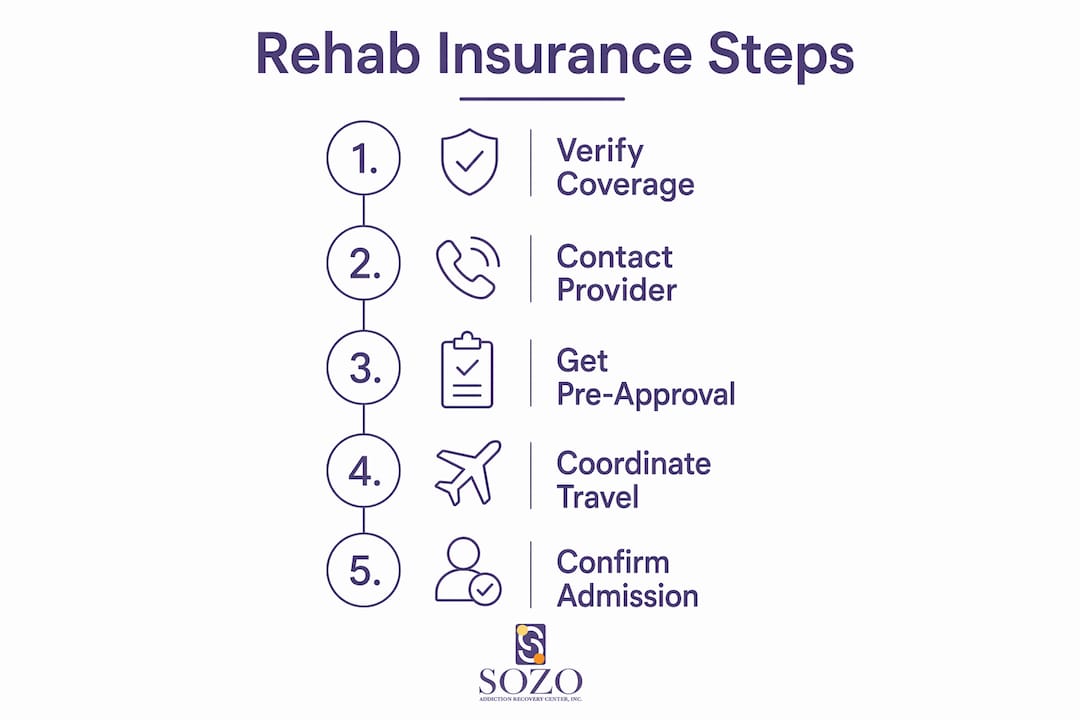
Most reputable out-of-state rehab facilities offer free insurance verification before admission. Admissions teams handle insurance verification at no extra cost, confirming your benefits and out-of-pocket responsibility before you travel.
Pro Tip: Call your insurance provider and ask specifically: “Does my plan cover inpatient substance use disorder treatment at out-of-network facilities in other states?” Get the answer in writing before you commit to any program.
What practical steps should you take when choosing out of state rehab?
Logistics matter more than most people expect when planning cross-state addiction treatment. Travel from home to a facility averages 1.5 to 6 hours, and many programs offer coordinated airport pickups and same-day admissions to reduce the window where second thoughts can derail the process. That coordination is not a luxury. It is a clinical safeguard.

Planning for the distance from your local support network is equally important. Effective out-of-state rehab facilities build family communication into the treatment plan from day one. Scheduled virtual therapy sessions, family weekends, and structured phone contact keep relationships intact without undermining the therapeutic separation that makes the program work.
Key practical considerations before you commit:
- Accreditation status: Verify that the facility holds accreditation from the Joint Commission or CARF. These are the recognized standards for clinical quality in addiction treatment.
- Clinical specialization: Confirm the program has documented experience treating dual diagnosis conditions like PTSD, anxiety disorders, and depression alongside addiction.
- Staff-to-client ratio: Lower ratios mean more individualized attention. Ask directly how many clients each therapist carries.
- Aftercare planning: The best programs connect you with providers in your home state before discharge, not after.
- Travel coordination: Ask whether the facility provides airport pickup, same-day admission, and a dedicated admissions contact.
| Evaluation Factor | What to Ask |
|---|---|
| Accreditation | Is the facility accredited by Joint Commission or CARF? |
| Dual diagnosis care | Does the program treat co-occurring mental health conditions? |
| Program length | Are 30, 60, 90-day, and longer options available? |
| Insurance verification | Does the admissions team verify coverage before admission? |
| Aftercare support | Does the program connect you with home-state providers? |
Building a support network after treatment is part of the planning process, not an afterthought. The strongest recoveries are built on relationships that begin during treatment and extend into daily life at home.
Which states are known for high-quality dual diagnosis programs?
California and Florida hold the highest concentrations of board-certified addiction specialists and are recognized nationally for their treatment cultures. Both states have strict licensing requirements and a long history of clinical innovation in addiction medicine. That does not make them the right choice for every man seeking treatment.
The honest answer is that no single state is universally best. The right location is the one with a program that matches your clinical profile. A man with severe PTSD and alcohol use disorder needs a facility with trauma-informed care and psychiatric support, regardless of whether that facility sits in California, Arkansas, or Florida. Specialized treatment for co-occurring conditions matters far more than a facility’s zip code or its amenities.
Program length is another variable that depends on clinical complexity, not preference. Longer treatment correlates with better outcomes, particularly for men with previous relapses or complex dual diagnosis presentations. A 30-day program may stabilize acute symptoms. A 90-day or longer program builds the behavioral and spiritual foundation that sustains sobriety.
Sozorecoverycenter, located in Hot Springs, Arkansas, offers men a faith-based dual diagnosis program informed by the ASAM Continuum model. The program integrates biblical principles with the 12-step recovery model and clinical mental health care. For men who have tried local treatment without lasting results, addiction treatment in Arkansas represents a purposeful geographic and clinical change.
Key Takeaways
Out of state rehab works because clinical fit, physical distance, and specialized dual diagnosis care combine to produce outcomes that local programs often cannot match.
| Point | Details |
|---|---|
| Distance is therapeutic | Physical separation from home reduces early dropout and disrupts conditioned substance-use behaviors. |
| Clinical fit over location | Verify dual diagnosis expertise and accreditation before choosing any facility, regardless of state. |
| Insurance requires verification | PPO plans cover out-of-state treatment; Medicaid typically does not. Confirm coverage before committing. |
| Logistics are manageable | Most facilities coordinate airport pickup, same-day admission, and family communication at no extra cost. |
| Program length affects outcomes | Longer stays produce better results, especially for complex cases or previous relapses. |
Why I think most people choose out of state rehab for the wrong reason
Men often choose a facility out of state because it looks impressive online or because a friend recommended it. That is the wrong starting point. The right question is not “Where is this place?” but “Can this program treat what I actually have?”
The most important shift I have seen in how men approach this decision is moving from location shopping to clinical matching. A man with untreated depression and alcohol dependence does not need a beautiful facility in a warm climate. He needs a program with a licensed psychiatrist, a trauma-informed therapist, and a structured dual diagnosis protocol. Those credentials are what choosing the right program actually requires.
Distance does something else that people underestimate. It forces a man to set down the version of himself that was using. When you cannot walk out the door and drive to a familiar place, you have to sit with the discomfort that treatment is designed to address. That discomfort is where the real work happens. The miles between you and home are not an obstacle. They are part of the treatment.
If local treatment has not worked, out-of-state rehab is a logical next step, not a last resort. It is a deliberate choice to access better care in a better environment. The men who approach it that way tend to stay. The ones who treat it as a geographic escape tend to leave early. The difference is intention.
Ty
Sozorecoverycenter: faith-based dual diagnosis care for men
Sozorecoverycenter in Hot Springs, Arkansas, offers men a structured path through addiction and co-occurring mental health conditions. The program combines clinical dual diagnosis treatment with biblical principles and the 12-step model, creating a recovery environment built on both spiritual and therapeutic foundations.
The admissions team at Sozorecoverycenter handles insurance verification, travel coordination, and intake planning before a man arrives. For men considering dual diagnosis treatment who need a program that addresses both addiction and mental health with equal seriousness, Sozorecoverycenter offers personalized treatment plans informed by the ASAM Continuum model. Reach out to the admissions team to verify your insurance and learn whether the program is the right clinical fit for you.
FAQ
What is out of state rehab?
Out of state rehab is addiction treatment at a facility located outside a person’s home state. It is chosen to access specialized programs, remove environmental triggers, and increase commitment to recovery.
Does insurance cover rehab facilities out of state?
Private PPO plans typically cover out-of-state inpatient rehab under the Mental Health Parity and Addiction Equity Act. Medicaid usually restricts coverage to in-state facilities, so verification before admission is critical.
How long do out of state rehab programs last?
Program lengths range from 30 days to six months or more. Longer stays produce better outcomes, particularly for men with dual diagnosis conditions or a history of relapse.
What is dual diagnosis treatment in rehab?
Dual diagnosis treatment addresses addiction and a co-occurring mental health condition, such as depression, anxiety, or PTSD, simultaneously. Treating both conditions together produces stronger and more lasting recovery outcomes than treating addiction alone.
How do I choose the best out of state rehab for my needs?
Verify the facility’s accreditation through the Joint Commission or CARF, confirm its clinical experience with dual diagnosis care, and check that its program length matches your treatment complexity. Clinical fit is the deciding factor, not location or amenities.