


Six to eight structured art projects, each mapped to a specific treatment goal, give clinicians and faith leaders a ready-to-run toolkit for men’s recovery groups: grounding clay work, scripture journaling collage, craving-mapping drawings, relapse-prevention timelines, service murals, gratitude stone painting, identity shield construction, and prayer-action journaling.
| Project | Primary Goal | Time | Materials | Facilitator Prompt |
|---|---|---|---|---|
| Grounding clay work | Regulation | 30 min | Air-dry clay, table covers, water | “Shape what calm feels like in your hands.” |
| Scripture journaling collage | Spiritual growth | 60 min | Magazines, glue sticks, journals, printed verses | “Find an image that matches a verse that has stayed with you.” |
| Craving-mapping drawing | Urge recognition | 45 min | Paper, markers, colored pencils | “Draw your craving as a shape, color, or weather pattern.” |
| Relapse-prevention timeline | Relapse prevention | 60 min | Poster board, markers, sticky notes | “Mark the moments that pulled you toward use and the ones that held you back.” |
| Service mural | Community rebuilding | 90 min | Canvas or butcher paper, acrylic paint, brushes | “Paint one thing you want to give back to your community.” |
| Gratitude stone painting | Grounding | 30 min | River stones, acrylic paint, sealant | “Write or paint one word that describes what sobriety has returned.” |
| Identity shield | Emotion processing | 60 min | Cardstock, markers, magazine cutouts | “Divide the shield into four quadrants: who I was, who I became, who I am now, who I am becoming.” |
| Prayer-action journaling | Faith integration | 45 min | Journals, pens, printed Step 3 or Step 12 prompts | “Write a prayer, then write one action that answers it.” (Optional; never required.) |
Safety note: all faith-based prompts are optional. Offer secular alternatives for each. Keep a quiet processing area available, and brief a clinical lead before every session.
Table of Contents
- Why art therapy supports addiction recovery
- Detailed addiction recovery art project ideas by treatment goal
- Trauma-informed facilitation: what to do before art-making begins
- How to structure a 30–90 minute art therapy session
- Measuring outcomes after art-based sessions
- How Sozorecoverycenter integrates art projects into its men’s program
- Key Takeaways
- What most programs get wrong about art in men’s recovery
- Sozorecoverycenter offers a ready-built model for men seeking faith-based recovery
- Useful sources
- FAQ
Why art therapy supports addiction recovery
Art therapy is not a creative elective. It activates the brain’s reward circuitry, trauma-processing networks, and stress-regulation systems simultaneously, giving men access to emotional material they cannot always reach through talk alone.

Research published in Frontiers in Psychiatry found that 38.6% of U.S. addiction treatment programs already offer art therapy, despite limited reimbursement pathways. That adoption rate reflects a clinical consensus that expressive arts work. A pilot randomized clinical trial in PLOS One observed measurable psychological and physiological changes in people with alcohol use disorder after structured art therapy interventions, including shifts in stress biomarkers and emotional regulation. Art also externalizes internal conflict: when a man draws his craving as a storm cloud rather than describing it in words, he sets down a weight he did not know he was carrying. That externalization complements both ASAM Continuum-based clinical work and 12-step processing, where honest self-examination is central.
Detailed addiction recovery art project ideas by treatment goal
Projects are organized below by clinical goal. Each entry includes materials, timing, step-by-step prompts, and faith adaptations. Residential settings generally support longer, tactile projects; outpatient groups work best with 30–45 minute formats that produce a take-home artifact.
Grounding and regulation
1. Grounding clay work
Clay is resistive, tactile, and forgiving. Men who resist “art” rarely resist working with their hands.
- Objective: Activate the parasympathetic nervous system before deeper processing work.
- Materials: Air-dry clay, table covers, a small bowl of water. Cost under $10 per group.
- Steps: (1) Pass clay. (2) Ask each man to knead for two minutes in silence. (3) Prompt: “Shape something that represents where you feel safe.” (4) Brief share: one word per person, no pressure for more.
- Faith adaptation: Read Jeremiah 18:6 aloud before step 2. Optional; secular groups skip this.
- Safety note: Some men find silence activating. Keep background music available.
2. Gratitude stone painting
Simple, portable, and concrete — three qualities that reduce resistance in men new to expressive work.
- Objective: Anchor positive affect and reinforce recovery identity.
- Materials: River stones (free from any park), acrylic paint, foam brushes, sealant spray.
- Steps: (1) Each man selects a stone. (2) Paint one word or symbol representing what sobriety has returned. (3) Seal and keep as a physical grounding object.
- Group adaptation: Display stones on a shared table as a visual community of recovery.
Emotion processing and trauma work
3. Identity shield construction
Framing this as a “problem-solving map” rather than an art project increases buy-in significantly.
- Objective: Process layered identity and integrate pre-addiction, addiction, and recovery selves.
- Materials: Cardstock, markers, magazine cutouts, glue sticks.
- Steps: (1) Draw a large shield divided into four quadrants. (2) Label: “Who I was / Who I became / Who I am now / Who I am becoming.” (3) Fill each quadrant with images, words, or color. (4) Share one quadrant with the group.
- Residential vs. outpatient: Residential groups can complete all four quadrants across two sessions. Outpatient groups focus on one quadrant per session.
- Safety note: The “who I became” quadrant can surface shame. Brief the clinical lead to monitor body language and offer individual processing time.
4. Craving-mapping drawing
Externalizing a craving as a shape or weather pattern gives men language for something that previously felt uncontrollable.
- Objective: Build urge recognition and interrupt automatic response patterns.
- Materials: Paper, markers, colored pencils.
- Steps: (1) Prompt: “Draw your craving. Give it a color, a shape, a temperature.” (2) Add arrows showing what feeds it and what shrinks it. (3) Share the map with a partner before group discussion.
- Faith adaptation: Close with 1 Corinthians 10:13 and invite men to mark one “way of escape” on their map.
Pro Tip: Frame craving-mapping as a data-collection exercise, not an art assignment. Men engage more readily when the task feels analytical rather than expressive.
Relapse prevention and urge mapping
5. Relapse-prevention timeline
This project produces a physical document men can carry into aftercare planning.
- Objective: Identify high-risk moments and protective factors across the recovery arc.
- Materials: Poster board, markers, colored sticky notes (two colors: risk moments and protective moments).
- Steps: (1) Draw a horizontal timeline from “first use” to “today.” (2) Place red sticky notes at high-risk moments; green notes at moments of strength. (3) Identify patterns. (4) Write one sentence: “When I see [trigger], I will [action].”
- 12-step integration: Align this with Step 4 inventory work. The timeline becomes a visual moral inventory.
- Outpatient adaptation: Participants complete the timeline at home and bring it to the next session for group review.
Spiritual growth and scripture integration
6. Scripture journaling collage
This project works especially well for men in Step 3 or Step 11 work, where surrender and conscious contact with God are central.
- Objective: Deepen spiritual engagement and connect faith to daily recovery practice.
- Materials: Journals, printed scripture cards, magazines, glue sticks, pens.
- Steps: (1) Each man selects one verse that has stayed with him. (2) Find magazine images that resonate with that verse. (3) Collage images around the verse in the journal. (4) Write a one-sentence prayer or intention beneath it.
- Faith adaptation: Pair with Step 3 reflection for men working surrender. Secular alternative: use a meaningful quote instead of scripture.
7. Prayer-action journaling
The structure here matters: prayer first, then action. That sequence mirrors the 12-step principle that spiritual awareness precedes behavioral change.
- Objective: Connect spiritual practice to concrete daily action.
- Materials: Journals, pens, Step 12 service prompts.
- Steps: (1) Write a short prayer or intention (3–5 sentences). (2) Write one action that answers it. (3) Share the action, not the prayer, with the group (privacy preserved).
- Safety note: Never require prayer. Frame as “a reflection or intention” for men of diverse or no faith backgrounds.
Community rebuilding and service
8. Service mural
Community-based creative recovery models consistently show that collaborative public art builds group cohesion and a sense of purpose beyond the self.
- Objective: Reinforce Step 12 service principles and build group identity.
- Materials: Large canvas or butcher paper, acrylic paint, brushes, painter’s tape.
- Steps: (1) Group decides on a shared theme (“What we are building”). (2) Each man paints one section. (3) Sections are joined into a single piece displayed in a common area.
- Residential adaptation: Hang the finished mural in a shared space as a lasting symbol of the group’s commitment.
Trauma-informed facilitation: what to do before art-making begins
Get consent, set clear boundaries, and plan your referral pathway before a single brush touches paper. That sequence protects participants and protects the facilitator.
Pre-session safety checklist:
- Obtain verbal informed consent: “This session involves creative expression. Participation in sharing is always optional.”
- State trigger-warning language: “Some prompts may bring up strong feelings. You can step back at any time.”
- Identify a quiet processing area outside the main room.
- Brief the clinical lead on any participant with known trauma history.
- Have referral contacts ready (on-call counselor name and number).
Facilitator red flags to watch for: sudden withdrawal, visible distress, dissociative stillness, or aggressive destruction of artwork. When any of these appear, pause the group, offer a grounding exercise (slow breath, clay kneading), and escort the participant to the clinical lead.
Ethical considerations for faith-based groups: Men in recovery come from diverse faith backgrounds, and some carry wounds from religious institutions. Keep all scripture prompts optional, offer secular alternatives for every faith-based element, and never use spiritual language to minimize clinical distress. The goal is integration, not conversion. Trauma-informed care means meeting each man where he is, spiritually and clinically.
Pro Tip: Post a simple card at each seat: “You may pass on any prompt. Your presence here is enough.” That one sentence reduces dropout significantly in early-stage groups.
How to structure a 30–90 minute art therapy session
Every session follows the same four-phase arc: arrival and grounding, art-making, processing, and closure. Predictability reduces anxiety and builds trust over time.
| Phase | Time (30 min) | Time (60 min) | Time (90 min) | Facilitator Role |
|---|---|---|---|---|
| Arrival & grounding | 5 min | 10 min | 15 min | Clinical lead: check-in, breathing or clay warm-up |
| Art-making | 15 min | 30 min | 45 min | Art facilitator: distribute materials, hold space |
| Processing & sharing | 8 min | 15 min | 30 min | Clinical lead: open questions, safety monitoring |
| Faith integration & closure | 2 min | 5 min | 10 min | Spiritual support (optional): brief reflection, prayer, or gratitude round |
Documentation prompts after each session:
- Observable behavior: Did the participant engage, withdraw, or show distress?
- Participant reflection: What did he say about his artwork (one direct quote if possible)?
- Safety note: Any red flags observed and actions taken?
- ASAM linkage: Which treatment dimension does this session address (e.g., Dimension 3: Emotional/Behavioral, Dimension 6: Recovery Environment)?
For 12-step integration, open the closure phase with an optional check-in: “Is there a step you’re working that connects to what you made today?” Never make this mandatory. Men who are not yet in a step-based program can reflect on a personal value instead.
Measuring outcomes after art-based sessions
Use brief pre/post self-report items alongside facilitator observations. Three questions before and after a session reveal more than a lengthy survey.
Sample pre/post items (1–3 each):
- “On a scale of 1–10, how intense is your craving right now?”
- “On a scale of 1–10, how connected do you feel to your recovery community?”
- “On a scale of 1–10, how settled do you feel in your body?”
| Outcome Domain | Measurement Tool | Frequency | ASAM Dimension |
|---|---|---|---|
| Craving intensity | Single-item numeric scale (1–10) | Pre/post each session | Dimension 1 |
| Emotion regulation | Facilitator observation + self-report | Weekly | Dimension 3 |
| Spiritual engagement | Optional self-report item | Monthly | Dimension 6 |
| Group cohesion | Facilitator observation | Weekly | Dimension 6 |
When a participant’s craving score does not decrease after three consecutive sessions, flag for clinical review and consider adjusting the project type or increasing individual counseling frequency. Validated tools such as the Difficulties in Emotion Regulation Scale (DERS) or the Spiritual Well-Being Scale can supplement program-level tracking for programs seeking grant documentation or research-grade evidence. The PLOS One pilot trial demonstrates that even brief structured art interventions produce measurable physiological change, which supports using biomarker-adjacent self-report items as proxies in clinical settings.
For sobriety support tools between sessions, participants can use free take-home worksheets that reinforce the craving-mapping and relapse-prevention work done in group.
How Sozorecoverycenter integrates art projects into its men’s program
Sozorecoverycenter runs weekly 60–90 minute group art sessions that pair scripture journaling with tactile grounding exercises and structured clinical processing. The model is built on the ASAM Continuum framework, meaning session content and intensity are matched to each man’s level of care, from residential through intensive outpatient.
A typical 60-minute session at Sozorecoverycenter follows this sequence: a 10-minute clay grounding warm-up led by the clinical lead, 30 minutes of identity shield or scripture collage work facilitated by the art therapist, and a 15-minute processing circle with optional Step-aligned reflection. The final five minutes are reserved for a brief gratitude round or closing prayer, always offered as optional.
Staff roles are clearly delineated: the clinical lead monitors safety and documents ASAM-linked observations, the art facilitator manages materials and holds creative space, and the spiritual support staff member offers faith integration only when a participant invites it. That structure preserves clinical boundaries while honoring the spiritual and therapeutic healing that defines the program.
Implementation tips for other faith-based centers:
- Start with one project per week for four weeks before expanding the program.
- Assign a dedicated clinical lead to every session, not just an art volunteer.
- Keep faith elements explicitly optional in writing and in verbal framing at every session.
Key Takeaways
Art therapy, when structured around specific treatment goals and delivered with trauma-informed facilitation, gives men in faith-based recovery a non-verbal pathway to process emotion, map cravings, and deepen spiritual engagement alongside clinical care.
| Point | Details |
|---|---|
| Clinical evidence is strong | 38.6% of U.S. programs already offer art therapy; PLOS One trial data shows measurable physiological change. |
| Match projects to goals | Use clay and stone painting for grounding, identity shields for trauma processing, timelines for relapse prevention. |
| Faith elements stay optional | Every scripture prompt needs a secular alternative; informed consent is non-negotiable before each session. |
| Measure with three questions | Pre/post craving intensity, emotional regulation, and spiritual engagement items capture change without burdening participants. |
| Sozorecoverycenter as a model | Sozorecoverycenter pairs weekly art sessions with ASAM-informed clinical care and 12-step integration in its men’s residential and outpatient programs. |
What most programs get wrong about art in men’s recovery
The most common mistake is framing art sessions as a break from “real” treatment. That framing is both clinically inaccurate and counterproductive for men who already feel ambivalent about expressive work. Art therapy, when properly structured, is treatment. It engages the same neural systems that addiction has hijacked, and it does so through a medium that bypasses the verbal defenses many men have spent years building.
The second pitfall is conflating spiritual care with clinical care. A facilitator who uses scripture to address a trauma response is operating outside their lane, regardless of how well-intentioned the impulse is. Faith integration belongs in the closure phase, offered gently and optionally, not woven into the clinical processing of difficult material.
What actually works for men is concrete, tactile, and purposeful. Clay, stone painting, and mural work produce something real. A man can hold a painted stone, point to a mural panel, or show his craving map to his sponsor. That tangibility is not incidental. It is the mechanism. When a man can see his internal world represented outside himself, he can begin to work with it rather than be controlled by it.
Pro Tip: When introducing art projects to a skeptical men’s group, call it “mapping” or “building” rather than “art.” The task is identical; the resistance drops noticeably.
Sozorecoverycenter offers a ready-built model for men seeking faith-based recovery
Men who want a program where clinical art therapy, 12-step principles, and Christian faith work together rather than in parallel will find that structure already in place at Sozorecoverycenter. The center’s residential and outpatient programs in Hot Springs, Arkansas are built on the ASAM Continuum model and include dual diagnosis care for men managing both addiction and mental health conditions alongside their recovery work.
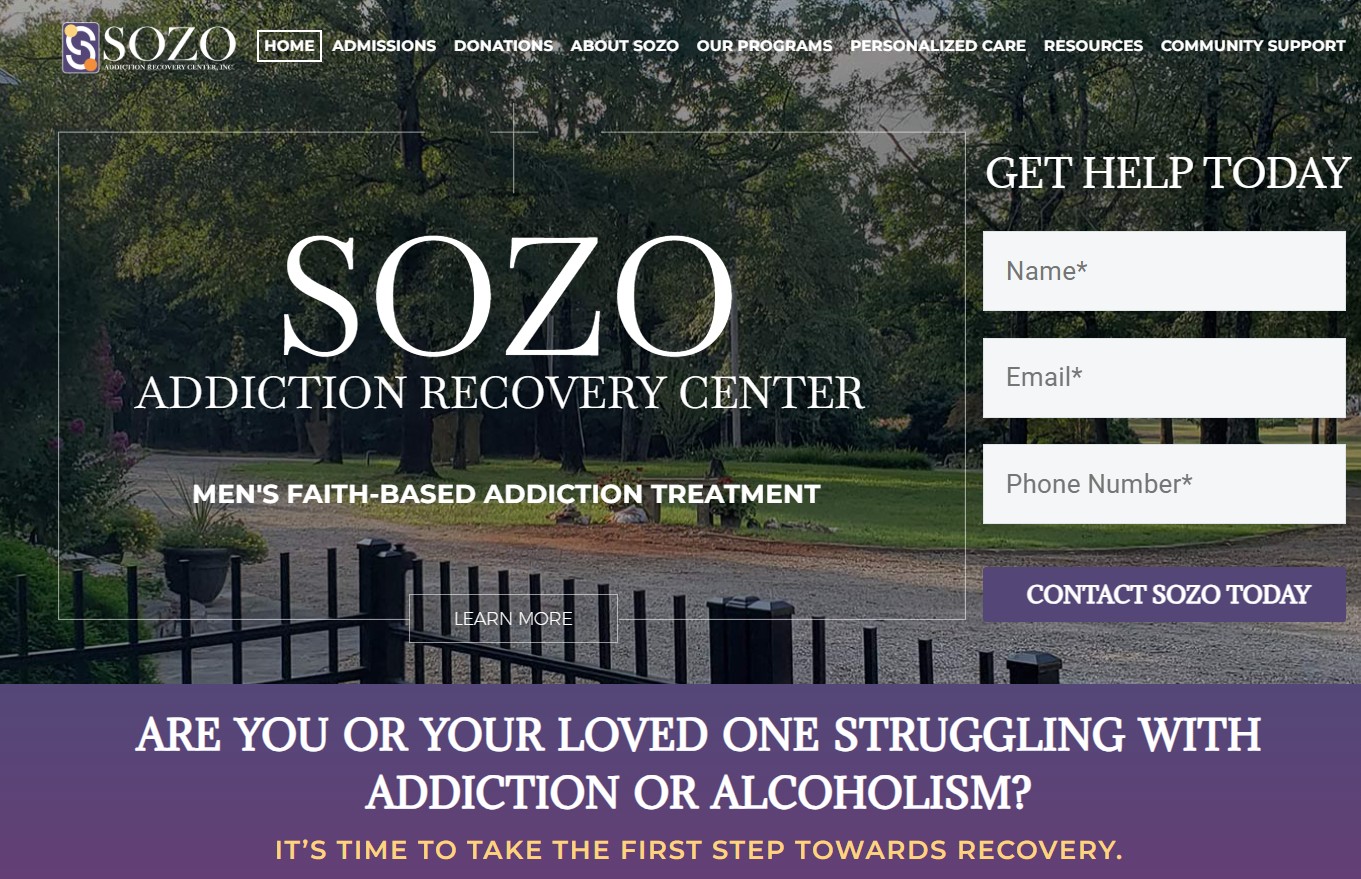
Art projects at Sozorecoverycenter are not supplemental. They are woven into weekly treatment alongside individual counseling, group therapy, and spiritual direction. For programs looking to replicate this model, the admissions team can speak to session structure, staffing ratios, and how art-based work connects to each man’s personalized care plan. To learn more or to begin the admissions process, visit the SOZO admissions page or explore faith-based rehab options in Arkansas.
Useful sources
Key peer-reviewed and practical resources for program leaders, grant writers, and clinicians:
- Frontiers in Psychiatry (2025): Reports that 38.6% of 307 U.S. addiction programs offer art therapy and reviews the neural mechanisms behind its effectiveness. Use for grant proposals and clinical justification.
- PLOS One pilot RCT: Randomized trial showing psychological and physiological changes in people with alcohol use disorder after structured art therapy. Use as evidence for outcome measurement sections.
- AddictionCenter: Art Therapy for Addiction: Practical clinical summary positioning art therapy as a psychotherapy adjunct across inpatient, outpatient, and correctional settings. Useful for program orientation materials.
- Creative Recovery — Arts Mid North Coast: Operational lessons on trauma-informed facilitator training and small-grant funding for pilot projects. Adapt for program launch planning.
- University of Florida College of the Arts: Creative Recovery Solutions: Interdisciplinary research on arts and public health, including participatory community art as a recovery tool. Relevant for service mural and community-rebuilding project design.
- Reclaim Sobriety: free sobriety tools: Practical take-home resources for building recovery support teams; useful for integrating art-based work with broader aftercare planning.
For clinicians seeking validated measurement tools, the Difficulties in Emotion Regulation Scale (DERS) and the Spiritual Well-Being Scale are both publicly documented and appropriate for pre/post tracking in faith-integrated programs. For trauma-informed art therapy training, the American Art Therapy Association (arttherapy.org) maintains a directory of credentialed supervisors and continuing education programs.
FAQ
Does art therapy actually work for addiction recovery?
Yes. Research in Frontiers in Psychiatry shows art therapy engages reward and trauma-processing neural networks, and a PLOS One pilot trial found measurable psychological and physiological changes in people with alcohol use disorder after structured art interventions.
What art projects work best for men in early recovery?
Tactile, concrete projects such as clay grounding work, craving-mapping drawings, and gratitude stone painting tend to reduce resistance and produce clear processing material in men’s groups, particularly when framed as problem-solving rather than artistic expression.
How do you integrate faith into art therapy without making it mandatory?
Offer scripture prompts and prayer elements as optional additions at the closure phase of each session, always providing a secular alternative. Informed consent language should state explicitly that faith participation is never required.
Can Sozorecoverycenter help men who need both clinical and spiritual care?
Yes. Sozorecoverycenter’s programs in Hot Springs, Arkansas combine ASAM Continuum-based clinical treatment, dual diagnosis care, and 12-step spiritual integration, including structured art sessions, within a single men’s residential and outpatient program.
How do you measure whether art sessions are helping?
Use three brief pre/post self-report items covering craving intensity, emotional regulation, and spiritual engagement, paired with facilitator observations tied to ASAM Continuum dimensions. Flag participants whose craving scores do not improve after three consecutive sessions for clinical review.