


Alcohol odor on the breath typically lasts 12 to 24 hours after the last drink, though a single standard drink may clear in as few as 6 hours and heavy drinking can push that window well past a full day. The key driver is how fast your liver processes ethanol, not how your mouth feels. One critical caveat: the absence of smell does not mean your blood alcohol content (BAC) has returned to zero. If you find yourself asking this question often, that pattern itself may be worth paying attention to.
- Typical alcohol breath detection window: up to about a day after drinking
- Light drinking: often clears within several hours
- Heavy drinking: can persist a full day or longer
- Smell alone cannot confirm legal sobriety
Table of Contents
- Why does alcohol make your breath smell in the first place?
- How long does alcohol breath last after light, moderate, and heavy drinking?
- What factors change how long the alcohol smell stays?
- Why smell is not a reliable sign of sobriety or legal safety
- Do quick fixes actually get rid of alcohol breath?
- When does persistent smell point to something bigger?
- Key Takeaways
- What men in recovery deserve to hear about this question
- SOZO Recovery Center: faith-based care for men ready to address alcohol dependence
- Useful sources and further reading
- FAQ
Why does alcohol make your breath smell in the first place?
The odor does not come from your mouth. It comes from your lungs.
When you drink, ethanol absorbs into your bloodstream through the stomach and small intestine. Your liver then converts ethanol into acetaldehyde, a volatile and pungent compound, before breaking it down further into acetate. Both ethanol and acetaldehyde travel in the blood to the lungs, where they are exhaled with every breath. That is why brushing your teeth removes the taste but not the odor: the source is systemic, not oral.
Breath odor is a clinical signal that the body is still actively metabolizing alcohol. The pungent smell of acetaldehyde is, in a real sense, your liver announcing that it is still at work.
The liver clears alcohol at roughly 0.015 to 0.016% BAC per hour. Nothing, not coffee, cold showers, or exercise, meaningfully speeds that rate. Only time and metabolic processing reduce BAC and, with it, the exhaled odor.
How long does alcohol breath last after light, moderate, and heavy drinking?
Practical ranges matter here, because the numbers shift considerably based on how much you drank.
- Light drinking (1 standard drink): Smell typically clears within 12 to 24 hours for most men.
- Moderate drinking (3 to 5 drinks): Expect 12 to 24 hours before odor becomes undetectable.
- Heavy drinking (6+ drinks or a late-night binge): Breath odor can persist well past 24 hours, sometimes into the following afternoon.
Alcohol has an approximate half-life of 4 to 5 hours, meaning the body needs roughly five half-lives, about 20 to 25 hours, to process a single serving for many people. That math surprises most men.
Two quick examples make it concrete:
- One beer at 9 PM. At typical BAC elimination rates, a man with moderate peak BAC would likely reach near-zero by early morning, with odor fading several hours later.
- Six drinks finishing at midnight. Peak BAC might be elevated. At typical elimination rates, measurable breath alcohol could remain well into the next day.
Pro Tip: When in doubt, assume the longer end of the window. Breath odor can outlast your subjective sense of sobriety by several hours, and that gap is where poor decisions get made.
What factors change how long the alcohol smell stays?
No two men process alcohol at exactly the same rate. Several variables push the window shorter or longer.
Individual factors:
- Body weight and composition (more lean mass generally means faster processing)
- Sex (women typically metabolize alcohol more slowly than men, though men are not immune to slow clearance)
- Age (older adults often metabolize more slowly)
- Liver health (chronic drinking damages the liver’s processing capacity over time)
- Genetic differences in ADH and ALDH enzymes, which govern how efficiently ethanol and acetaldehyde are broken down
Situational factors:
- Number of drinks and drink strength
- Drinking pace (faster consumption overwhelms the liver’s steady clearance rate)
- Food intake (eating slows absorption, which moderates peak BAC)
- Smoking (can intensify oral odor and mask or compound breath smell)
- Medications (some drugs slow liver metabolism)
- Dehydration (concentrates alcohol in the blood)
| Factor | Effect on Smell Duration |
|---|---|
| High body weight / lean mass | Shortens |
| Eating a full meal before drinking | Shortens |
| Slow drinking pace | Shortens |
| Female sex / older age | Lengthens |
| Heavy or rapid drinking | Lengthens |
| Poor liver health | Lengthens |
| Dehydration | Lengthens |
| Smoking | Variable / worsens perception |
| Medications affecting liver enzymes | Variable |
Individual metabolism rates, shaped by age, sex, weight, and liver function, substantially affect how long alcohol and its odor remain detectable. The “one drink per hour” rule is an unsafe simplification for legal or safety decisions.

Why smell is not a reliable sign of sobriety or legal safety
Feeling like the smell is gone is not the same as being sober. This distinction carries real legal weight.
Breathalyzers measure actual BAC in deep lung air, not surface odor. A man can metabolize enough alcohol to lose the noticeable smell while still registering above the U.S. legal limit of 0.08% BAC for driving. The reverse is also true: a strong smell after a single drink does not necessarily mean impairment.
“No smell” is not a reliable sign of sobriety. Experts caution that individual variability in metabolism and device sensitivity means a person can have a measurable BAC with no detectable odor, and vice versa.
Breathalyzers can detect alcohol for up to 24 hours in some individuals, depending on device sensitivity and personal metabolism. Men with ignition interlock devices (IIDs) installed after a DUI conviction face particular risk: heavy late-night drinking has triggered positive IID readings the following morning, hours after the smell has faded.
- Never drive based on how your breath smells.
- A negative smell is not proof of a zero BAC.
- Legal BAC limits in the U.S. are 0.08% for most drivers and lower (0.04%) for commercial drivers.
- IIDs are calibrated to detect even low BAC levels: well below the threshold of noticeable odor.
Do quick fixes actually get rid of alcohol breath?
Mints, mouthwash, gum, coffee, and breath sprays are masking strategies, not solutions. They address mouth-level odor while doing nothing about the ethanol and acetaldehyde being exhaled from the lungs with every breath.

Short-term oral fixes, including mouthwash and breath mints, only mask odor at the surface. The systemic source continues until the liver finishes its work.
Steps that genuinely help comfort and perception (though not elimination):
- Brushing teeth and tongue to reduce oral bacteria that amplify odor
- Drinking water to support hydration and dilute concentration slightly
- Eating a meal to slow further absorption if still drinking, or to aid general recovery
- Resting and allowing time to pass
Pro Tip: If you need to be around others, pair basic oral care with an honest safety decision. Fresher breath does not mean a lower BAC. Treat them as two separate questions.
When does persistent smell point to something bigger?
A man who occasionally wonders how long alcohol stays on his breath is asking a reasonable question. A man who asks it regularly, or who wakes up most mornings with alcohol still on his breath, is describing a pattern that deserves honest attention.
Signs that the smell reflects a larger concern:
- Waking up with alcohol odor most mornings
- Inability to limit drinking despite wanting to
- Blackouts, memory gaps, or lost time
- Legal consequences, relationship strain, or work problems tied to drinking
- Needing to drink to feel normal or to manage anxiety
If any of those feel familiar, the next step is not another breath mint. Practical steps to take today:
- Call SAMHSA’s National Helpline (1-800-662-4357) for a confidential conversation and referral.
- Ask your doctor for a liver function panel and an honest conversation about your drinking.
- Request an ASAM-level assessment to understand what level of care fits your situation.
- Contact a faith-based treatment program for men to discuss residential or outpatient options.
- Talk to someone you trust: a pastor, a sponsor, or a counselor.
Pro Tip: Recovery does not require hitting a dramatic bottom. If drinking is causing consequences you can see, that is enough reason to reach out. Detox programs that support liver health can be a medically safe first step when physical dependence is a concern.
For men who want community alongside clinical care, faith-based recovery communities offer structured support that pairs spiritual accountability with practical recovery tools.
Key Takeaways
Alcohol breath odor typically lasts up to about a day after drinking, but smell alone cannot confirm sobriety, only time and metabolism eliminate alcohol from the body.
| Point | Details |
|---|---|
| Typical detection window | Alcohol breath odor lasts up to about a day; heavy drinking can extend this longer. |
| Only time works | The liver clears alcohol at ~0.015% BAC per hour; no quick fix speeds that process. |
| Smell ≠ sobriety | A faded odor does not mean BAC is at zero or that driving is safe. |
| Individual factors matter | Body weight, liver health, age, and drinking pace all shift how long odor persists. |
| Sozorecoverycenter | SOZO Recovery Center offers ASAM-informed, faith-integrated treatment for men whose drinking patterns go beyond occasional questions about breath. |
What men in recovery deserve to hear about this question
Most men who search for how long alcohol stays on their breath are not asking out of idle curiosity. They are checking. They are calculating. And that act of checking, repeated often enough, is its own kind of signal.
The physiology is real and worth understanding: acetaldehyde is a toxin, and the smell it produces is the body’s honest report on what the liver is still processing. There is no shame in knowing that. But the clinical truth is that focusing on masking symptoms, whether breath odor or the feeling of impairment, keeps a man’s attention on the wrong problem. The question worth sitting with is not “will anyone smell it?” but “why am I drinking in a way that makes this question necessary?”
Faith and clinical care are not in tension here. Recovery that honors a man’s spiritual life and addresses the medical reality of dependence is not a compromise: it is the most complete form of care available. An ASAM-informed assessment does not strip away faith; it gives it a structure to work within. Men who pursue hope and growth in recovery often describe the clinical process as the thing that finally made their faith feel practical.
SOZO Recovery Center: faith-based care for men ready to address alcohol dependence
For a man whose relationship with alcohol has moved past occasional use into something that controls his mornings, his relationships, or his sense of self, Sozorecoverycenter offers a path that takes both the clinical and the spiritual seriously.
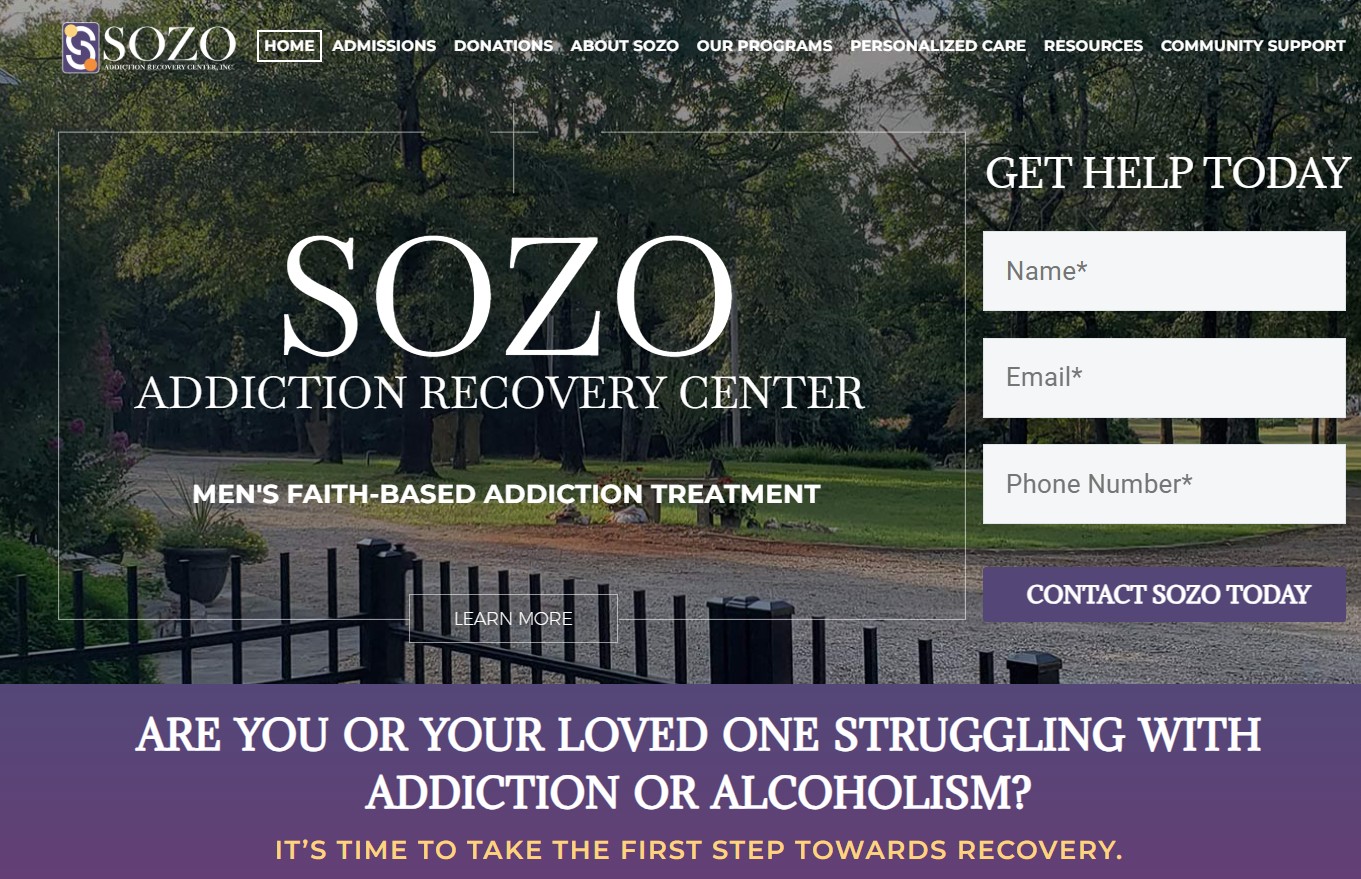
Located in Hot Springs, Arkansas, SOZO Recovery Center provides residential, outpatient, intensive outpatient, partial hospitalization, sober living, and dual diagnosis programs for men. Every treatment plan is built on ASAM Continuum criteria, which means placement is matched to actual clinical need rather than a one-size approach. Biblical principles and the 12-step model are woven together throughout, so a man does not have to choose between his faith and evidence-based care. Insurance options include BlueCross BlueShield, Ambetter, and QualChoice, with private pay available.
If you recognize the patterns described in this article, reviewing the signs of alcohol dependence in men is a clear first step. When you are ready to speak with someone, the admissions team at SOZO is available for a confidential consultation.
Useful sources and further reading
These are the primary sources used to build this guide, with brief notes on what each covers.
- Healthline: How Long Does Alcohol Stay in Your System? Detection windows across test types; good starting reference for breath timelines.
- Verywell Mind: How Long Does Alcohol Stay in Your System? BAC elimination rates and the clinical caution that smell does not equal sobriety.
- Men’s Health: How Long Alcohol Stays in Your Body: Half-life explanation and practical clearance estimates for men.
- Medical News Today: How Long Do Breathalyzers Detect Alcohol? Device sensitivity, individual metabolism differences, and detection variability.
- Intoxalock: How Long Can a Breathalyzer Detect Alcohol? IID-specific data and heavy-drinking next-morning scenarios.
- Colgate: Alcohol Breath Smell Explained: Acetaldehyde’s role as the primary odor source and why oral fixes are temporary.
- Healthline: How to Get Rid of Alcohol Breath: Masking strategies versus true elimination; practical guidance on what helps and what does not.
- PMC: Alcohol Breath Testing: Peer-reviewed science on how evidential breath testers work and what they measure.
- Sozorecoverycenter.com: Alcohol Addiction Treatment: SOZO’s faith-integrated clinical model for men.
- MindShift Psychological Center: How to Battle Alcohol Use Disorder: Practical treatment-focused guidance on addressing alcohol use disorder.
FAQ
How long does alcohol breath smell last after one drink?
After a single standard drink, most men will find the odor typically clears within 12 to 24 hours, depending on body weight, liver health, and whether food was consumed alongside the drink.
Can you smell alcohol on someone’s breath after 24 hours?
After heavy drinking, breath odor can persist beyond 24 hours. Breathalyzers have detected measurable BAC more than 12 hours after the last drink in heavy-drinking scenarios.
Does drinking water or eating remove alcohol breath?
Water and food support comfort and slow absorption, but they do not eliminate alcohol from the body. Only time and liver metabolism reduce BAC and the exhaled odor that comes with it.
Why does alcohol breath smell even after brushing your teeth?
The odor originates from ethanol and acetaldehyde exhaled from the lungs via the bloodstream, not from the mouth itself. Brushing removes surface bacteria and taste but cannot address the systemic source.
When should a man seek help for alcohol use?
If questions about breath odor are a regular part of your morning, or if drinking is affecting your relationships, work, or health, an ASAM-level clinical assessment is a practical and confidential next step.