


Most recovery professionals advise a man to hold off on dating in early recovery, often for several months and commonly for about a year, so that his sobriety, his support network and his sense of who he is can take root first. That is not a rule carved in stone, and it is not a judgment on his character. It is a recognition that early sobriety asks a great deal of a man, and that a new romance asks a great deal too.
If you are a man leaving treatment, or a family member wondering about a son, brother or husband, this guide walks through the reasoning, the warning signs, the signs of readiness and the practical boundaries that make a thoughtful decision possible.
TL;DR
- Many professionals suggest waiting several months to about a year before starting a romantic relationship, because a breakup or conflict can trigger relapse.
- Readiness looks like steady sobriety, a solid sober support network, clear goals and boundaries, and the willingness to involve trusted people in the decision.
- If a relationship does begin, keep meetings, sponsor contact and treatment routines first, choose substance-free settings and move slowly.
- Friendships, support groups and service are strong ways to meet people and ease loneliness while you wait.
- Dating a man in recovery, or loving one, is easier with honest communication and, often, couples counseling.
Table of Contents
- Why the first year gets so much attention
- The real risk: when a relationship ends
- What you may be gaining by waiting
- Signs you may be ready to date
- Dating while in treatment, and after rehab
- If you do start dating: boundaries that protect recovery
- Sober date ideas that keep the focus on the person
- Our perspective: faith, clinical care and patience
- When someone you love is in recovery, or you are dating a man who is
- How SOZO supports men before, during and after the dating question
- A closing thought on timing
- FAQ
- Sources
Why the first year gets so much attention
Early recovery is a season of repair. The body is adjusting, sleep and mood are often uneven, and old coping habits are being replaced with new ones. The National Institute on Alcohol Abuse and Alcoholism describes recovery from alcohol use disorder as dynamic and individualized, with paths that vary widely and a first year that can include both gains and setbacks. That honest picture matters. A man is not expected to be steady every day. He is expected to keep returning to the work.
Now place a new romance on top of that. Attraction, attention and uncertainty all stir strong feelings, and strong feelings were once the very thing a substance helped him manage. A relationship can quickly become the main event of his life, pushing aside meetings, counseling and the slow work of rebuilding trust with family.
Psychologist and sex and relationship specialist Robert Weiss, writing in Psychology Today, advises people new to sobriety not to rush into new relationships, and to spend several months to about a year building sobriety, self-understanding and platonic support. The reasoning is practical rather than moralistic. A man who has not yet learned what triggers him, what he needs and what he can offer is poorly placed to choose a partner well.
The real risk: when a relationship ends
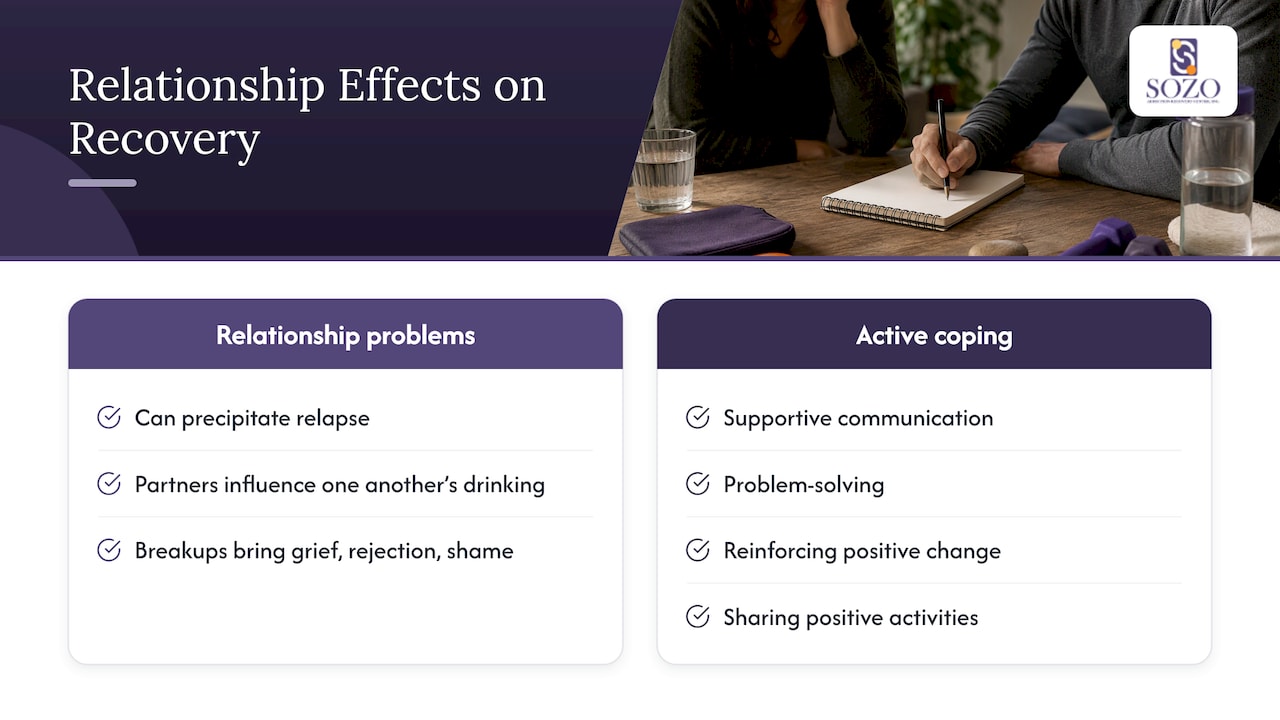
The concern is not that love is dangerous. The concern is what happens if the relationship wobbles. U.S. News & World Report, reporting on expert views, notes that the collapse of a new relationship can easily trigger relapse. A breakup brings grief, rejection, shame and loneliness all at once, and those are exactly the feelings that early recovery has not yet given a man much practice in handling without a substance.
The research on couples points the same direction. A NIAAA-reviewed article on family and alcohol use disorder recovery states that relationship problems can be relapse precipitants, and that partners influence one another’s drinking. The same review is encouraging on the other side: when a partner copes actively, through supportive communication, problem-solving, reinforcing positive change and sharing positive activities, recovery is better supported. In other words, relationships are powerful in both directions. The question is timing and foundation.
Three patterns worth watching
A man can look at his own situation honestly and ask whether any of these patterns are showing up:
- Replacing one intensity with another. If the thrill of a new person feels like the old rush, or he is thinking about the person the way he once thought about using, that is a signal to slow down and talk to his sponsor or counselor.
- Skipping the underlying work. A relationship can become a way to avoid grief, trauma, depression or anxiety that still needs attention. This is especially true for men with co-occurring mental health conditions.
- Making one person the whole support system. When a partner becomes the only person he leans on, the pressure on both of them grows, and his recovery rests on something that cannot hold it alone.
What you may be gaining by waiting
Waiting is not the same as standing still. Early recovery is a period of real emotional rawness and self-discovery, and avoiding the distraction of romance leaves room for the essential work of defining personal identity and values. A man who has spent years organizing his life around a substance often does not yet know what he likes, what he believes or how he behaves when he is under stress and sober.
The months he spends not dating can be filled with things that make him a better partner later:
- Rebuilding trust with parents, siblings, a spouse or children.
- Learning to sit with discomfort without escaping it.
- Attending meetings regularly and working the steps with a sponsor.
- Strengthening his faith practice, whatever that looks like for him.
- Returning to work, school or volunteering with consistency.
- Treating anxiety, depression or trauma with a qualified clinician.
Experts also suggest that, instead of dating, newly sober people focus on building a network of sober friends and take part in support groups to combat loneliness. Loneliness is often what makes dating feel urgent. Answer the loneliness directly, and the urgency usually softens.
Signs you may be ready to date
There is no calendar date that makes a man ready. Time helps, but readiness is about what has been built. According to the Psychology Today piece above, a person may be ready when he is firmly grounded in sobriety, has some ego strength and a good social support network, knows his goals and boundaries, and involves sober supports in the decision.
Translated into everyday terms, a man might ask himself these questions:
| Question to ask | What a steady answer sounds like |
|---|---|
| Is my sobriety stable? | I have a routine that holds up on hard days, and I know my warning signs. |
| Who supports me? | I have a sponsor, sober friends, family or a counselor I talk to weekly. |
| Why do I want to date? | I want companionship, not an escape from loneliness, boredom or pain. |
| Do I know my limits? | I can name what I will not do, such as drinking venues or skipping meetings. |
| Who knows about this? | My sponsor and counselor know, and I am open to their honest view. |
| Can I handle a no? | If this ends, I have people to call and a plan that does not involve using. |
If several of those answers feel shaky, that is not a verdict. It is useful information, and it points to what to strengthen next. A man who is unsure can bring the list to his counselor or sponsor and work through it together.
Dating while in treatment, and after rehab
People often ask whether dating during rehab is a good idea. In a residential setting, the answer is generally no, and the reason is simple: the purpose of treatment is to give a man protected time to focus on himself. Romantic attention inside a treatment community divides that focus, and it can complicate the experience for everyone around him. Most programs ask clients to keep their attention on their own recovery, and a man should follow the guidance of his own treatment team.
After rehab the picture changes gradually. A man steps down through levels of care, from residential to partial hospitalization, intensive outpatient and outpatient, as his stability grows. Each step gives him more freedom and more responsibility, and each is a chance to practice the skills he learned. It makes sense to let dating, if it comes, follow that same gradual path rather than be the first thing he reaches for when he leaves.
Two practical points for the first months after treatment:
- Tell your team. If someone interests you, say so in counseling or to your sponsor. That is not asking permission. It is putting another set of eyes on a decision where your own judgment may still be wobbly.
- Protect the schedule. Aftercare sessions, meetings and sleep are not optional extras. If a relationship begins to crowd any of them out, that is the moment to pause.
The VA/DoD clinical practice guideline for substance use disorders recommends promoting active involvement in group mutual-help programs for patients with alcohol use disorder in early recovery or after relapse, and suggests the same for drug use disorders. Keeping that involvement steady is one of the strongest protections a man has, whether he is dating or not.
If you do start dating: boundaries that protect recovery
Some men will date earlier than their counselors would choose. Some meet someone naturally through church, work or a recovery community and are not sure what to do. The goal then is not shame but structure. The Family Institute, a behavioral health organization, describes healthy dating in sobriety as setting clear boundaries, choosing substance-free activities and moving slowly to keep emotional balance.
Here is a practical set of boundaries a man can adapt:
- Be honest early. Tell the person you are in recovery before things become serious. A person who cannot respect that is not a safe partner right now.
- Keep substances out of the picture. Choose settings without alcohol or drugs, and do not date someone whose life centers on them.
- Go slowly. Take time between dates, resist spending every day together and avoid making big commitments such as moving in.
- Keep your routine. Meetings, sponsor calls, counseling and faith practice stay on the calendar first.
- Share the decision. Check in with your sponsor or counselor regularly about how things are going.
- Keep other friendships alive. One person should never be your only support.
- Agree on a stop signal. If cravings rise, if you feel secretive, or if you are skipping recovery work, step back and talk to your supports that day.
A particular word on physical intimacy. Emotional and physical closeness can be intense and can stir old patterns, including using sex the way a substance was once used. Slowing down here is not prudishness. It leaves room to know whether the connection is real.
Sober date ideas that keep the focus on the person
One of the quiet gifts of sober dating is that you actually get to know the other person. U.S. News notes that sober friends can enjoy going out to eat, seeing movies or going on hikes together, and the same list works for a first or second date. Some ideas that tend to work well in Arkansas and elsewhere:
- A daytime walk or hike on a park trail, with coffee or lemonade afterward.
- A casual dinner at a restaurant you already know, with a plan for when you will head home.
- A movie or a minor league baseball game.
- Volunteering together at a food pantry or church project.
- A cooking night at home with friends present.
- Fishing, kayaking or a picnic by a lake.
Avoid bars, parties built around drinking and late nights with no exit plan. Drive yourself so you can leave when you need to, and keep your phone on in case a sponsor calls.
Our perspective: faith, clinical care and patience
We have walked with many men through the first months after treatment, and the question of dating almost always comes up. Our view is that the answer is rarely a flat yes or no. It is a question of foundation.
At SOZO, we believe recovery is built on three things working together: spiritual grounding, honest clinical care and a community of men who understand. Our approach combines biblical principles with the 12-step model, and our treatment plans are personalized using the ASAM Continuum, so each man gets the level of care that fits him. When that foundation is in place, a man is far better prepared to love someone well, because he is no longer asking another person to fill what only recovery can.
For many men, we also see that mental health conditions sit underneath the urge to find a relationship quickly. Loneliness, depression, anxiety and old wounds can all make a new romance feel like rescue. That is why we treat addiction and co-occurring mental health concerns together through dual diagnosis care, rather than hoping a relationship will smooth over what has not been addressed.
Our encouragement to a man in early recovery is simple. Set down the weight of needing to be chosen. Invest in friendships, service, prayer, meetings and counseling. Let your humility and steadiness grow. The right relationship, if it is meant for you, will be able to wait for the man you are becoming.
Ty
When someone you love is in recovery, or you are dating a man who is
Not every reader is the man in recovery. Some are wives, girlfriends or families wondering how to support him, and some are people who have met a man in recovery and are unsure what to expect.
A few honest ideas help. Learn what recovery involves, including that meetings and counseling are not negotiable parts of his week. Avoid pressuring him to drink or to “just have one.” Expect that trust grows slowly, and that he may need to set limits that feel inconvenient. And do not make yourself his only support. That pressure can strain even a loving partnership.
The research is encouraging for couples who work at it. The NIAAA-reviewed family review cited above describes how active partner coping, such as reinforcing positive behavior, improving communication and decreasing negative behaviors, is associated with better recovery outcomes. Many couples find that working with a licensed therapist helps them practice those skills, and the benefits of couples counseling include a safer place to talk about how relationship patterns and substance use affect each other. For couples where one partner is in treatment, ask his clinical team how and when to bring a partner into the work.
How SOZO supports men before, during and after the dating question
At SOZO Recovery Center in Hot Springs, Arkansas, we offer a faith-based program for men that combines Christian principles with the 12-step model and clinical care. A man can begin with residential treatment for structured, focused time away from daily pressures, and step down through partial hospitalization, intensive outpatient and outpatient care as he builds stability. Those who need a supportive place to rebuild confidence can look at our sober living option, and we can help with medical detox placement when it is needed.
If mental health conditions are part of the picture, our dual diagnosis and personalized care addresses both together. To talk through which level of care fits you or someone you love, reach out to our team at SOZO Recovery Center. We accept private pay and private insurance, and our team can explain what shapes the total for each plan, including the level of care and the length of stay.
A closing thought on timing
The steps were never the destination. They were the training. The same is true of the first year: it is training for a life in which a man can love and be loved without losing himself. Waiting is not a loss. It is a way of becoming someone a relationship can safely rest on.
FAQ
Can you date in early recovery?
You can, but many professionals advise waiting several months to about a year. The risk is that conflict or a breakup can trigger relapse while your coping skills are still new. If you are unsure, talk with your sponsor or counselor before making the decision.
Should you date while in rehab?
Generally, no. Treatment is protected time to focus on your own health, and romantic attention can divide that focus and complicate things for you and others in the program. Follow your treatment team’s guidance, and revisit the question as you step down in care.
Why shouldn’t you date during your first year of sobriety?
Early recovery is emotionally raw, and romance can pull attention from the work of understanding yourself and your triggers. A new relationship can also become a substitute for the substance, and its collapse can trigger relapse. Building sober friendships and support first gives you a steadier foundation.
How do I know if I am ready to date after rehab?
Look for stable sobriety, a reliable sober support network, clear goals and boundaries, and the willingness to involve trusted people in the decision. If you are dating to escape loneliness or pain, it is likely worth waiting. Bring the question to your counselor or sponsor for an honest outside view.
What are good sober date ideas?
Daytime activities work well: hikes, walks, meals at a casual restaurant, movies, volunteering or cooking together. Avoid bars and drinking-centered events, drive yourself, and keep your recovery routine on the calendar.
Sources
- NIAAA: Alcohol Use Disorder, From Risk to Diagnosis to Recovery
- Psychology Today: Sober Dating and Sober Sex, Less Drug and Alcohol Relapse
- U.S. News & World Report: Why Newly Sober People Shouldn’t Date for a Year
- NIAAA Alcohol Research: The Role of the Family in Alcohol Use Disorder Recovery for Adults
- VA/DoD Clinical Practice Guideline: Substance Use Disorders, Provider Summary
- Family Institute: Dating Sober
- Benefits of couples counseling for lasting connection