


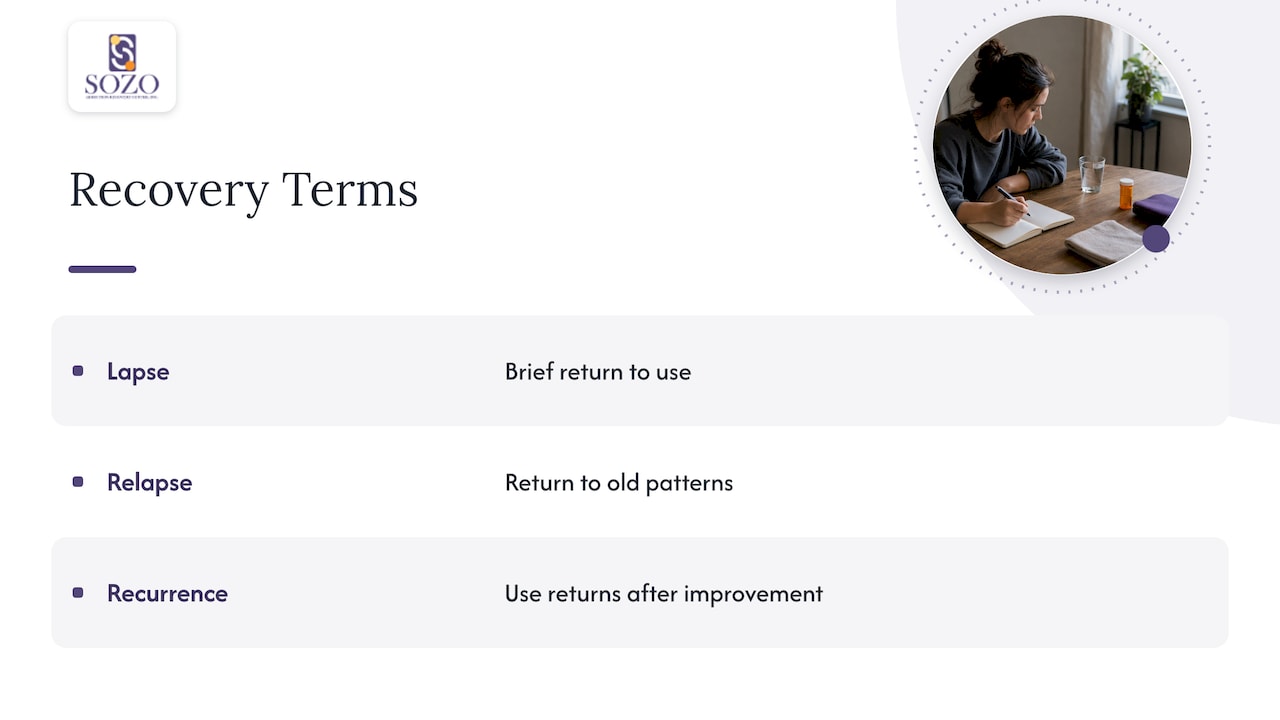
A lapse is a brief return to alcohol or drug use, often a single episode, followed by a return to recovery goals. A relapse is a longer return to previous patterns of use, where a man can no longer stay abstinent over time. Both are painful. Neither one erases the work already done, and the way a man responds in the first hours usually matters more than the label.
This guide explains the difference in plain terms, covers what “slip” and “recurrence” mean, walks through the warning signs that come before renewed use, and lays out what to do next. It is written for a man in recovery, and for the family members who love him and want to know how to help.
TL;DR
- A lapse is a brief episode of use after quitting, or use beyond a self-set limit. A relapse is a return to earlier patterns of use over a longer period.
- “Slip” is an informal word for a lapse. “Recurrence” is a term many professionals prefer because it carries less stigma.
- Relapse rarely begins with the first drink or drug. It tends to build through emotional, mental, and then physical stages, and each stage has signs you can catch.
- After either one: stop using, get out of the unsafe setting, call your supports quickly, and review what led to it once your head is clear.
- Treatment levels exist for both situations, from outpatient care to residential care, and a man can step back into any of them.
Table of Contents
- What a lapse is
- What a relapse is
- Lapse vs. relapse at a glance
- Does a lapse count as a relapse?
- What recurrence means
- How relapse builds: the stages and warning signs
- What to do right after a lapse
- What to do after a relapse
- How the levels of care fit a lapse or a relapse
- Building a plan that lowers the odds of the next one
- How families can help
- Our perspective on lapse and relapse
- Talk with us about the next step
- FAQ
- Sources
What a lapse is
The Department of Veterans Affairs describes a lapse as a brief episode of alcohol or drug use after quitting, or as using more than a self-set safe or healthy limit when a person is cutting back instead of stopping completely. The key word is brief. A man has a drink at a wedding, or uses once after a hard conversation with his wife, and then he stops and reaches for his recovery plan.
The International Society of Substance Use Professionals frames it in similar terms: a short return to use, such as a day or a night, followed by a return to recovery goals. What defines a lapse is not only how much was used. It is also what happens afterward. A man who uses once and tells his sponsor the next morning is in a very different place from a man who uses once and hides it for three weeks.
Is a slip the same thing?
In everyday talk, yes. People say “slip” for a lapse, and 12-step rooms have used the word for decades. The same professional glossary notes that many professionals now prefer terms like resumed use or recurrence, because “slip” can carry stigma. If a man uses the word slip about himself, that is fine. What matters is that he speaks about it openly instead of burying it.
The University of Wisconsin–Madison STAR Study uses similar language, describing a lapse as brief drinking after deciding to quit, and a relapse as a return to previous drinking patterns for a longer period.
What a relapse is
VA guidance describes relapse as the inability to remain abstinent over time. It may follow lapses that come close together, or it may involve heavier and longer use. The man is no longer having an isolated episode. The old pattern is running again.
That can look different from one man to the next. For one man it is daily drinking again within a few weeks. For another it is a return to pills, or to the people and places that go with them. What they share is that the use has stopped being a single event that the man steps away from.
Lapse vs. relapse at a glance
| Lapse | Relapse | |
|---|---|---|
| Length | Brief, often one episode | Extended, over days, weeks, or longer |
| Pattern | Isolated | A return to earlier patterns of use |
| Response | Man stops and returns to his recovery plan | Man struggles to stop without added support |
| Common informal word | Slip | Setback, going back out |
| Usual next step | Tell supports, review the plan, adjust | Re-engage with professional care, possibly a higher level |
The line between the two is not always sharp. A lapse can turn into a relapse if shame takes over and the man keeps using to avoid facing it. That is why the response matters so much, and why the next section is worth reading closely.
Does a lapse count as a relapse?
Not by the definitions above. A lapse is its own thing: brief, followed by a return to goals. But a lapse should still be treated as a serious signal. It tells a man that something in his plan, his stress load, or his support has a gap in it.
There is also a practical reason to take a lapse seriously. VA guidance explains that relapse may follow lapses that come close together. One lapse followed by honest action often ends there. A string of lapses with no change in the plan is how many men end up in a relapse.
What recurrence means
You will see “recurrence” in clinical writing, and it comes up often when men search for the difference. It means that symptoms or use have returned after a period of improvement. Many professionals prefer it, as noted above, because it describes what happened without the moral weight that “slip” or “relapse” can carry.
The idea behind it is that addiction behaves like other long-term health conditions. Professional sources describe the National Institute on Drug Abuse as placing relapse alongside the return of symptoms in conditions like diabetes, hypertension, and asthma. A man whose blood pressure climbs again after a good stretch does not conclude that he is a lost cause. He goes back to his doctor and adjusts the treatment. Recovery asks for the same response.
So in practice: lapse describes a brief return to use, relapse describes a return to old patterns, and recurrence is a broader clinical word for use returning after improvement. In casual conversation, men and families often use them loosely. Clear language helps a man decide what to do next.
How relapse builds: the stages and warning signs
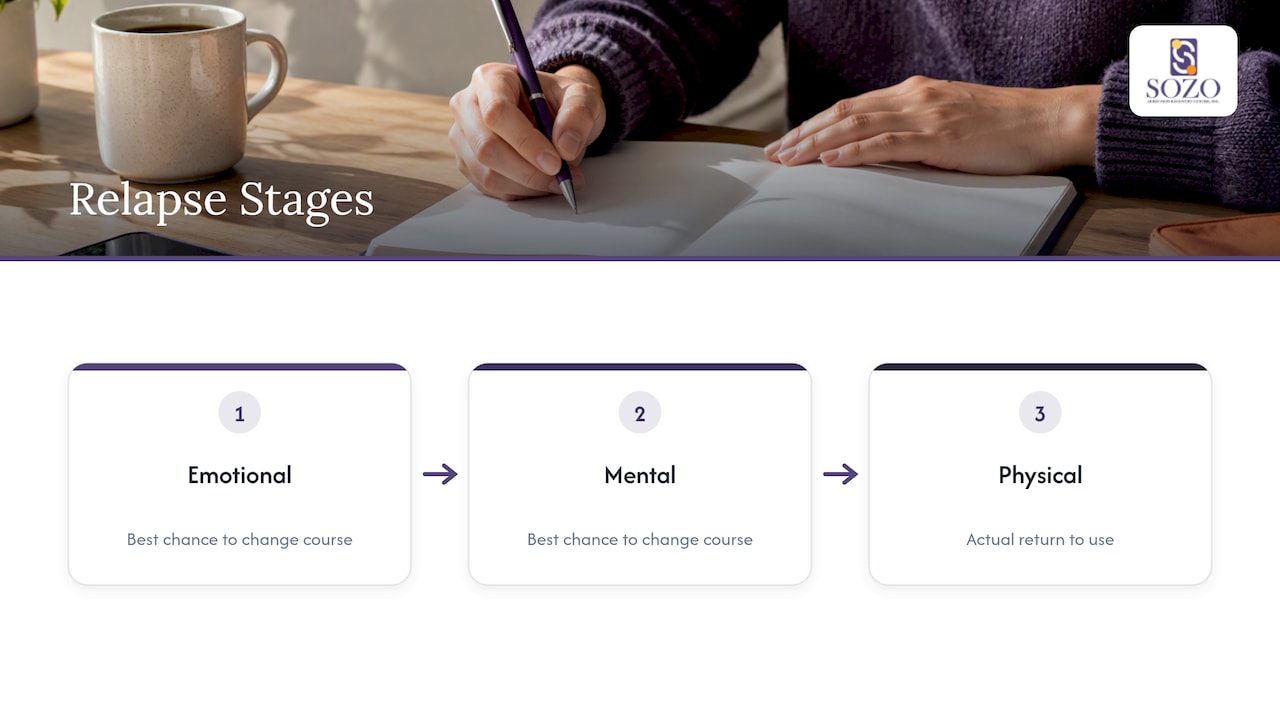
Relapse is usually described as a process that starts before any substance is touched. A commonly used model breaks it into three stages: emotional, mental, and physical. The physical stage is the actual return to use. The two before it are where a man has the best chance to change course.
Emotional stage
Nothing about using is on his mind yet. But he stops looking after himself. He may isolate, skip meetings, sleep badly, eat poorly, bottle up what he feels, or get defensive when someone asks how he is doing. The recovery plan stays in a drawer.
Mental stage
Now part of him is thinking about using. He may replay the good times with a substance and forget the bad ones. He may start bargaining with himself, planning a time when no one would know, or drifting back toward old friends and places. This is a tug of war, and the right call here is to speak up. Tell a sponsor, a counselor, or a brother in the program what is going on in your head.
Physical stage
This is the return to use itself. A man can stop here and have a lapse, or continue and have a relapse. Family members often notice lying, a change in appearance, missed commitments, or signs of intoxication.
For a longer list of what each stage can look like day to day, see our guide to relapse warning signs.
What to do right after a lapse
The VA’s guidance on what to do after renewed use is practical and short. It tells a person to stop using, dispose of the substance, leave the unsafe situation, use a healthy distraction, and contact recovery supports quickly. Here is how that looks in order.
- Stop. Do not use more to quiet the guilt. The first episode is a lapse. Everything after it is a choice that can still go another way.
- Remove the substance. Pour it out, hand it over, or throw it away. Do not keep it “just in case.”
- Leave the setting. If you are at a bar, a party, or a house where others are using, go. Your safety comes before politeness.
- Call someone. A sponsor, a counselor, a pastor, a family member, a friend from your program. Do it while you are still in the moment, not three days later.
- Do something steady. Walk, eat, pray, shower, drive to a meeting. A simple, healthy action changes the next hour.
- Review it when your head is clear. Ask what happened before the use: who was there, what you were feeling, what you skipped. Then put prevention steps into your plan. The same guidance also advises getting help for anxiety or depression if they are part of the picture.
One point is worth stating plainly. The VA says a lapse or relapse does not mean the person or the treatment has failed. It may mean stress and challenges piled up past the coping skills the man had at that time. That is information, not a verdict. The task is to build more skill and more support.
What to do after a relapse
A relapse needs the same first steps, and then more. Because the use has gone on longer, the body and the mind have usually been pulled back into the old pattern. A man in this position should talk with a doctor or a licensed treatment professional soon, not wait to see whether he can manage alone.
Two safety notes belong here. First, if a man has been using heavily for days or weeks, stopping suddenly can be medically risky with some substances, alcohol among them. Speak with a physician or a medical detox program before stopping on his own. Second, a man who has been abstinent for a while may have a lower tolerance than before. Using the same amount he used in the past can raise the risk of overdose. If someone is unresponsive, struggling to breathe, or having a seizure, call 911.
When it is safe to do so, he can re-engage with the supports that worked, and look honestly at whether the level of care still fits. A man who tried to manage on his own weekly meetings may need an intensive outpatient program. A man whose home environment keeps pulling him back may need the structure of residential care or a sober living home.
How the levels of care fit a lapse or a relapse
Not every setback calls for the same response. The ASAM Continuum, which guides our treatment planning, is built around matching the intensity of care to what a man needs right now. Here is how that can look in practice.
- A lapse with strong supports. Regular outpatient counseling, an updated prevention plan, and more frequent meetings may be enough. Our outpatient program lets a man keep working and caring for his family while he does that work.
- A lapse that exposed gaps. More structure may help. An intensive outpatient program adds several sessions a week, and partial hospitalization offers day-long treatment while he sleeps at home or in sober living.
- A relapse, or a home environment that keeps triggering use. Residential treatment removes a man from daily triggers and gives him around-the-clock support. If withdrawal is a concern, we can help with medical detox placement first.
- Use alongside depression, anxiety, or trauma. Dual diagnosis care treats the mental health condition and the addiction together, so one does not keep restarting the other.
To see how two of these options differ, read our comparison of sober living and residential treatment.
Building a plan that lowers the odds of the next one
VA guidance on reducing risk points to several things working together: staying in treatment, relapse-prevention counseling, medications that reduce craving when clinically appropriate, mutual-help groups, and care for anxiety, depression, or other mental health concerns. It also recommends identifying triggers and high-risk situations and building a plan for getting help fast.
A workable plan has a few parts.
- Know your triggers. People, places, times of day, feelings, anniversaries. Write them down, specifically.
- Name your calls. Decide in advance who you will phone, where you will go, and what you will do. Deciding at the moment of craving is much harder.
- Keep your supports close. Sponsor, counselor, church, brothers in recovery. Our article on support systems and sobriety goes deeper on why connection matters.
- Keep treating mental health. Untreated depression and anxiety push many men back toward old coping habits.
- Plan for after treatment. The months after a program are often the most exposed. See our aftercare plan for men.
If you want to write yours out step by step, here is our guide to creating a relapse prevention plan.
How families can help
Families often feel torn between being supportive and being firm. VA guidance suggests planning ahead with family, friends, providers, counselors, and sponsors so everyone knows whom to call, where to go, and what to do if use returns. That conversation is easiest to have while things are stable.
Some practical ways to help:
- Agree on the plan together before anything happens, and write it down.
- When a man tells you he used, thank him for telling you. Honesty is worth protecting, and punishment teaches him to hide.
- Stay calm about the facts. Ask what he needs and what the plan says to do.
- Encourage him to contact his counselor or sponsor, and offer a ride to a meeting or appointment.
- Do not put yourself in an unsafe spot. If you are worried about his safety or yours, call 911.
- Look after yourself too. Family support groups exist for exactly this.
Our perspective on lapse and relapse
We have sat with men on the morning after a lapse, and we have sat with men months into a relapse. The ones who recover are rarely the ones who never stumble. They are the ones who tell the truth quickly and let people help.
That is why we pair clinical care with spiritual guidance. A treatment plan built on ASAM criteria tells us what level of care a man needs today. The 12 steps and biblical principles give him something to stand on when the plan gets hard: humility to ask for help, honesty about where he is, and service to others that pulls him out of himself.
We also treat the whole man. Many of the men who come to us carry depression, anxiety, or trauma along with their addiction. Our dual diagnosis approach is designed to address both, so that untreated pain does not keep sending him back to the bottle or the pill.
A lapse can be a turning point. We believe a man who responds with honesty and a stronger plan can come out of it with more resolve than he had before. Our small, peaceful setting in Hot Springs, Arkansas, is built for that kind of steady, personal work.
Ty
Talk with us about the next step
If you or your son, husband, or brother has had a lapse or a relapse, you do not have to sort out the right level of care alone. SOZO Recovery Center is a faith-based men’s program in Hot Springs, Arkansas, offering residential, partial hospitalization, intensive outpatient, outpatient, and sober living programs, along with dual diagnosis care and medical detox placement. Plans are personalized and informed by the ASAM Continuum.
Cost depends on the level of care, the length of stay, and whether private insurance applies, so the admissions team can walk you through your own situation. Start at our men’s recovery home page or go straight to residential treatment.
FAQ
What is the main difference between a lapse and a relapse?
A lapse is a brief return to use, followed by a return to recovery goals. A relapse is a longer return to earlier patterns, where staying abstinent becomes hard. Length, pattern, and the man’s response afterward are what separate them.
Is a slip the same as a lapse?
In daily conversation, yes. Slip is the informal word. Some professionals avoid it because it can carry stigma and prefer terms such as resumed use or recurrence. Either way, the response is the same: stop, call your supports, and learn from it.
Does a lapse mean treatment did not work?
No. VA guidance says a lapse or relapse does not mean the person or the treatment has failed. It can mean stress outran the coping skills available at that time. It is a cue to strengthen the plan, add support, or step up the level of care.
What should I do the same day after using again?
Stop using, get rid of the substance, and leave any unsafe setting. Then contact a sponsor, counselor, or family member quickly. If you were drinking heavily or using for a long period, talk with a doctor before stopping, since withdrawal can be dangerous. Call 911 in an emergency.
When should a man consider a higher level of care?
Consider it when use continues after the first episode, when lapses keep repeating, when home is full of triggers, or when depression or anxiety are driving the use. A clinician can help match the care to the need, and we are glad to talk through options.
Sources
- Understanding Alcohol or Drug Lapse or Relapse, Veterans Health Library
- Lapse, International Society of Substance Use Professionals
- Slips or Lapses in Recovery, STAR Study, UW–Madison
- Relapse: what it means, the three stages, and what to do, ISSUP