


Forgiveness, including self-forgiveness, eases the shame and anger that commonly trigger relapse, and it does not require waiting until a man feels ready. A short, structured exercise, like a five to ten minute journaling prompt or a REACH-style reflection, is an effective place to start today. If deep trauma or unstable sobriety is part of the picture, professional guidance should come before any attempt at reconciliation.
TL;DR:
- Forgiveness therapy has been proven to significantly reduce anger, depression, and anxiety while lowering vulnerability to relapse in substance-dependent clients.
- Self-forgiveness involves honest remorse, making amends, and a commitment to change, and it improves recovery outcomes beyond emotional relief.
- Processing feelings before contact, setting boundaries, and prioritizing safety are critical when forgiving others, especially in cases of trauma or ongoing risk.
- Short, structured exercises like REACH and guided workbooks can produce measurable mental health benefits within two weeks, especially when done consistently.
- Professional support is advised when trauma symptoms persist, relapse occurs, or forgiveness exercises increase agitation rather than calm.
Table of Contents
- Why forgiveness matters in recovery
- Self-forgiveness: why it’s often the hardest step
- Forgiving others without losing your footing
- Practical techniques you can start using this week
- When to bring in professional support
- Progress, not perfection, in the forgiveness process
- How a faith-based recovery program can support this work
- Sources
- FAQ
Why forgiveness matters in recovery
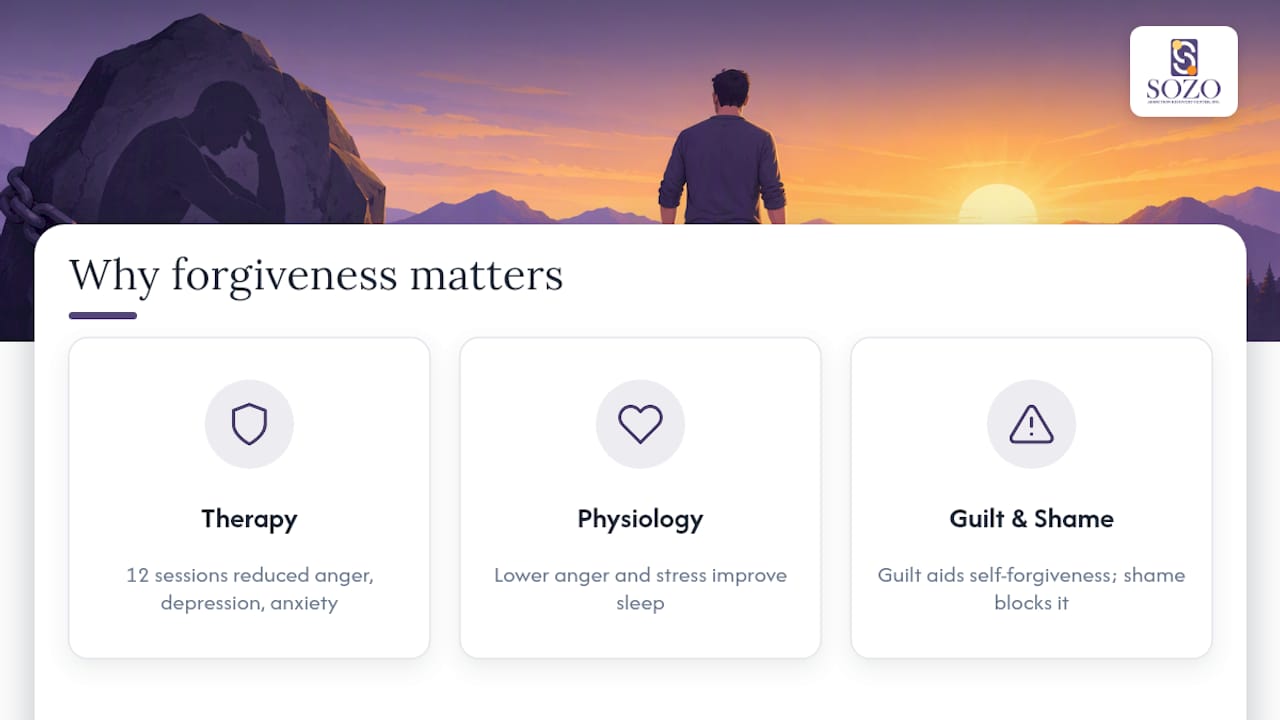
Forgiveness is not a soft, secondary idea in recovery. A randomized clinical trial of inpatient substance-dependent clients found that twelve sessions of Forgiveness Therapy significantly reduced anger, depression, and anxiety compared with routine treatment, and lowered vulnerability to drug use, with many of those gains still present four months later. That kind of durability matters for a man who has tried and relapsed before.
The physiological picture backs this up. Lower anger and reduced stress tend to bring better sleep and calmer physical states, both of which support the kind of steady emotional regulation that sobriety depends on.
Guilt and shame are not the same force, and recovery depends on knowing the difference. A study of 133 people in residential treatment found that guilt was positively associated with self-forgiveness, while shame strongly inhibited it, with acceptance acting as the bridge that helped people move past shame’s grip. Guilt says “I did something wrong” and can motivate repair. Shame says “I am something wrong,” and it tends to isolate a man right at the moment he needs connection most. Self-forgiveness interrupts that isolation before it turns into relapse.
A clinical trial found forgiveness therapy lowered vulnerability to drug use in inpatient clients, with benefits still measurable at four months. (source)
Self-forgiveness: why it’s often the hardest step
Self-forgiveness is different from forgiving someone else. It asks a man to hold two things at once: full honesty about the harm he caused, and permission to stop punishing himself for it. Neither piece works without the other. Genuine self-forgiveness tends to involve three components: honest remorse, some form of apology or amends, and a real recommitment to change going forward. Skip any one of those and the process tends to collapse back into either denial or self-punishment.
Evidence suggests this work matters beyond feeling better. Increases in self-forgiveness have been linked to improved substance use outcomes independent of 12-step involvement, according to empirical reviews of forgiveness and recovery, suggesting this is not just an emotional nicety, but a mechanism tied to staying sober.
A few starting practices, small and repeatable, tend to work better than one big emotional breakthrough:
- Write a short apology plan for one specific harm, naming what happened, what you take responsibility for, and what changes going forward, even if you never send it.
- Build a daily self-compassion ritual, as simple as naming one thing you did today that reflected the man you’re trying to become.
- Practice acceptance-based reframing: instead of “I am a failure,” try “I failed at this, and I am still capable of change.”
Pro Tip: Write your self-forgiveness reflection by hand rather than typing it. The slower pace tends to surface feelings a quick note skips past.
Forgiving others without losing your footing
Forgiveness of someone else comes in two forms, and mixing them up causes real damage. Decisional forgiveness means choosing to let go of the desire for revenge and to stop rehearsing the wrong. Emotional forgiveness means the anger itself has actually cooled. A man can offer the first without the second yet to arrive, and forgiveness never requires reconciliation. You can forgive a parent, an ex-spouse, or an old friend and still choose no contact.
A safer sequence tends to hold up better than jumping straight to a conversation:
- Process the feelings first, alone or with a therapist, before deciding whether contact is wise.
- Decide your boundaries in advance: what contact, if any, you’re willing to have, and what you are not.
- Choose mediated contact (a therapist present, a written letter) or no contact at all when direct conversation carries real risk.
For men who survived abuse or who remain in contact with someone who still poses a risk, safety comes first. Guidance on anger management from clinical practice cautions against pushing reconciliation early, since a failed attempt at amends can deepen guilt rather than relieve it. Trauma-focused therapy before any forgiveness exercise that reopens old memory is often the wiser path.
Practical techniques you can start using this week
Structured exercises tend to outperform vague good intentions, and several have real trial evidence behind them.
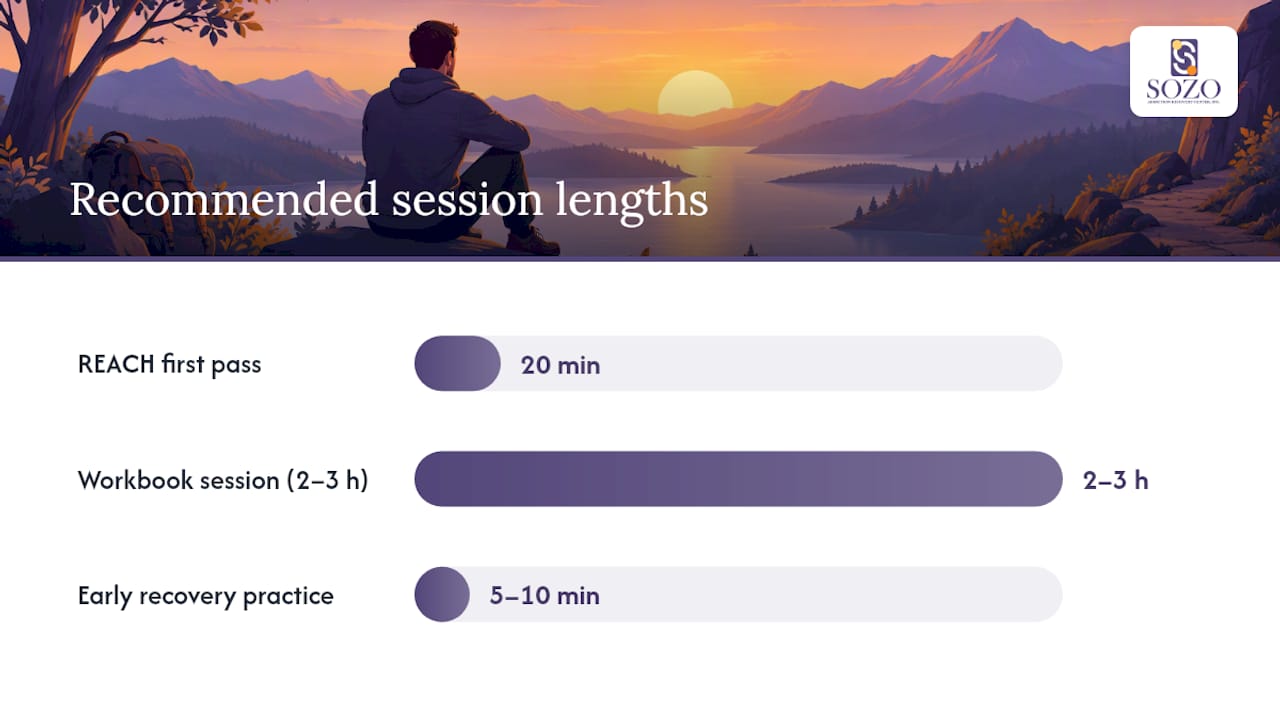
- Try REACH. Harvard Health outlines a five-step method: Recall the hurt honestly, Empathize with the other person’s perspective, offer an Altruistic gift of forgiveness, Commit to that choice, and Hold onto it when doubt creeps back in. Twenty minutes with a notebook is enough for a first pass.
- Work through a brief workbook. A multisite randomized trial of a self-directed forgiveness workbook involving 4,598 participants found that two to three hours of guided exercises produced measurable reductions in unforgiveness, depression, and anxiety within two weeks.
- Journal with a specific prompt, such as “What would I need to believe about myself to let this go?” rather than a general “how do I feel today” entry.
- Anchor with mindfulness. Elements borrowed from mindfulness-based relapse prevention, like noticing a resentment arise without acting on it, help create space between the feeling and the next decision.
A multisite trial of nearly 4,600 participants found a short, self-directed forgiveness workbook produced measurable drops in depression and anxiety after just two weeks. (source)
Early in recovery, keep exercises short and low-intensity, five to ten minutes, and skip anything that surfaces trauma without a therapist present. Later in recovery, once sobriety feels steadier, longer workbook sessions and direct conversations become more realistic.
When to bring in professional support
Self-directed exercises help a great deal, but they are not a substitute for clinical care when trauma or instability is present. Signs that professional help is needed usually include recurring flashbacks, relapse tied to a specific unresolved relationship, or forgiveness exercises that leave a man more agitated rather than calmer.
- Individual therapy fits best when trauma history, active mental illness, or unstable sobriety complicates the picture.
- Forgiveness-focused therapy, mindfulness-based relapse prevention, and 12-step or faith-based groups often work well together rather than as competing paths.
- When talking to a clinician, ask directly whether forgiveness work fits your treatment plan and how they sequence it alongside sobriety stabilization.
Progress, not perfection, in the forgiveness process
Setbacks are part of this work, not proof it isn’t working. NIAAA guidance frames recovery as a marathon, not a sprint, recommending compassionate, non-shaming responses to lapses rather than treating one hard day as failure. A man doesn’t have to feel finished with forgiveness to be making progress with it. Small, honest practices, repeated without self-punishment, tend to matter more than one dramatic turning point. For those who find it meaningful, prayer or a faith community can offer steady company along the way, though it is never the only route through.
Ty
How a faith-based recovery program can support this work
Forgiveness work goes deeper with structure and company around it, and that is where a program like Residential Treatment at SOZO Recovery Center becomes useful. SOZO combines clinical dual diagnosis care with 12-step and biblical principles, giving a man both the therapeutic tools and the spiritual framework to work through self-forgiveness and interpersonal forgiveness without doing it alone.
| Program | Best fit |
|---|---|
| Residential Treatment | Men needing round-the-clock structure for deep emotional work |
| Partial Hospitalization | Men stepping down who still need daily clinical support |
| Intensive Outpatient | Men balancing treatment with work or family responsibilities |
| Sober Living | Men practicing forgiveness and accountability in daily community life |
Every plan starts with a conversation with admissions about fit, insurance, and clinical needs. If you are ready to talk it through, reach out about Residential Treatment today.
Sources
- Effects of Forgiveness Therapy on Anger, Mood, and Vulnerability to Substance Use Among Inpatient Substance-Dependent Clients
- A multisite randomized trial of a self-directed forgiveness workbook
- Shame, guilt, and self-forgiveness in residential treatment samples
- The power of forgiveness: Harvard Health
- Support recovery: It’s a marathon, not a sprint: NIAAA
FAQ
What are the 4 R’s of forgiveness?
Definitions vary across programs, but many forgiveness frameworks emphasize recognizing the hurt, taking responsibility where it applies, releasing resentment, and recommitting to changed behavior. The REACH method described by Harvard Health offers a closely related five-step version many clinicians use instead.
What are some practical steps to forgive others?
Start by processing your own feelings before deciding on contact, then set clear boundaries about what interaction, if any, feels safe. Decisional forgiveness (choosing to let go of revenge) can happen well before emotional forgiveness catches up, and reconciliation is never required.
How do you forgive without forgetting?
Forgiveness does not erase memory, and it does not require pretending harm never happened. It means choosing not to let that memory drive resentment or retaliation going forward, while still protecting yourself with boundaries where needed.
What does forgiveness look like in daily practice?
It often looks like a short journaling habit, a completed REACH reflection, or a brief workbook exercise rather than one dramatic moment. A multisite trial found even a few hours of structured self-directed work produced measurable improvement within two weeks.
Does forgiveness actually help with sobriety?
Evidence points that way. A randomized trial found Forgiveness Therapy reduced anger, anxiety, and vulnerability to drug use among inpatient clients, with effects still present four months later.