


Yes. Blue Cross Blue Shield covers medically necessary addiction treatment, including detox, inpatient or residential care, PHP, IOP, outpatient therapy, and FDA-approved medication-assisted treatment (MAT). Coverage details vary by your specific plan and state licensee, but the baseline protection is real and legally required for most policies.
Before you commit to a facility, take three steps:
- Call the number on the back of your BCBS card and ask specifically about behavioral health and substance use disorder benefits.
- Have the treatment facility’s admissions team run a benefits verification on your behalf. They do this daily and know what to ask.
- Request written confirmation of any coverage details you’re given, including authorization numbers and expected out-of-pocket costs.
Table of Contents
- What BCBS Typically Covers Across the Continuum of Care
- How Coverage and Costs Differ by Plan Type and Licensee
- How Do You Verify Your BCBS Benefits Before Admission?
- What Happens During Prior Authorization and How Do You Appeal a Denial?
- How SOZO Recovery Center Handles BCBS Verification for You
- Start Verification With a Center Built for BCBS Members
- Sources
- FAQ
What BCBS Typically Covers Across the Continuum of Care
Blue Cross Blue Shield rehab coverage follows the treatment continuum defined by the ASAM Criteria, the framework most licensees use to decide what level of care fits your clinical picture. Medical detox sits at the top of urgency because withdrawal from alcohol or certain sedatives can be dangerous without supervision. Insurers typically review detox authorization every few days rather than issuing a blanket approval for the full stay.
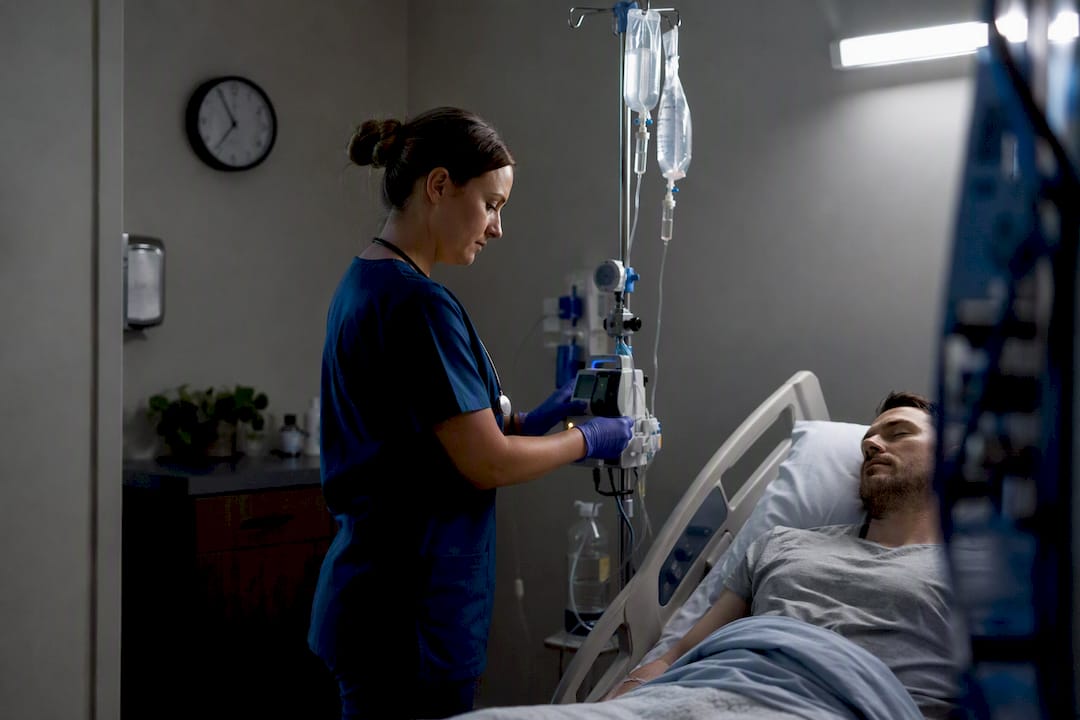
Residential and inpatient treatment usually gets authorized in blocks, often starting with an initial period of about one to two weeks with reassessment, and total stays may vary widely depending on clinical progress and documented medical necessity.
Partial hospitalization programs (PHP) and intensive outpatient programs (IOP) often serve as a step-down from residential care, or as a starting point for people who don’t need 24-hour supervision. These programs run several hours a day, several days a week, and BCBS Blue Cross Blue Shield rehab coverage generally treats them as medically appropriate alternatives to a longer inpatient stay when clinical criteria support it.
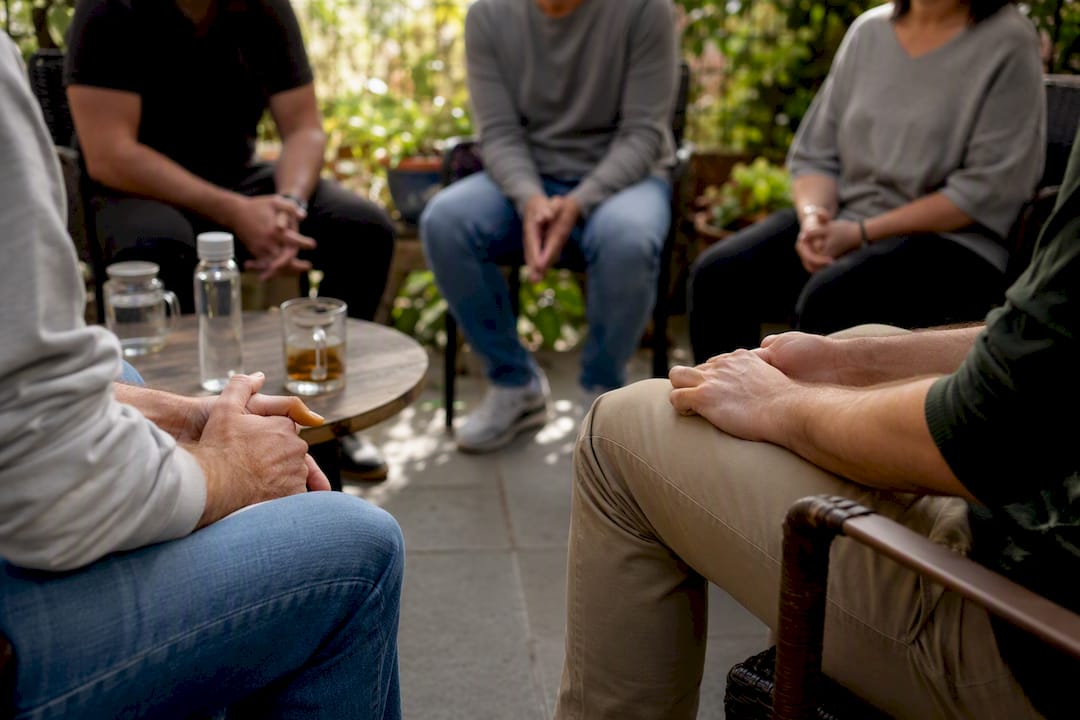
Outpatient therapy and MAT round out the continuum. SAMHSA documents MAT, which includes buprenorphine, methadone, and naltrexone, as a standard, evidence-based component of substance use disorder treatment, not an optional add-on.
Coverage typically extends to:
- Medically supervised detox and withdrawal management
- Residential and inpatient treatment
- PHP and IOP programming
- Outpatient counseling and group therapy
- MAT prescribing and monitoring
- Integrated dual-diagnosis care for co-occurring mental health conditions
How Coverage and Costs Differ by Plan Type and Licensee
Your plan type changes how much flexibility and cost protection you get. PPO plans let you see out-of-network providers, but you risk balance billing and higher coinsurance if the facility isn’t contracted with BCBS. HMO plans generally require in-network care and a referral, trading flexibility for lower predictable costs.
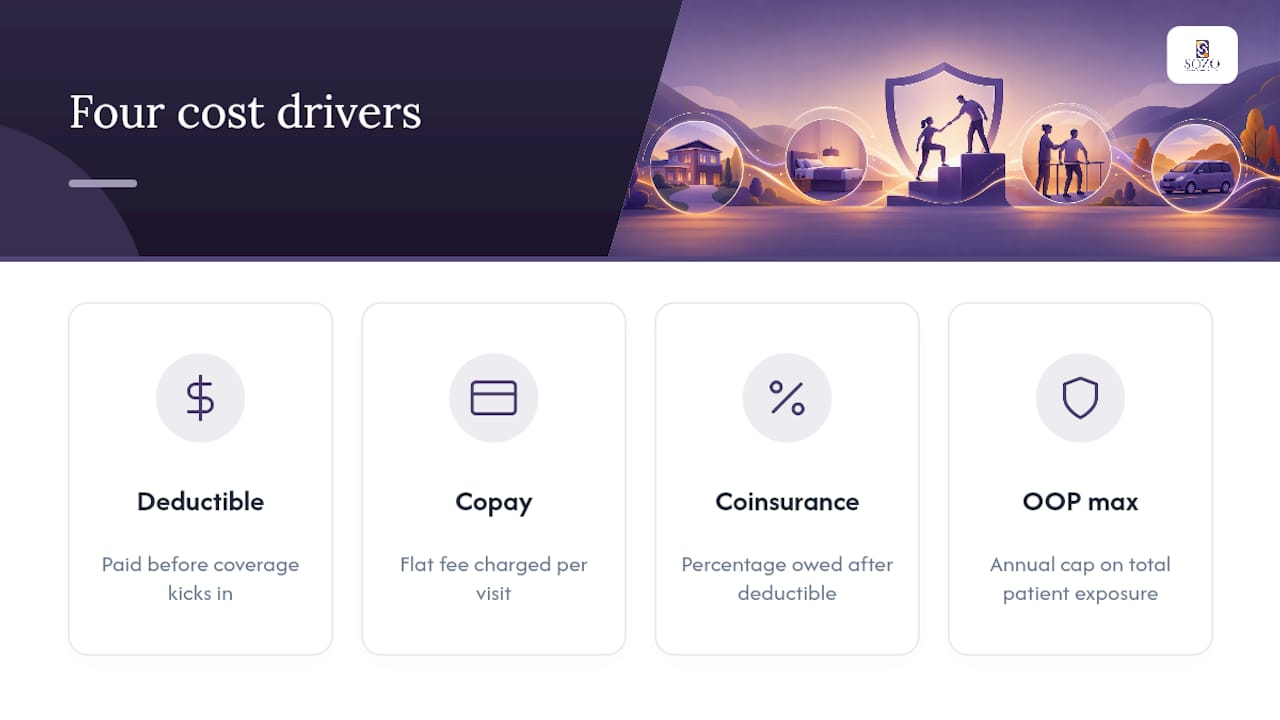
Four numbers drive your actual out-of-pocket cost: the deductible you pay before coverage kicks in, the copay or flat fee per visit, the coinsurance percentage you owe after the deductible, and the annual out-of-pocket maximum that caps your total exposure for the plan year.
For an inpatient stay of around one month, in-network out-of-pocket costs can vary from a few hundred dollars to several thousand, depending heavily on whether you’ve already met your deductible and how your specific licensee structures coinsurance. Out-of-network costs for the same stay can be significantly higher because balance billing isn’t capped by your plan’s negotiated rates.
BCBS operates through independent state licensees, so blue cross rehab coverage in Arkansas can look different from a policy issued in another state, even under the same parent brand. The BlueCard program lets you access in-network care when traveling or living away from your home plan’s service area, which matters if you’re considering treatment outside your home state. Federal Employee Program (FEP) members often get more generous terms. Some FEP products waive prior authorization for the first 28 days of inpatient substance use treatment, so identify yourself as an FEP member early in any verification call.
How Do You Verify Your BCBS Benefits Before Admission?
Verification takes fifteen minutes on the phone if you come prepared. Here’s the order that works:
- Gather your member ID number, group number, and the BIN/prefix from your insurance card.
- Write down the specific facility name and the level of care you’re considering (detox, residential, PHP, IOP, or outpatient).
- Call the member services number on your card, or ask the treatment facility to call on your behalf, which most admissions teams do routinely.
- Ask directly: “Is this facility in-network for behavioral health and substance use disorder services under my plan?”
- Ask whether prior authorization is required, and if so, what clinical documentation the utilization review team needs.
- Ask for an estimate of your coinsurance, copay, and how much of your deductible and out-of-pocket maximum you’ve already met this year.
- Request a reference number for the call and the representative’s name.
- Ask for written confirmation, either by fax, email, or the online member portal, and save it.
Pro Tip: Never rely on a verbal “yes, you’re covered” alone. Insurance representatives routinely note that verbal quotes aren’t a guarantee of payment, so the written confirmation is what protects you if a claim gets disputed later.
What Happens During Prior Authorization and How Do You Appeal a Denial?
Most inpatient and detox admissions require prior authorization, and BCBS licensees lean on the ASAM Criteria to judge medical necessity. That’s not a one-time approval. Concurrent utilization review typically happens every few days during an inpatient stay, with the facility’s clinical team submitting updated documentation to justify continued care.
Initial denials happen for predictable reasons: missing clinical documentation, disagreement over which level of care is medically necessary, or confusion over network status. Industry reporting on BCBS rehab authorizations suggests many of these initial denials get overturned once a facility resubmits with fuller ASAM-based documentation.
If you’re denied, you have real recourse:
- Request the specific denial reason in writing.
- Have your facility’s clinical team gather and resubmit records addressing that exact reason.
- File a formal internal appeal through your plan’s process.
- Request an external review if the internal appeal fails.
The Department of Labor’s 2024 MHPAEA final rule strengthened enforcement against arbitrary denials of substance use disorder claims, meaning plans face more scrutiny for treating addiction coverage more restrictively than comparable medical care. That parity protection is on your side when you appeal.
How SOZO Recovery Center Handles BCBS Verification for You
SOZO Recovery Center’s admissions team runs full benefits verification before you ever set foot on campus, handling the paperwork most people find confusing on their own. We check network status, confirm whether prior authorization is required, and estimate your likely coinsurance and copay based on what BCBS tells us about your specific plan.
Because SOZO builds treatment plans around ASAM placement criteria, our clinical documentation is structured the way BCBS utilization reviewers expect it. That reduces back-and-forth during authorization and speeds up the concurrent review process for residential and outpatient stays.
A man arriving for detox doesn’t need to also become his own insurance advocate. That’s work our admissions team does so he can focus on the first hard days of recovery.
Services BCBS members commonly access through SOZO include:
- Residential and inpatient treatment with dual-diagnosis clinical care
- Outpatient and intensive outpatient programming
- MAT referrals for men who need medication support alongside counseling
- Faith-integrated care combining the 12-step model with biblical principles
Pro Tip: If you’re appealing a denial, ask SOZO’s admissions team what clinical records they can provide immediately. Having that documentation ready before you file speeds up the whole appeal.
Author Perspective: Quick Advice From Ty at SOZO
Speed matters most at detox and inpatient admission. That’s when delays cost lives, not paperwork points. Further down the continuum, at IOP or outpatient, taking an extra day to confirm in-network status saves real money. Watch for out-of-network surprise bills before you sign anything. If it happens anyway, you still have appeal rights under federal parity law.
— Ty
BCBS covers medically necessary addiction treatment across the full continuum, but the amount you pay depends on verifying network status and authorization requirements before admission.
| Point | Details |
|---|---|
| Coverage exists by law | ACA essential health benefit rules require many BCBS plans to cover substance use disorder treatment. |
| Verify before you commit | Confirm in-network status, prior authorization needs, and cost estimates in writing before admission. |
| Expect utilization review | Inpatient and detox stays face concurrent review every few days, not one-time approval. |
| Appeals often succeed | Denials are frequently overturned once ASAM-based clinical documentation is resubmitted. |
| SOZO handles verification | SOZO Recovery Center’s admissions team runs BCBS benefits checks and manages authorization paperwork directly. |
Start Verification With a Center Built for BCBS Members
You’ve read what BCBS covers and how to verify it. Sozorecoverycenter turns that knowledge into action for men who need faith-based, clinically sound treatment without weeks of phone tag with an insurance company. Where a general facility might leave you to run your own benefits check, our admissions team does it for you, then builds an ASAM-informed treatment plan that matches what your BCBS plan is likely to approve.
If you’re comparing rehabilitation insurance options and want a center that integrates dual-diagnosis clinical care with a Christian, 12-step foundation, our faith-based residential program in Arkansas is built for exactly this moment. For men whose family members worry treatment costs will be unclear or unmanageable, start by exploring admissions and asking our team to verify your BCBS benefits today. You can also read more about how insurance coverage for addiction treatment works before you make the call.
This article is general information, not a substitute for advice from a qualified doctor. Consult a qualified healthcare professional about your own circumstances before acting on anything here.
Sources
For plan-specific details and appeal rights, consult the Department of Labor’s parity enforcement statement, CMS’s parity overview, Healthcare, and SAMHSA’s treatment locator. FEP members should also review FEPBlue’s benefit plans for enhanced inpatient terms.
- U.S. Department of Labor — Statement on enforcement of the MHPAEA final rule
- SAMHSA — Find help by disorder
- ASAM Criteria overview (NCBI Bookshelf)
FAQ
Does Blue Cross Blue Shield Cover Physical Rehab?
BCBS blue cross blue shield rehab coverage in the addiction treatment sense covers detox, residential, PHP, IOP, and outpatient substance use disorder care as medically necessary; physical rehabilitation therapy (physical therapy) is a separate benefit category with its own authorization rules.
How Long Will Insurance Pay for Inpatient Rehab?
Length of coverage depends on medical necessity, established through concurrent utilization review every few days rather than a single approval; total stays may vary widely depending on clinical progress and documented medical necessity.
Does Insurance Typically Cover Rehab?
Most BCBS plans are required to cover substance use disorder treatment as an essential health benefit under the ACA, though specific coverage details, network requirements, and cost sharing vary by plan and licensee.
How Do I Know if My BCBS Plan Covers Therapy?
Call the member services number on your insurance card, ask specifically about behavioral health outpatient therapy benefits, and request written confirmation of any coverage details, including copay and session limits.
Does Ambetter Cover Rehab Similarly to BCBS?
Ambetter rehab coverage generally follows the same ACA essential health benefit requirements as BCBS, covering substance use disorder treatment across the continuum, though specific network rules, copays, and authorization requirements differ by insurer and plan.
Recommended
- Does Insurance Cover Rehab in Arkansas? What Ambetter, BlueCross BlueShield, and QualChoice Cover – SOZO Addiction Recovery Center
- Does Insurance Cover Rehab? Your Guide to Addiction Treatment Costs | SOZO Recovery Center
- Maximize Addiction Treatment Insurance Coverage in the USA
- Out of State Rehab: Your 2026 Treatment Guide