


Call the Arkansas Mental Health and Addiction Support Line at 1-844-763-0198 during business hours to find a licensed provider near you. If the person is in immediate danger, call or text 988 or call 911 right now. Either line connects you to local crisis teams, hospitals, or community mental health centers that can begin the placement process today.
TL;DR:
- Immediate intervention requires calling 988 or 911 if there is a risk of harm, and contacting the Arkansas DHS support line during business hours for assessment.
- Finding treatment involves contacting state-funded and private providers, ensuring they accept insurance or Medicaid, and being prepared with recent behavior and medical information.
- Clinicians primarily use the ASAM continuum to match care levels, with medical detox for withdrawal risks, residential or partial hospitalization for structured care, and outpatient services for ongoing support.
- Involuntary admission is limited to cases of clear danger or medical impairment, requiring thorough documentation of recent behavior and legal criteria, often involving emergency evaluation.
- Preparing for intake includes gathering medication details, recent substance use history, insurance information, and clarifying treatment options and facility capabilities beforehand.
Table of Contents
- Immediate steps to take when someone needs help now
- Where to find verified treatment providers across Arkansas
- Matching the level of care to what he actually needs
- What happens when someone won’t go voluntarily
- Getting ready for the intake appointment
- How insurance and Medicaid shape what’s actually available
- A local option: how SOZO Recovery Center fits into this picture
- A note from someone who has walked alongside these calls
- How to reach SOZO and start the conversation
- Sources
- FAQ
Immediate steps to take when someone needs help now
The first hours matter most, and having a clear order of operations helps you act instead of freeze.
- If the person has expressed intent to harm themselves or someone else, call or text 988 or call 911, and remove firearms, medications, or other means of harm if it is safe to do so.
- Call the Arkansas DHS support line at 1-844-763-0198, available Monday through Friday from 8:00 a.m. to 5:00 p.m., and have the person’s age, county, insurance status, and recent substance use history ready.
- Ask whether a mobile crisis team or hospital transport is appropriate if the person will not go voluntarily.
- Write down recent behavior, current medications, and any legal issues such as pending charges, since intake staff will ask.
Our guide on helping a loved one with addiction walks through these conversations in more depth.
Pro Tip: A short, dated list of recent incidents moves an intake conversation along far faster than trying to explain the whole history from memory.
Where to find verified treatment providers across Arkansas
Arkansas offers several official channels for locating a provider, and using more than one at once often shortens the wait.
- Start with the Arkansas DHS treatment resources page and the 1-844-763-0198 line for regional, state-funded referrals.
- Use SAMHSA’s FindTreatment.gov directory or call the national helpline at 1-800-662-4357 for after-hours help or a second opinion on options.
- Contact your regional community mental health center, since Arkansas is divided into catchment areas that each serve a defined set of counties.
- Confirm the provider is currently enrolled with Medicaid or your insurer before you drive, since enrollment status changes and a call can save a wasted trip.
Our step-by-step guide to finding the right rehab in Arkansas covers how to compare providers once you have a shortlist.
Matching the level of care to what he actually needs
Clinicians in Arkansas generally use the ASAM continuum as the framework for deciding where someone belongs, weighing withdrawal risk, medical needs, and living situation rather than picking a level of care by habit, as explained by Behavioral Health & Substance Abuse Treatment | ETS.
- Medical detox is the starting point when withdrawal carries physical risk, and most residential programs require a completed detox referral before admission.
- Residential treatment suits someone who needs a structured, live-in setting away from daily triggers.
- Partial hospitalization provides full days of clinical programming while the person sleeps at home or in sober housing.
- Intensive outpatient and standard outpatient therapy fit someone who can maintain work or family responsibilities while attending scheduled sessions.
- Sober living offers a supportive, substance-free household during the transition back to independent life.
Our overview of addiction treatment options in Arkansas breaks down what each level looks like day to day.
What happens when someone won’t go voluntarily
Arkansas law limits involuntary admission to specific situations, and families should understand the boundaries before assuming a hospital or crisis unit can simply take someone in against their will. Act 383 of 2025 clarified the criteria for involuntary admission, including behavioral health impairment caused by an underlying medical condition and a defined standard for what counts as a clear and present danger. Crisis stabilization units in Arkansas are required to provide continuous 24-hour evaluation and medically supervised detox when it is needed, seven days a week. Under the law, an initial evaluation period typically runs up to 72 hours before further steps are decided.
A family calling to request a welfare check or emergency evaluation should be ready to describe specific, recent behavior rather than general concern.
Call 911 or your county sheriff’s office to request a welfare check, or bring the person directly to a hospital emergency department for evaluation if they will come along.
Getting ready for the intake appointment
A smoother intake usually comes down to preparation, not luck.
- Gather a list of current medications, dosages, and any known allergies.
- Write a short timeline of recent substance use, overdoses, or hospitalizations.
- Bring identification, insurance card, and any prior discharge paperwork from treatment.
- Ask the intake clinician directly whether the facility handles detox on site, treats co-occurring mental health conditions, and what happens if a higher level of care is needed later.
- Pack comfortable clothing, toiletries, and leave valuables at home, since most residential programs have limits on personal items.
Consent matters here too. An adult generally has to agree to treatment himself, though family members can share information and advocate during the call even when they cannot make the decision for him.
How insurance and Medicaid shape what’s actually available
Coverage rarely comes down to a simple yes or no. Arkansas Medicaid covers certain counseling and crisis services, but only when the provider is enrolled and certified, and certified providers must maintain emergency response capability around the clock.
- Call the number on the back of the insurance card to ask for a list of in-network behavioral health providers before you commit to a facility.
- Expect a medical necessity review, since insurers and Medicaid both require documentation that the requested level of care matches clinical need.
- Prior authorization can slow placement by a day or more, so ask the facility’s admissions team to start that paperwork immediately.
- If authorization stalls, call DHS or your insurer’s grievance line directly rather than waiting on hold for a callback.
Our page on insurance and rehab coverage in Arkansas explains how private plans like BlueCross BlueShield, Ambetter, and QualChoice typically process these requests.
A local option: how SOZO Recovery Center fits into this picture
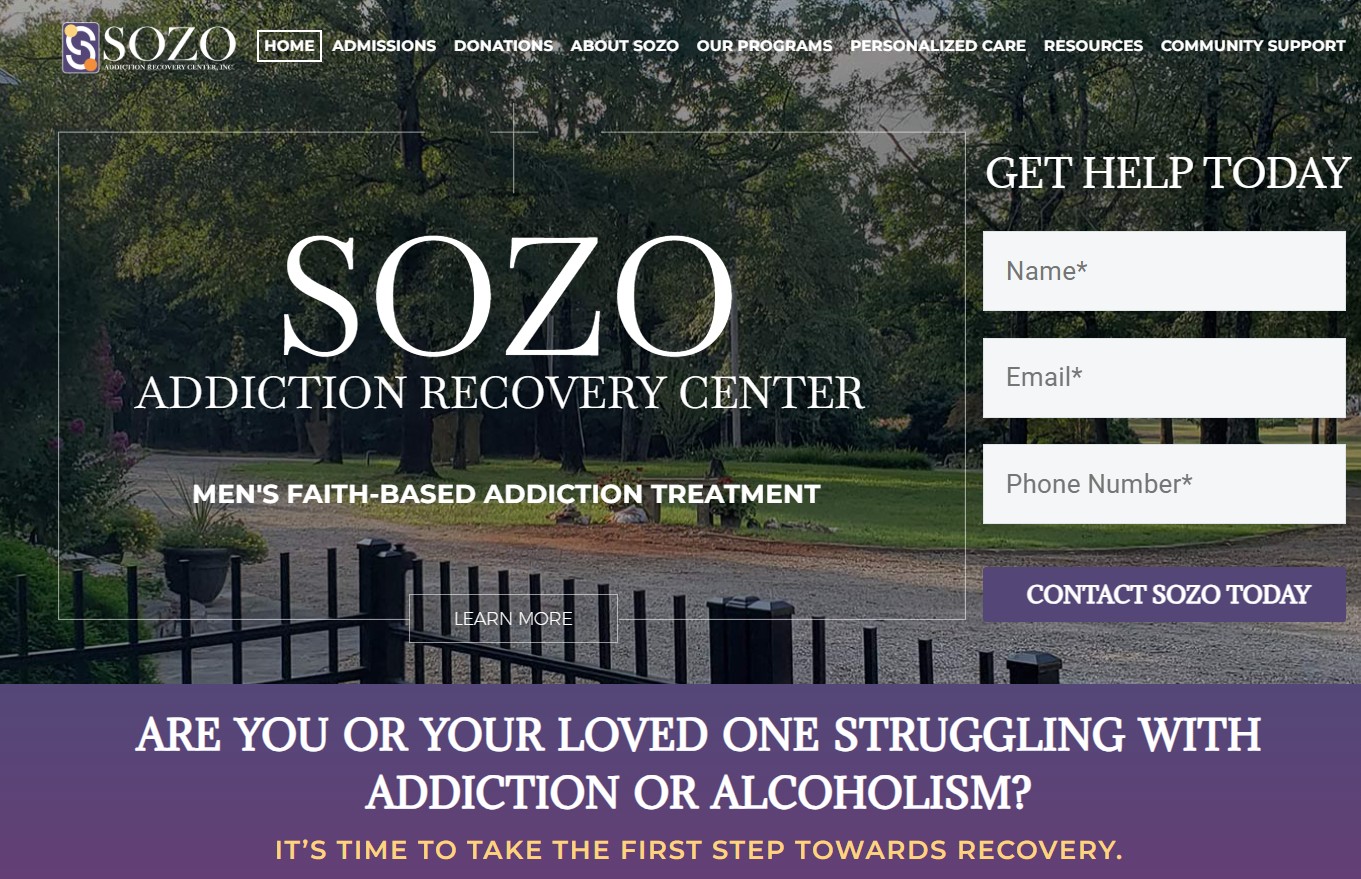
A local center offers residential treatment, partial hospitalization, intensive outpatient, outpatient care, medical detox placement, sober living, and dual diagnosis care for men. Treatment plans are built using established clinical criteria and combine clinical care with faith-based programming rooted in biblical principles and the 12-step model. A family deciding whether SOZO fits should ask admissions how the program handles co-occurring mental health conditions and what a typical week of programming includes.

Pro Tip: Ask any facility you’re considering how quickly they can complete a medical necessity review, since that single step often determines how fast admission happens.
A note from someone who has walked alongside these calls
Reaching out for a man you love is one of the hardest calls you’ll make, and there’s no clean, easy version of it. Keep 988 and the DHS line close, because those two numbers cover almost every situation you’ll face this week. Take care of yourself in the process too. Our family guide to supporting recovery has practical ways to do that without losing yourself in someone else’s crisis.
Ty
How to reach SOZO and start the conversation
Arkansas offers several strong official pathways into treatment, and SOZO exists as one direct, local route built specifically for men who want faith woven into clinical care rather than treated as separate from it.
- Residential Treatment for men who need a structured, live-in setting.
- Medical Detox Placement for those who need supervised withdrawal before residential care begins.
- Partial Hospitalization for full clinical days with home or sober-living nights.
- Intensive Outpatient for men balancing work or family alongside treatment.
Calling admissions typically starts with questions about substance use history, insurance, and timing, and the team can tell you the same day whether a bed is available. If you’re facing an emergency right now, call 988 or 911 first. Once things are stable, reach out to SOZO Recovery Center to talk through whether this is the right next step.
This article is general information, not a substitute for advice from a qualified doctor. Consult a qualified healthcare professional about your own circumstances before acting on anything here.
Sources
- Find Substance Abuse or Mental Health Treatment: Arkansas Department of Human Services
- 20 CAR § 705-203. Crisis stabilization, psychiatric, substance use disorder, and co-occurring services: Code of Arkansas Rules
- Act 383 (2025): Arkansas legislative text
- 988 Suicide & Crisis Lifeline information
FAQ
How do you help someone who refuses treatment?
Keep the conversation focused on specific, recent incidents rather than general worry, since vague appeals are easier to dismiss. A structured, professional-led conversation often succeeds where a solo family confrontation does not, and the Arkansas DHS support line can point you toward local resources for that kind of conversation.
What does rehab cost in Arkansas?
Cost depends mainly on the level of care, length of stay, and whether Medicaid or private insurance covers the provider, since enrolled providers bill differently than out-of-network facilities. Calling the number on your insurance card or the Arkansas DHS support line will give you the clearest picture for your specific coverage.
How do you get someone into rehab against their will?
Arkansas law allows involuntary admission only under specific conditions defined by Act 383 of 2025, including a clear and present danger standard, and typically starts with an emergency evaluation at a hospital or crisis stabilization unit. Call 911 or bring the person to an emergency department, and be ready to describe specific recent behavior rather than general concern.
How can a family support a loved one through addiction?
Families help most by setting clear boundaries, encouraging professional evaluation instead of trying to manage the situation alone, and taking care of their own well-being along the way. Our family guide to supporting recovery covers practical steps for staying steady through the process.