


Choose a Christian rehab that pairs genuine spiritual support with evidence-based clinical care, dual diagnosis capability, and clear medical oversight. Faith alone does not treat withdrawal or co-occurring depression, so the strongest programs combine prayer and scripture with licensed clinicians and documented treatment planning. Use the checklist below on your first call or tour. SOZO Recovery Center is one faith-integrated option among others to consider as you compare programs.
TL;DR:
- Faith-integrated programs should include licensed clinicians and documented treatment plans, not rely solely on prayer or biblical teaching.
- Proper matching of care levels requires assessment of withdrawal risk, mental health history, and whether medical detox or residential treatment is necessary.
- Confirm that the program has valid licensing, accreditation, and staffing credentials, and offers evidence-based therapies like CBT and medication management.
- Ensure the facility supports co-occurring mental health conditions with integrated psychiatric care and clear communication between medical and therapy staff.
- A credible program provides a detailed aftercare plan with housing, outpatient therapy, community supports, and follow-up procedures to maintain progress.
Table of Contents
- What Makes a Rehab Program Christian or Faith-Based
- Matching Your Needs to the Right Level of Care
- Clinical Credentials and Capabilities Worth Confirming
- A Script for Your First Call and the Red Flags to Notice
- What Genuine Faith and Clinical Integration Looks Like
- Why Aftercare Determines Whether Progress Holds
- How SOZO Recovery Center Puts This Checklist Into Practice
- What I Want You to Take From This
- Where SOZO Recovery Center Fits Into Your Search
- Resources to Verify Any Program You Are Considering
- Sources
- FAQ
What Makes a Rehab Program Christian or Faith-Based
A faith-integrated program weaves spiritual practice into a clinical structure that already meets recognized treatment standards. A faith-only program, by contrast, offers prayer, worship, and biblical teaching as the primary intervention, often without licensed therapists, psychiatric support, or individualized treatment plans. The difference matters because addiction frequently involves physical dependence, trauma, and mental health conditions that respond to specific clinical methods, not willpower or belief alone.
In a well-run Christian recovery program, spiritual elements are offered, not imposed, and they run alongside therapy rather than replacing it. A man working through early sobriety might attend group therapy in the morning, meet with a counselor in the afternoon, and join a chaplain-led study or worship service in the evening. Each piece serves a distinct purpose, and the clinical team tracks progress across all of them.
Common faith activities you will see in a credible program include:
- Chapel services or worship gatherings that are optional and scheduled around clinical programming.
- One-on-one chaplaincy or pastoral counseling available alongside licensed therapy, not instead of it.
- Scripture study or faith-based 12-step meetings offered as a complement to evidence-based group therapy.
- Prayer and meditation practices integrated into daily structure without being mandatory.
When a center asks you to sign a consent form for spiritual programming, separate from clinical consent, that is a good sign. It means the staff treats faith as a defined service, coordinated with your overall plan, rather than a blanket assumption about what every client wants.
Matching Your Needs to the Right Level of Care
Addiction treatment is not one program. It is a sequence of care levels, and picking the right starting point saves time and protects safety. The American Society of Addiction Medicine’s criteria, often called ASAM levels, give clinicians a shared framework for matching severity to setting.
- Medical detox: for anyone with physical dependence on alcohol, opioids, or benzodiazepines, where withdrawal carries medical risk. Some centers run detox on-site; many refer clients to a hospital or detox partner first. Ask which model applies before you commit.
- Residential treatment: full-time, live-in care for men who need structure, daily clinical contact, and distance from triggers. This is typically the right starting point after detox for moderate to severe substance use disorders.
- Partial hospitalization (PHP): a full day of clinical programming with the client returning to a residence or sober living home at night. PHP suits men stepping down from residential care or those who need intensive support but have stable housing.
- Intensive outpatient (IOP): several hours of programming a few days a week, built for men managing work or family responsibilities while still in active treatment.
- Outpatient care: the lightest level, usually weekly therapy, appropriate for maintenance after stronger phases of treatment.
- Sober living: a structured, substance-free home that supports the transition out of formal treatment while recovery habits solidify.
A proper intake assessment, not a sales conversation, should determine where you start. If a program places every caller directly into residential treatment without asking about withdrawal risk, prior treatment history, or mental health symptoms, that is worth questioning.
Clinical Credentials and Capabilities Worth Confirming
Spiritual conviction does not substitute for medical training, and a program that blends the two well will have no trouble answering direct questions about its clinical backbone. Before you commit, confirm the following.
- State licensing: every legitimate facility carries a current state license to operate as a substance use treatment provider. Ask to see it or ask for the license number.
- Accreditation: look for CARF or Joint Commission accreditation, which signals outside review of clinical practices, though accreditation itself does not guarantee a good fit.
- Staff credentials: ask who provides therapy (LCSW, LPC, licensed addiction counselor) and who oversees medical care (a physician or psychiatric nurse practitioner).
- Directory listing: check the program against the National Directory of Drug and Alcohol Use Treatment Facilities. A listing confirms the facility met inclusion criteria and participated in state licensing or survey reporting, but it does not verify the quality of faith integration or outcomes, so treat it as a starting point, not a final answer.
On therapy, ask specifically whether the program offers cognitive behavioral therapy, motivational interviewing, trauma-informed care, and contingency management. NIDA names these among the evidence-based approaches that, combined with medication when indicated, tend to outperform either element alone. A program that cannot describe which of these it uses, or that answers only with general talk of “individual counseling,” has not given you enough information to judge its clinical depth.
Medication matters too. Ask directly whether the program can manage withdrawal medically and whether medications for opioid or alcohol use disorder are available or referred out. NIDA stresses that faith preference should never override medical safety, and that a program unable to provide a needed level of medical care should explain its referral and transfer process clearly.
Pro Tip: Ask the admissions team how a psychiatrist and an addiction counselor communicate about a shared client. A clear answer, such as joint treatment planning meetings or shared clinical notes, is a strong sign of real dual diagnosis capability.
Dual diagnosis care, treating substance use and mental health conditions together rather than separately, deserves its own question. Co-occurring depression, anxiety, or trauma is common, and NIDA’s research on comorbid conditions finds integrated treatment consistently outperforms treating each diagnosis in isolation. Ask whether psychiatric evaluation happens during intake, who prescribes and manages psychiatric medication, and whether therapy addresses both conditions in the same sessions rather than in separate, disconnected tracks.

A Script for Your First Call and the Red Flags to Notice
The first call to a treatment center tells you more than any website. Come prepared with specific questions, and listen for answers that are concrete rather than reassuring.
- What level of care do you recommend for me, and why? A strong answer references a clinical assessment, not a guess based on your first sentence.
- Who provides medical oversight, and is a physician on staff or on call? Listen for a named role, not a vague “our team.”
- Can you manage withdrawal medically, or do you refer out for detox? Either answer can be fine, but it should be clear and specific.
- What therapies make up a typical week? Expect names like CBT, motivational interviewing, or group process therapy, not just “counseling.”
- How do you handle co-occurring mental health conditions? A strong program describes integrated psychiatric care, not a separate add-on.
- How is faith offered, and is it optional? Listen for consent language and flexibility, not a requirement.
- What does a typical discharge and aftercare plan include? Expect housing, outpatient referral, and follow-up contact.
- How do you involve family? Programs with real structure describe specific family sessions or education, not just visiting hours.
- What are your current accreditations and licenses? A program should answer this without hesitation.
- What happens if I need a higher level of care mid-treatment? A credible program has a transfer process, not silence.
Before you call, use Findtreatment to pre-screen basic facts. The confidential, filterable search lets you check a facility’s listed services, payment types, and setting before you invest time in a conversation.
A SAMHSA directory listing confirms licensing or survey participation, not proven outcomes. That distinction means a facility can appear in the directory and still fall short on the clinical depth you need, so the phone call remains essential.
Watch for red flags: refusal to discuss medication options, vague claims about staffing (“our team is highly trained” with no credentials named), or a framing that positions spiritual practice as a replacement for clinical treatment rather than a complement to it. A program that cannot answer a direct medical question clearly is telling you something important.
What Genuine Faith and Clinical Integration Looks Like
The best faith-based programs build integration into their structure rather than treating it as a decoration. A chaplain and a clinical director who meet regularly to coordinate a client’s plan is a stronger signal than a chapel on the property. Spiritually adapted cognitive behavioral therapy, where a licensed therapist incorporates a client’s faith language into standard CBT techniques, is another model worth asking about directly. Spiritually integrated therapy adapts evidence-based methods to a client’s belief system rather than setting clinical work aside.
A faith-based 12-step implementation, where step work is framed through scripture and biblical principles alongside the traditional program, is common and can work well when clinical staff remain involved in tracking progress. Consent matters here too: a program should ask, not assume, whether you want spiritual content woven into your sessions, and document that preference.
Acceptable practices:
- Documented consent for spiritual programming, separate from clinical consent.
- Progress notes that reflect both clinical goals and spiritual growth, reviewed by licensed staff.
- An available non-faith clinical track for clients who prefer it.
Unacceptable practices:
- Spiritual content presented as a requirement for completing treatment.
- No licensed clinician reviewing a client’s overall progress.
- Faith practices substituted for medication or therapy without any clinical discussion.
The goal is coordination, not competition, between the spiritual and clinical sides of care.
Why Aftercare Determines Whether Progress Holds
Treatment creates the conditions for change, but the months after discharge decide whether that change lasts. A credible aftercare plan names specific next steps rather than offering general encouragement to “stay strong.”
Look for these elements in writing before you leave a program:
- A housing pathway, often a sober living placement, with a clear timeline and expectations.
- Scheduled outpatient therapy or IOP sessions already arranged, not left for you to find later.
- Community and faith supports identified by name, such as a specific church, recovery group, or alumni network.
- A case manager or discharge coordinator assigned to follow up after you leave.
Ask how alumni programs work, whether there is an active alumni community, and what relapse prevention planning looks like in practice. Ask, too, whether the program tracks what happens to clients after discharge. Centers cannot ethically promise specific outcomes, but a program that follows up and adjusts its practices based on what it learns is behaving differently than one that loses contact at discharge.
Housing and social support services remain some of the most common and most overlooked recovery supports, and a program that treats them as an afterthought is leaving a gap exactly where relapse risk is highest.
How SOZO Recovery Center Puts This Checklist Into Practice
SOZO Recovery Center, a faith-based men’s addiction treatment program in Hot Springs, Arkansas, structures its care around individualized treatment planning informed by ASAM criteria, the same clinical framework described above for matching severity to level of care. The center states that it addresses substance use and co-occurring mental health conditions together through dual diagnosis care, rather than treating spiritual growth as a stand-alone intervention.
A typical pathway at a program like this begins with an intake assessment that considers withdrawal risk, mental health history, and personal faith background, followed by placement at an appropriate level of care. From there, clinical sessions run alongside biblical teaching integrated with the 12-step model, with spiritual practices offered as part of a coordinated plan rather than a separate track.
Faith and clinical care, held together with intention, can support a man through withdrawal, through grief, and through the slow work of rebuilding trust in himself.
The center describes its setting as peaceful and designed to support a reflective recovery experience, a detail worth weighing against your own preference for pace and environment as you compare programs.
What I Want You to Take From This
Choosing a rehab is a decision made under pressure, often for someone you love, and the instinct to pick the program that feels most comforting is understandable. I would ask you to resist picking on comfort alone. A program’s warmth matters, but it should sit on top of a clinical foundation you can verify with specific questions, not assume from a well-designed website.
If you are evaluating options now, start with the checklist in this article: licensing, staffing, dual diagnosis capability, medication policy, and aftercare planning. Bring a trusted pastor or family member into the conversation if you can. A second set of ears catches details that worry or hope can make easy to miss, and a faith leader who understands your spiritual life can help you judge whether a program’s approach to faith actually fits you.
Ty
Where SOZO Recovery Center Fits Into Your Search
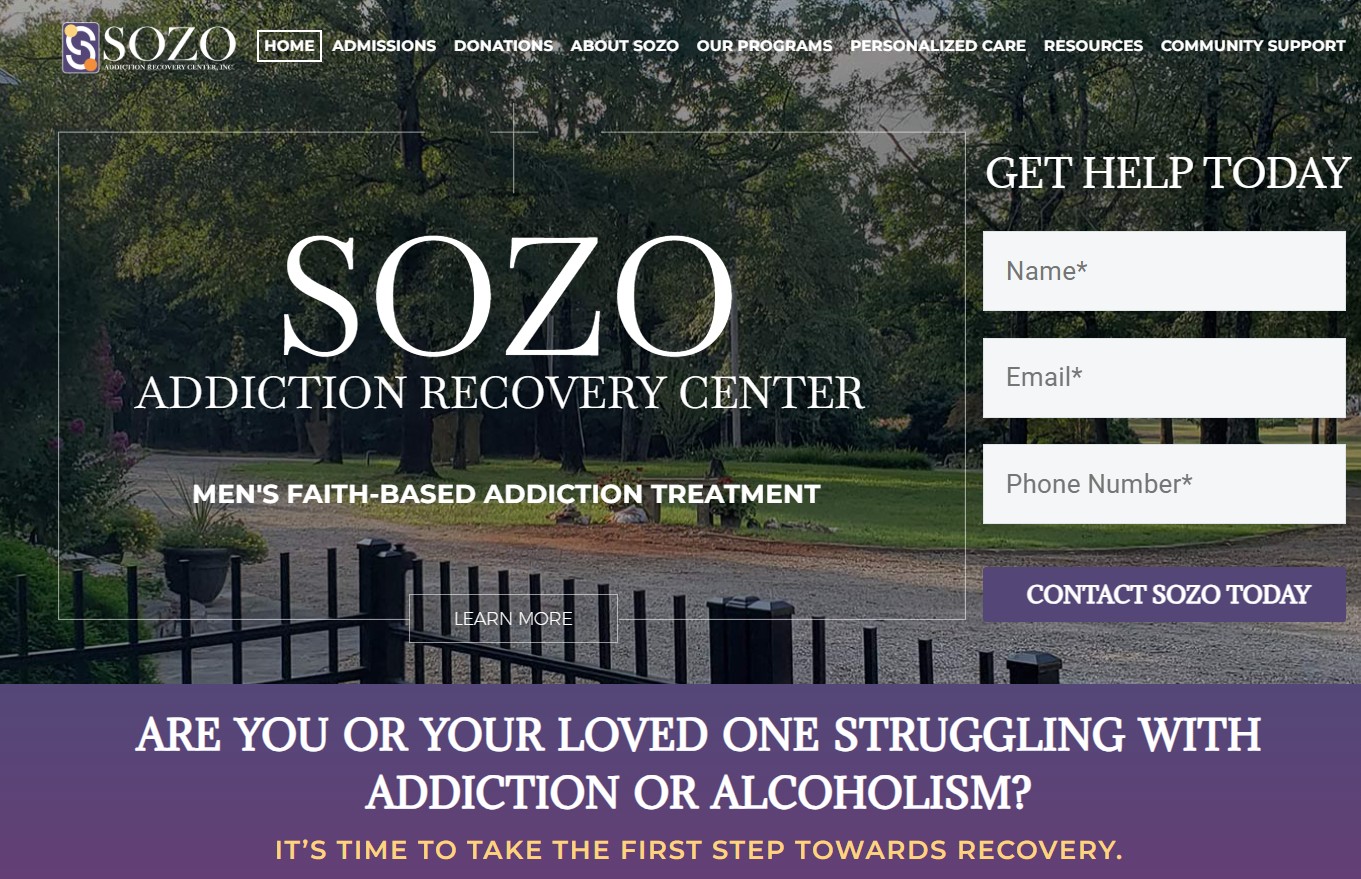
If the checklist above matches what you are looking for, SOZO Recovery Center’s programs map directly onto it. The center offers clinical oversight paired with spiritual care rather than one at the expense of the other, which addresses the exact gap this article has walked through.
-
Residential treatment for men who need full-time structure and daily clinical contact.
-
Partial hospitalization and intensive outpatient programs for stepping down with continued intensity.
-
Medical detox placement coordination for men who need withdrawal managed safely before further treatment.
-
Sober living support for the transition after formal treatment ends.
This is not the only path worth considering, and the right fit depends on your specific clinical needs and personal faith background. If SOZO’s model, ASAM-informed planning with biblical integration in a retreat-like setting, sounds like what you are looking for, you can begin the conversation by reaching out through the residential treatment program page to ask the same questions this article recommends.
Resources to Verify Any Program You Are Considering
Before you commit to any center, faith-based or not, run it through a few outside checks.
- Use the SAMHSA treatment facility directory to confirm a program met licensing and reporting criteria, then verify current details by phone.
- Search Findtreatment to filter by service type, setting, and location, and to review facility detail pages before you call.
- Review NIDA’s guidance on evidence-based therapies and medications to know what questions to ask about clinical methods.
- For medication-specific questions, an overview of medication-assisted treatment explains how detox and medication management typically work.
This article is general information, not a substitute for advice from a qualified doctor. Consult a qualified healthcare professional about your own circumstances before acting on anything here.
Sources
- National Directory of Drug and Alcohol Use Treatment Facilities: 2025
- Findtreatment
- National Institute on Drug Abuse (NIDA)
FAQ
Should a Christian go to rehab?
Yes, seeking clinical treatment does not conflict with Christian faith, and addiction’s physical and psychological effects generally require more than spiritual support alone. Many faith-integrated programs combine licensed clinical care with prayer, scripture, and pastoral support so neither element is sacrificed.
How do I choose a good rehab facility?
Start by confirming state licensing, accreditation, and whether the program offers evidence-based therapies like CBT and motivational interviewing alongside dual diagnosis care. Check the facility against the SAMHSA directory, then ask direct questions about staffing and medical oversight during a call or tour.
At what point should someone go to rehab?
Treatment is appropriate once substance use begins interfering with health, relationships, or daily responsibilities, or when withdrawal symptoms make quitting on your own medically risky. A clinical assessment using ASAM criteria can determine the right level of care, from medical detox through outpatient support.
Is sober living better than rehab?
Sober living and rehab serve different purposes rather than competing as better or worse options. Rehab provides structured clinical treatment for active addiction, while sober living offers a substance-free home environment that supports the transition after formal treatment ends.
What should I ask about faith integration before choosing a program?
Ask whether spiritual programming is optional and documented through separate consent, and whether a licensed clinician coordinates with chaplains or pastoral staff on your overall plan. A program that treats faith as a complement to clinical care, not a replacement for it, is giving you a stronger answer.