


If your son is battling addiction right now, four things matter most: address any immediate safety threat, contact SAMHSA’s National Helpline to find a treatment referral today, set boundaries that stop enabling without cutting off love, and get yourself into a peer-support group, so you have the steadiness to see this through. Everything else can wait until those four are in motion.
TL;DR:
- Immediate safety threats require urgent response, including calling 911 for overdose or severe physical danger, and administering naloxone if available.
- Document incidents such as missed work or arrests before planning treatment or intervention to provide accurate information and support follow-up care.
- Boundaries should involve direct payments for bills and clear help instead of cash, with consistent, calm communication like “I love you, I won’t give you money, but I will help you get into treatment today.”
- Pre-arranging treatment bed, transportation, and paperwork significantly shortens the time between acceptance and admission, increasing the likelihood of follow-through.
- Peer support groups and therapist support are crucial for parents to maintain emotional steadiness and avoid enabling behaviors during their son’s recovery process.
Table of Contents
- Practical Steps for Helping an Addicted Son Today
- When Is It Time to Plan an Intervention?
- Boundaries With an Addicted Son: What to Say and Do
- How to Find the Right Level of Care for Your Son
- Taking Care of Yourself While Supporting Your Son
- Responding to Overdose or Suicide Risk
- What Families Can Expect From SOZO Recovery Center
- A Parent-First Perspective on Getting Your Son Help
- Ready to Talk to SOZO Admissions?
- Helplines and Resources Worth Saving Now
- Sources
- FAQ
Practical Steps for Helping an Addicted Son Today
Helping an addicted son starts with clear eyes, not a rescue plan built on hope. Before you make a single phone call, you need to know what you’re actually dealing with.
Watch for the signs that separate risky use from a genuine crisis: slurred speech combined with slowed breathing, unresponsiveness, aggression toward himself or others, or visible withdrawal symptoms like tremors and vomiting. Any of these calls for emergency response, not a family conversation.
Once immediate safety is confirmed, here’s the order that works:
- Document quietly. Write down dates of missed work, canceled family events, arrests, ER visits, or medications that went missing. This record becomes essential if you plan an intervention or need to explain the situation to a treatment intake coordinator.
- Offer specific, bounded help. Drive him to an intake appointment. Sit with him while he fills out insurance paperwork. Pay a program directly for a copay rather than handing over cash.
- Stop the money that fuels the problem. Swap unrestricted cash for a bus pass, a grocery gift card, or a direct payment to a landlord. NIDA’s most recent data shows drug use patterns shift constantly among young people, which is exactly why a clinical assessment, not a guess based on his mood that week, should guide your next move.
- Line up one concrete next action. A phone number, an appointment time, a name. Vague concern rarely moves anyone toward treatment. A plan does.
When Is It Time to Plan an Intervention?
An intervention isn’t a confrontation staged in anger. It’s a structured, pre-planned meeting designed to move your son from denial toward accepting help, and it works best when treatment is already arranged before anyone sits down in that room.
Consider one when he has refused help repeatedly, when his use has led to legal trouble or a medical emergency, or when his behavior has become unpredictable enough that you’re no longer confident a calm conversation will land. Mayo Clinic’s guidance on interventions stresses that this process works best when it’s planned in advance, not improvised in a moment of crisis.
Build the plan around these steps:
- Assemble a small team of people he trusts, not everyone who’s ever been frustrated with him.
- Gather specific incidents rather than general complaints.
- Arrange a treatment bed and transportation before the conversation happens.
- Rehearse what each person will say, and agree on what happens if he says yes.
Families who pre-book an intake slot and line up a ride often shorten the gap between acceptance and admission, which matters because that waiting period is when resolve tends to crumble.
Pro Tip: If your son has a co-occurring mental health condition or a history of unpredictable behavior, bring in a professional interventionist. A trained third party can de-escalate tension in ways family members, however loving, often can’t.
Boundaries With an Addicted Son: What to Say and Do
Enabling rarely looks like enabling in the moment. It looks like paying his rent again, calling his boss with an excuse, or bailing him out of a legal situation without a single condition attached. Each of these removes a natural consequence that might otherwise push him toward change.
Replace them with boundaries you can actually hold:
- No cash, ever. Offer to pay bills directly instead.
- Scheduled check-ins instead of answering every 2 a.m. call.
- Support tied to a specific action: “I’ll drive you to intake Monday” instead of “I’ll help however you need.”
- A calm, repeatable script: “I love you, and I won’t give you money. I will help you get into treatment today.”
If your other children or your own safety are at risk, that changes the calculation entirely. Staying with relatives temporarily or involving law enforcement isn’t a failure of patience. It’s a boundary too.
How to Find the Right Level of Care for Your Son
Treatment isn’t one-size-fits-all, and knowing the options before you make that first call saves you from getting talked into the wrong program.
- Medical detox manages withdrawal safely under medical supervision, and it’s often the first step for opioid, alcohol, or benzodiazepine dependence.
- Residential treatment provides 24-hour structured care for men who need to step fully away from their environment.
- Partial hospitalization (PHP) offers intensive daily treatment while allowing evenings at home or in sober housing.
- Intensive outpatient (IOP) and standard outpatient fit men who can maintain some daily responsibilities while getting structured support.
- Sober living bridges the gap between residential care and full independence.
Call SAMHSA’s National Helpline at 1-800-662-HELP or search FindTreatment.gov to locate programs near you and confirm what your insurance covers, all in one call. Have his insurance card, a summary of recent incidents, and a current medication list ready. Family members who help manage paperwork and transportation significantly increase the odds an adult child follows through on treatment rather than backing out at the last minute. If insurance coverage is delayed or unclear, ask programs directly about private-pay options or financing so a gap in paperwork doesn’t become a gap in care. When mental health symptoms are present alongside substance use, prioritize a program built for dual diagnosis rather than one that treats addiction in isolation.
Taking Care of Yourself While Supporting Your Son
You cannot pour from an empty cup, and addiction has a way of draining parents faster than almost anything else in family life.
Peer-support groups like Al-Anon, Nar-Anon, and SMART Recovery Family & Friends exist specifically for this. Clinicians consistently point to peer support as a way for parents to stop enabling and hold steadier emotional ground, and a first meeting usually involves nothing more than listening. No one will ask you to share before you’re ready.
- Set a contact schedule with your son so worry doesn’t consume every hour.
- Protect your sleep, even when it feels wrong to rest during a crisis.
- Ask a therapist for short-term support if the weight becomes too heavy to carry alone.
- Loop in siblings gently. They’re often scared and confused, too, and deserve honest, age-appropriate information.
Responding to Overdose or Suicide Risk
Slowed breathing, blue lips, or unresponsiveness means an opioid overdose is possible. Call 911 immediately, administer naloxone if you have it, and follow the dispatcher’s instructions until help arrives.
If your son expresses suicidal thoughts or seems to be in a severe mental health crisis, call or text 988. Save both numbers, along with a trusted contact and his treatment provider, somewhere you can find them in seconds.
- 911: overdose, violence, immediate physical danger
- 988: suicidal thoughts, severe emotional crisis
- Local ER: unclear symptoms that still feel urgent
What Families Can Expect From SOZO Recovery Center
Sozorecoverycenter combines clinical, ASAM-informed treatment planning with a faith-based framework built specifically for men, including those carrying a co-occurring mental health diagnosis alongside addiction. Programs range from residential treatment through medical detox placement referrals, outpatient care, and sober living for the transition afterward. Families are typically brought into the admissions process early, since insurance verification and transport planning both move faster with a parent’s help. Timing for placement varies by program availability and clinical need, and admissions staff can walk you through realistic expectations once your son’s situation is assessed.
A Parent-First Perspective on Getting Your Son Help
Most advice on helping an addicted son treats boundaries and compassion as opposites, as though loving him less firmly is the price of loving him at all. That framing is backwards. The parents who hold the steadiest boundaries are usually the ones with the most emotional capacity left to actually show up when their son is ready for help.
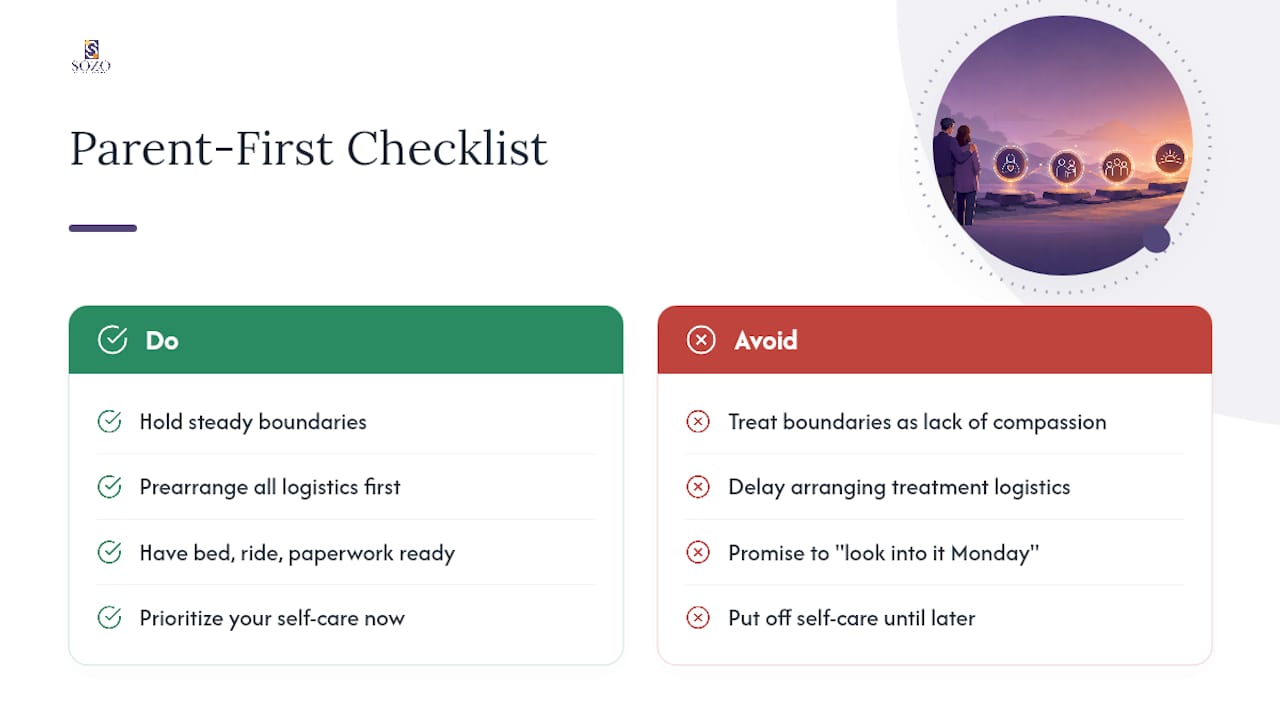
The conventional wisdom also overweights the intervention itself and underweights what happens in the ninety minutes after. A son who says yes to treatment needs a bed, a ride, and paperwork ready that same hour, not a promise to “look into it Monday.” Families who prearrange every logistical piece before the conversation starts see far better follow-through than families who wing it emotionally and scramble logistically.
If there’s one shift I’d ask parents to make, it’s this: stop treating self-care as something you’ll get to once he’s better. Your stability now is part of what makes his recovery possible later. A faith-integrated program, dual-diagnosis care, structured boundaries. None of it works if the parent behind it has nothing left to give.
Ty
Ready to Talk to SOZO Admissions?
This center offers faith-based clinical care for men dealing with addiction and co-occurring mental health diagnoses, integrating spiritual principles with the 12-step model from the start in a small, retreat-style setting.
Programs include residential treatment, medical detox placement referrals, intensive outpatient care, standard outpatient, and sober living for the months after residential care ends. Before you call admissions, gather three things: his insurance information, a brief written summary of recent incidents, and a plan for who will drive him to intake. Having those ready turns a difficult phone call into a fast one. Reach out through SOZO’s residential treatment program page to start the conversation and ask what admission could look like for your son this week.
Helplines and Resources Worth Saving Now
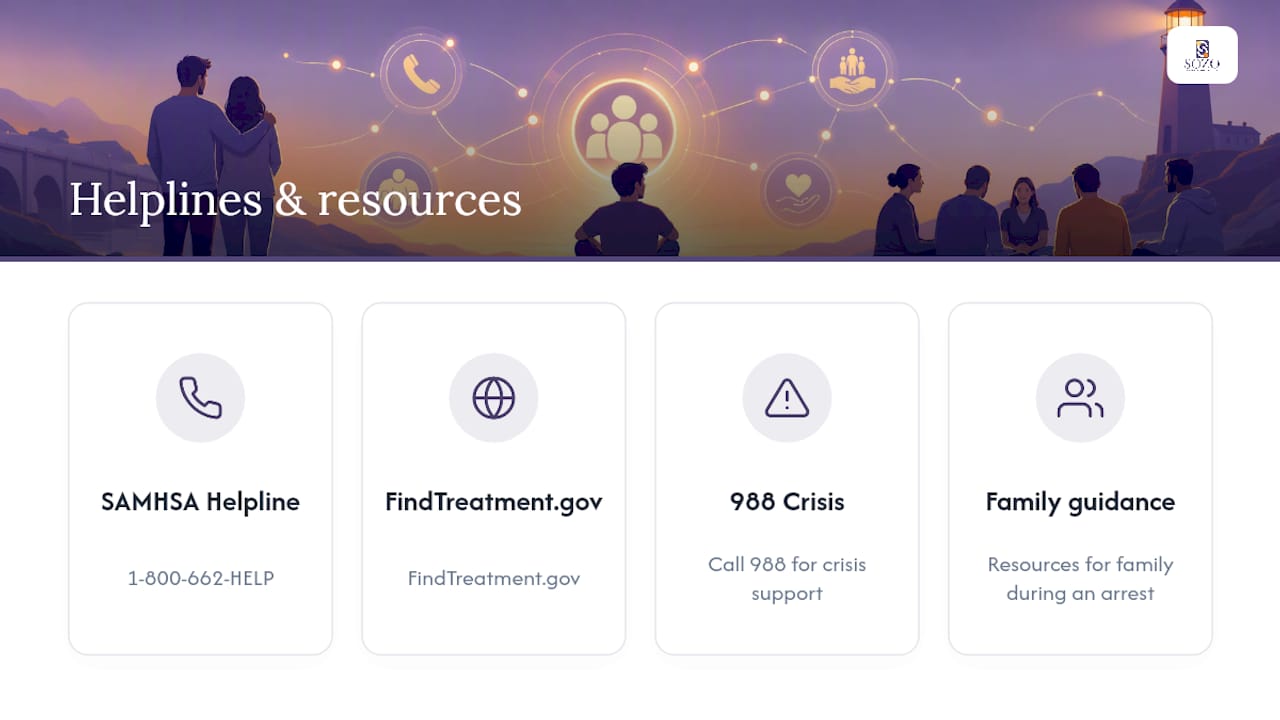
Save SAMHSA’s National Helpline (1-800-662-HELP) and FindTreatment.gov, plus 988 for crisis support. If arrest or legal trouble complicates the picture, resources on immediate family steps during an arrest can help you act fast.
This article is general information, not a substitute for advice from a qualified doctor. Consult a qualified healthcare professional about your own circumstances before acting on anything here.
Sources
- SAMHSA: FAQs
- Mayo Clinic: Intervention: Help a loved one overcome addiction
- Usa
- NIDA: Reported use of most drugs remains low among U.S. teens (2025)
FAQ
How do I help a person struggling with addiction who doesn’t want help?
You can’t force someone into recovery, but you can stop enabling and make treatment easy to say yes to when he’s ready. Set firm boundaries, remove unrestricted cash, and keep a treatment referral number on hand so there’s no delay if his willingness shifts. A structured, professionally guided intervention is often the most effective way to create that window.
How can I set boundaries with my addicted son?
Replace unrestricted financial support with specific, conditional help, like paying a treatment copay directly or offering a ride to intake instead of cash. State your limits calmly and consistently: “I love you, and I won’t give you money, but I will help you get into treatment.” Consistency matters more than intensity.
How can I best support a family member who is drug addicted?
Document incidents, offer logistical help like transportation and paperwork, and connect with programs through SAMHSA’s National Helpline or FindTreatment.gov. Joining a peer-support group like Al-Anon also helps you stay steady enough to support him consistently over time.
How can a mother help an alcoholic son?
The same principles apply regardless of which parent is asking: recognize withdrawal danger signs, remove enabling behaviors, and get a same-day referral through the National Helpline if he’s willing to accept care. Faith-integrated programs like those at Sozorecoverycenter also give mothers a way to involve spiritual support alongside clinical treatment, which some families find eases the conversation about getting help.
When should I call 911 versus 988?
Call 911 for overdose symptoms, violence, or any immediate physical danger. Call or text 988 when the crisis is suicidal thoughts or a severe emotional breakdown rather than a medical emergency.