


For men and families searching out “12-step alternatives,” the answer that fits most often is not a replacement for the 12 steps at all. It is a program that combines Christian spiritual guidance with 12-step counseling and licensed clinical care for co-occurring disorders. Sozorecoverycenter is a direct example of this model. The sections ahead walk through what these programs include, what the evidence actually shows, and how to evaluate one for a specific man’s situation.
TL;DR:
- Faith-based programs integrating Christianity with 12-step facilitation and licensed clinical care often include assessments, therapy, spiritual counseling, medication management, family involvement, and community service.
- Spiritual well-being has been shown to significantly reduce substance use in early recovery, particularly within the first three to four months, but effects diminish over time without ongoing support.
- Effective programs need to coordinate dual diagnosis treatment with licensed staff and ensure spiritual activities are optional rather than mandatory, especially for non-Christian participants.
- Choosing the right program requires confirming onsite treatment for co-occurring conditions, licensed staff presence, explicit use of the ASAM model, clear spiritual participation policies, and comprehensive aftercare offerings.
- Costs vary based on care intensity, with residential treatment lasting 30 to 90 days and insurance verification essential before admission; structured, integrated care often provides better outcomes than disjointed providers.
Table of Contents
- What Does “12-Step Alternatives” Mean in a Faith-Based Context?
- Does Spirituality Actually Improve Recovery Outcomes?
- What Happens During Treatment, Day to Day?
- How Do You Choose the Right Program for Him?
- What Timeline and Costs Should You Expect?
- Why Faith and Clinical Care Have to Work Together, Not Separately
- Start the Conversation With Sozorecoverycenter
- Sources
- FAQ
What Does “12-Step Alternatives” Mean in a Faith-Based Context?
Here, “12-step alternatives” doesn’t point toward secular programs that reject the steps entirely. It points toward Christian-integrated treatment that keeps the 12-step framework but grounds it in biblical principles, staffed by licensed clinicians who treat addiction alongside anxiety, depression, trauma, or other mental health conditions at the same time.
That distinction matters for a family doing research at 11 p.m. after a hard conversation. A purely secular, non-12-step program (think SMART Recovery-style, self-managed models) is a different animal entirely, built for people who want no spiritual framework at all. A faith-based 12-step-integrated program keeps the group structure, sponsor relationships, and step work familiar from Alcoholics Anonymous, but layers Christian counseling, chaplaincy, and prayer directly into the clinical treatment plan.
The core components most of these programs share:
- Assessment and planning using the ASAM Continuum model to match the level of care to the severity of the addiction and any co-occurring diagnosis.
- Individual and group therapy, including formal 12-step facilitation and structured Step study.
- Spiritual counseling, worship, prayer, and meditation woven into the clinical week, not bolted on as an optional Sunday extra.
- Medical and psychiatric care for withdrawal management and mental health treatment.
- Family involvement, since addiction rarely affects just one person in a household.
- Community service and volunteer work, which many programs use to rebuild a man’s sense of purpose outside himself.
These programs run across several settings: residential (live-in treatment), outpatient, intensive outpatient (IOP), partial hospitalization (PHP), and sober living homes for the transition afterward. A related term worth knowing is dual diagnosis care, the clinical standard for treating substance use and mental health conditions together rather than one at a time.
Does Spirituality Actually Improve Recovery Outcomes?
Yes, according to multiple peer-reviewed studies, though the effect has real limits worth understanding before betting an entire treatment decision on it. The 12-step model is already embedded in roughly 73% of U.S. behavioral health treatment services, so a program that folds Christian spirituality into that structure isn’t a fringe experiment. It’s an extension of what most clinical treatment in the country already looks like.
A key figure to know: Higher spiritual well-being was linked to significantly less frequent substance use during early recovery, with the strongest effects showing up in the first 3.5 months after treatment.
That timing detail matters. Spiritual well-being isn’t a permanent inoculation. It’s a lever that works hardest early, which is exactly when relapse risk peaks and exactly when structured aftercare should pick up where the initial spiritual boost fades.
A separate mediational analysis of Alcoholics Anonymous found something mechanistic and useful: increases in spiritual practices partially explained the link between AA attendance and better drinking outcomes. Attending meetings didn’t just create accountability. It changed how people prayed, reflected, and connected, and those changes independently predicted improvement.
A third study, following a largely Black and African American sample, found that greater 12-step involvement predicted fewer substance use consequences for up to about 6.6 months post-treatment, while spiritual well-being’s effect window ran shorter, and effects varied by subgroup.
Three things stand out from this body of research:
- Spiritual well-being functions as a form of recovery capital, a resource that compounds alongside therapy and peer support rather than substituting for either.
- Effects fade over months, not years, so ongoing spiritual and clinical support matters more than a single powerful moment of conversion.
- None of these studies suggest spirituality alone treats a psychiatric condition. Clinical dual-diagnosis care remains the backbone; faith accelerates and reinforces it.
What Happens During Treatment, Day to Day?
A man arriving at a faith-based, 12-step-integrated program should expect a treatment week that looks clinical first, spiritual second, and never one without the other. Intake typically starts with an ASAM-informed assessment covering substance use history, medical risk, and psychiatric symptoms. If withdrawal risk is present, staff coordinate a referral to medical detox before residential programming begins. A psychiatric evaluation screens for co-occurring conditions like depression, PTSD, or bipolar disorder, since untreated mental illness is one of the most common causes of relapse after otherwise successful detox.
From there, a typical week combines several layers of care:
- Medication management, when clinically appropriate, overseen by a psychiatric provider.
- Evidence-based therapy, often cognitive behavioral therapy (CBT), dialectical behavior therapy (DBT), or trauma-informed counseling.
- 12-step facilitation and Step study, including the Step 11 practice of prayer and meditation, reframed through Christian teaching.
- Chaplain-led worship and spiritual counseling, distinct from clinical therapy but scheduled with the same seriousness.
- Service and volunteer work, giving men structured ways to practice humility and purpose outside the treatment building.
The staffing model behind this matters as much as the schedule. Effective programs run on licensed counselors, a psychiatrist or medical provider for co-occurring conditions, a chaplain or spiritual counselor for faith integration, and a case manager coordinating all of it so nothing falls through the cracks between disciplines.
Pro Tip: Ask any program directly whether its Step 11 practice (prayer and meditation) is led by clinical staff, chaplaincy staff, or both together. Programs that separate the two often struggle to keep spiritual and clinical goals pointed in the same direction.
Sozorecoverycenter’s approach to dual diagnosis treatment follows this same coordinated model, treating addiction and mental health as one connected problem rather than two separate referrals.
How Do You Choose the Right Program for Him?
Choosing between faith-based programs comes down to a short list of hard questions, not marketing copy. Severity of addiction, presence of a co-occurring psychiatric diagnosis, and how voluntary a man is about the spiritual component should all shape the decision more than location or amenities.
Run through this checklist before scheduling a tour or a call:
- Does the program treat co-occurring psychiatric conditions onsite, or refer out?
- Are the clinical staff licensed counselors, and is a psychiatrist or medical provider on the team?
- Is the treatment plan explicitly built on the ASAM Continuum model, or is level-of-care decided informally?
- Is spiritual participation described clearly, and is it voluntary rather than mandatory for men who aren’t Christian yet?
- Is the program gender-specific, with programming designed around how men process shame and accountability differently than mixed-gender groups?
- Does aftercare include sober living, continued step work, and family support, or does care stop at discharge?
- Is insurance and out-of-pocket cost explained in writing before admission?
When talking to an admissions team, ask directly:
- “Do you treat co-occurring psychiatric conditions onsite?”
- “Who provides spiritual care, and is participation optional?”
- “Can you describe an ASAM-based treatment plan for someone like him?”
- “What does aftercare look like after discharge?”
Watch for red flags that should end a conversation quickly: no licensed clinical oversight, spiritual participation presented as mandatory rather than encouraged, no clear plan for psychiatric medication continuity, or a program that can’t describe measurable treatment goals beyond “getting sober.” A program that can’t answer the ASAM question specifically is often not tracking severity and progress the way clinical treatment requires.
What Timeline and Costs Should You Expect?
Detox, when medically necessary, typically runs several days under medical supervision before residential treatment begins. Residential care itself commonly spans 30 to 90 days or longer, depending on severity and co-occurring diagnoses. IOP and standard outpatient programs run weeks to months after that, and sober living length varies by individual readiness rather than a fixed calendar.
Cost tracks closely with intensity of care. Residential treatment with 24-hour staffing and psychiatric coverage costs more than outpatient therapy sessions a few times a week, and length of stay compounds that difference. Many faith-based, clinically integrated programs accept private insurance, including major carriers, but verification of benefits before admission is the step families skip most often and regret skipping.
Before committing to any program, take these steps:
- Request an itemized cost estimate in writing, not a verbal range.
- Verify insurance benefits and any preauthorization requirements directly with the provider.
- Ask about sliding-scale pricing or scholarship funding if cost is a barrier.
- Plan for aftercare and travel logistics before, not after, discharge day.
Why Faith and Clinical Care Have to Work Together, Not Separately
The mistake I see most often in how families evaluate these programs is treating faith integration as a bonus feature layered on top of “real” treatment. That gets the relationship backward. The research on Alcoholics Anonymous shows spiritual practice partially explains why the program works at all, not as decoration but as an active mechanism sitting inside the clinical outcome.
What that means practically: a Step 11 prayer and meditation practice paired with trauma-informed CBT isn’t two treatments running in parallel. Done well, it’s one treatment addressing two dimensions of the same wound. A man doing Step study while also working through trauma-informed therapy is building relapse-prevention skills and spiritual conviction on the same weekly schedule, reinforcing each other rather than competing for his attention.
Programs like Sozorecoverycenter build around exactly this integration, using ASAM-informed dual-diagnosis care alongside chaplain-led Step work rather than choosing one lane. That structural choice, more than any single amenity, is what separates a program that treats the whole man from one that treats a diagnosis with a chapel attached.
— Ty
Start the Conversation With Sozorecoverycenter
Some centers run men’s residential, outpatient, and dual diagnosis programs built specifically around the combination this article covers: Christian spiritual guidance, 12-step facilitation, and ASAM-informed clinical care under one roof, not split across separate providers.
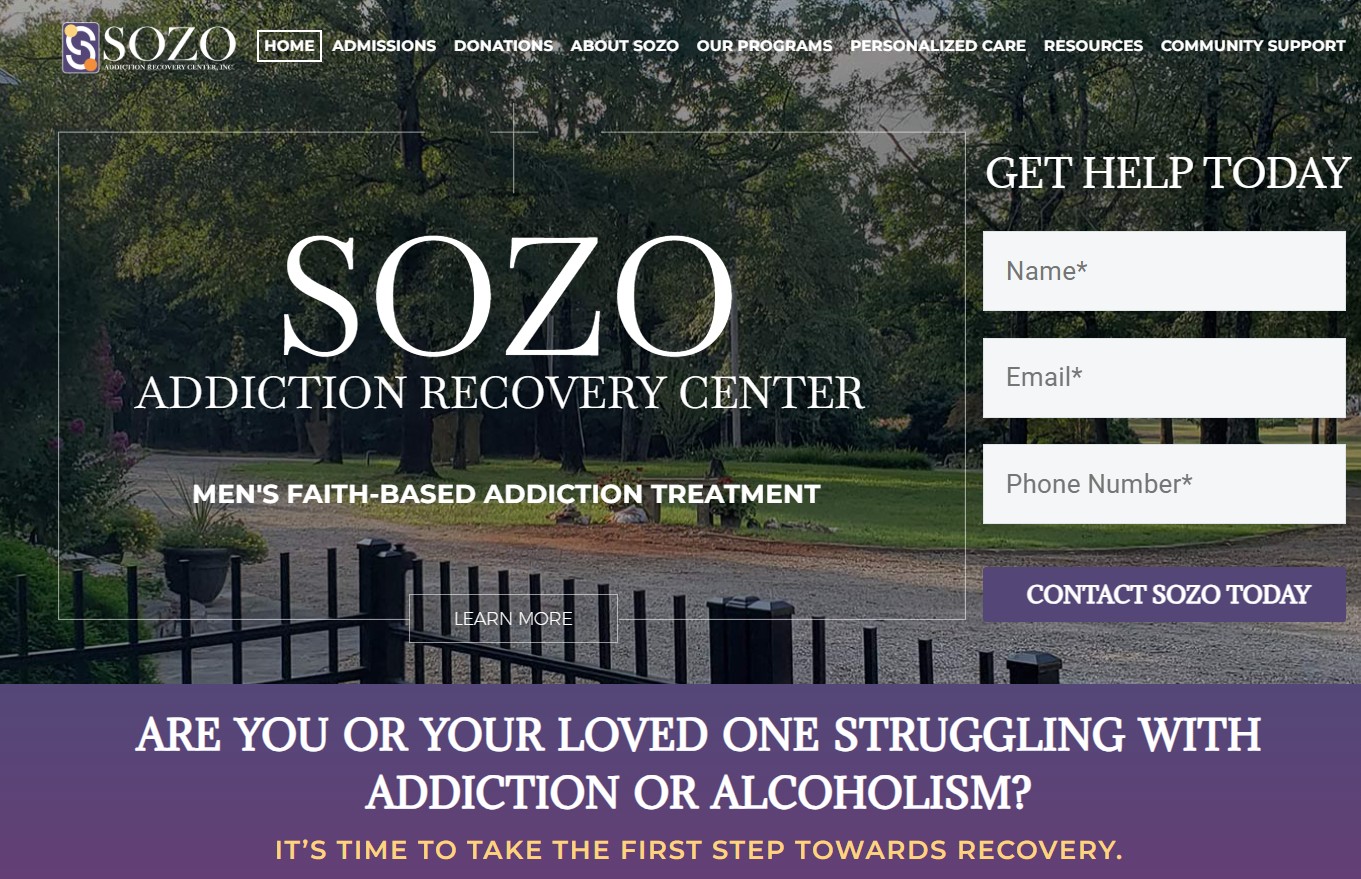
That matters most for a family trying to coordinate psychiatric care, spiritual counseling, and step work without stitching together three separate providers who never talk to each other. A single ASAM-informed treatment plan means one team tracking progress across all three, instead of a man falling through the gaps between them. If he’s showing signs of addiction alongside a mental health condition, reviewing the common warning signs is a useful first step before making any calls.
The next move is straightforward: contact Sozorecoverycenter’s admissions team for an ASAM-informed assessment, verify insurance coverage, and ask for an itemized estimate before committing to a start date.
This article is general information, not a substitute for advice from a qualified doctor. Consult a qualified healthcare professional about your own circumstances before acting on anything here.
Sources
- Belief, Behavior, and Belonging: How Faith is Indispensable in Preventing and Recovering from Substance Abuse – PMC
- Study linking spiritual well-being to lower substance use frequency in early recovery (PubMed)
- Spirituality in Recovery: A Lagged Mediational Analysis of Alcoholics Anonymous’ Principal Theoretical Mechanism of Behavior Change
FAQ
What Are 12-Step Alternatives in a Faith-Based Setting?
They are Christian treatment programs that keep the 12-step framework but integrate biblical teaching, prayer, and chaplaincy directly into licensed clinical care for addiction and co-occurring mental health conditions.
Is 12-Step Recovery Considered Religious?
The 12-step model references a “higher power” without requiring a specific faith, but faith-based programs intentionally frame that higher power as the Christian God through Step study and chaplain-led counseling.
Do Faith-Based Programs Still Provide Clinical Mental Health Care?
Yes. Programs built on the ASAM Continuum model treat co-occurring psychiatric conditions with licensed counselors and medical providers alongside spiritual counseling, rather than offering spiritual care as a substitute for clinical treatment.
How Long Does Spiritual Well-Being Actually Help Recovery?
Research shows the strongest link between spiritual well-being and reduced substance use appears in the first 3.5 months after treatment, which is why structured aftercare matters once that early boost fades.
What Should I Ask Before Choosing a Program for a Family Member?
Ask whether co-occurring conditions are treated onsite, whether spiritual participation is voluntary, and whether the treatment plan is explicitly built on ASAM criteria rather than a generic schedule.