


Opioid withdrawal usually begins within 8 to 24 hours after the last dose of a short-acting opioid, or 12 to 48 hours for a long-acting one, with the acute phase lasting roughly 4 to 20 days depending on the drug. Fentanyl, chronic high-dose use, polysubstance use, and a person’s overall health can all stretch or scramble that window. Whatever the timeline looks like, the highest-risk moment isn’t withdrawal itself. It’s the days after, when lowered tolerance makes overdose far more dangerous than it was before detox.
TL;DR:
- Withdrawal symptoms can last from 4 to 20 days, with long-acting opioids like methadone taking twice as long to resolve compared to short-acting drugs.
- The initial phase includes symptoms like yawning and runny nose, while peak symptoms involve nausea, muscle aches, and dilated pupils, lasting for several days.
- Symptoms such as goosebumps, tearing, and yawning are specific indicators of opioid withdrawal and distinguish it from other illnesses.
- Medications like methadone, buprenorphine, and lofexidine effectively manage withdrawal, but timing and medical supervision are crucial to reduce risks.
- The period immediately after withdrawal carries a high overdose risk due to lowered tolerance, making emergency care and ongoing treatment essential.
Table of Contents
- Opioid Withdrawal Timeline: Short-Acting vs Long-Acting
- Symptoms of Opioid Withdrawal by Phase
- Medical Management Options for Opioid Detox
- Overdose Risk and Emergency Warning Signs
- How to Prepare for Withdrawal Safely
- What Is Protracted Withdrawal (PAWS)?
- Choosing the Right Setting for Opioid Detox
- A Faith-Informed Perspective on Detox and What Comes After
- Get Medically Informed Support After Withdrawal
- Sources
- FAQ
Opioid Withdrawal Timeline: Short-Acting vs Long-Acting
The half-life of the opioid a man has been using is the single biggest factor in how his body responds once it’s gone. Shorter-acting drugs leave the bloodstream fast, so the nervous system reacts fast too. Longer-acting drugs build up in fat and tissue, which delays the crash but stretches it out once it arrives.
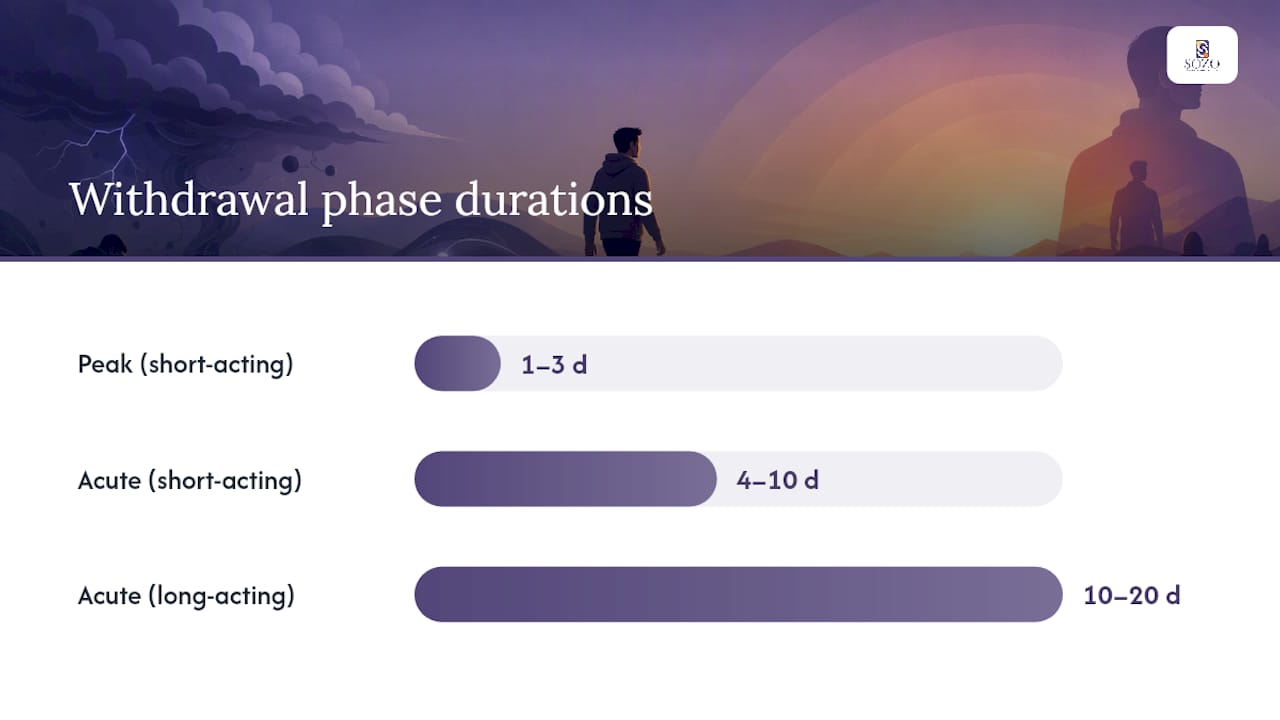
According to clinical withdrawal management guidelines, short-acting opioids such as heroin or immediate-release oxycodone tend to produce withdrawal onset within 8 to 24 hours, with the acute phase resolving in 4 to 10 days. Long-acting opioids like methadone typically delay onset to 12 to 48 hours, and the acute phase can drag on for 10 to 20 days. That’s not a minor difference. A man tapering off methadone should expect roughly double the timeline of someone coming off a short-acting pill.
A rough phase breakdown looks like this:
- Early hours (onset): Anxiety, restlessness, muscle tension, and the first wave of cravings appear as the drug clears the system.
- Days 1 to 3 (peak): Physical symptoms hit hardest here for short-acting opioids. This is usually the worst stretch.
- Days 4 to 10 (subacute): Physical symptoms fade, but fatigue, low mood, and disrupted sleep often linger.
- Days 10 to 20 (long-acting resolution): Men withdrawing from methadone or other long-acting agents are often still working through peak or subacute symptoms well into this window.
Two drugs deserve special mention. Fentanyl doesn’t follow the typical short-acting pattern. Its potency and unpredictable formulation mean withdrawal can start faster and hit harder than heroin, and some men report a second wave of symptoms days after they thought the worst had passed. Methadone, on the other hand, moves slowly in both directions. It takes longer to build up, and it takes longer to let go, which is why methadone tapers are usually measured over an extended period.
Symptoms of Opioid Withdrawal by Phase
Withdrawal doesn’t hit all at once. It builds, peaks, and then shifts from physical misery to something more psychological.
Early phase symptoms show up first and are easy to mistake for a bad cold: yawning, a runny nose, watery eyes, restlessness, and rising anxiety.
Peak phase is where the body fights back hardest. Nausea, vomiting, diarrhea, muscle and joint aches, goosebumps, sweating, dilated pupils, and a racing heart are all common in this window.
Subacute and psychological phase symptoms tend to outlast the physical ones. Insomnia, mood swings, and persistent cravings are the most common complaints as the body stabilizes.
Four signs in particular help distinguish opioid withdrawal from withdrawal off other substances. According to a clinical fast-fact review, mydriasis (dilated pupils), piloerection (goosebumps), lacrimation or rhinorrhea (tearing and a runny nose), and yawning are considered specific markers of opioid withdrawal, not general illness.
- Early: yawning, tearing, runny nose, restlessness
- Peak: nausea, vomiting, diarrhea, muscle aches, dilated pupils, sweating, rapid heartbeat
- Subacute: insomnia, mood disturbance, ongoing cravings
Pro Tip: If a man notices goosebumps on his arms in a warm room along with a runny nose and no fever, that combination is a strong signal of opioid withdrawal rather than a cold or flu.
Medical Management Options for Opioid Detox
The most effective way to shorten the misery of withdrawal, and the safest way to manage it, is with medications that target the underlying opioid receptors rather than just the symptoms.
Methadone is a long-acting full opioid agonist that can control withdrawal and, when continued, serve as long-term maintenance treatment. It has to be dispensed through a certified opioid treatment program in most cases, and its slow onset makes it a poor fit for men who need fast relief.
Buprenorphine is a partial agonist that relieves withdrawal with a ceiling effect that limits misuse potential and overdose risk. The catch is timing. Starting it too early, before enough of the previous opioid has cleared, can trigger precipitated withdrawal, a sudden and severe symptom spike caused by buprenorphine displacing opioids already on the receptor. Clinicians typically use the Clinical Opioid Withdrawal Scale (COWS) to confirm a man has reached moderate withdrawal before starting buprenorphine, which reduces that risk significantly.
Lofexidine is the first medication the FDA approved specifically for acute opioid withdrawal that isn’t itself an opioid. As an alpha-2 adrenergic agonist, it eases autonomic symptoms and can be used for up to 14 days, according to clinical withdrawal references.
Beyond those three, symptomatic medications round out most treatment plans:
- Clonidine for sweating, anxiety, and other autonomic symptoms
- Loperamide for diarrhea
- Ondansetron or promethazine for nausea and vomiting
- Ibuprofen or acetaminophen for muscle and joint aches
Overdose Risk and Emergency Warning Signs
Withdrawal itself is rarely fatal, but the period right after it is one of the most dangerous stretches in the entire recovery process. Once the body clears opioids, tolerance drops fast. A dose that felt manageable weeks earlier can now be lethal. A review on post-detox overdose risk found that detox without a transition into maintenance medication or psychosocial support is linked to a substantially higher risk of fatal overdose after relapse.
Certain symptoms mean it’s time for emergency care, not home management:
- Severe dehydration from uncontrolled vomiting or diarrhea
- Suicidal thoughts or a sudden mental health crisis
- Vomiting that won’t stop despite medication
- Trouble breathing or chest pain
- Seizures
Keeping naloxone on hand, choosing a supervised taper, and lining up follow-up treatment before detox even starts are the three moves that do the most to reduce harm.
How to Prepare for Withdrawal Safely
- Talk to a clinician before stopping. An individualized taper is almost always safer than quitting cold, particularly for oxycodone and other prescription opioids where a slow reduction schedule limits symptom severity.
- Stock symptomatic relief in advance. Electrolyte drinks, anti-diarrheal medication, an antiemetic, and an over-the-counter pain reliever cover most of the physical discomfort.
- Set up sleep support. Insomnia is one of the longest-lasting symptoms, so having a plan, whether that’s a sleep aid or a consistent wind-down routine, matters more than people expect.
- Arrange a support person. Someone who can monitor symptoms and get help quickly changes outcomes.
- Have naloxone and a care escalation plan ready before the first symptom even appears, not after.
What Is Protracted Withdrawal (PAWS)?
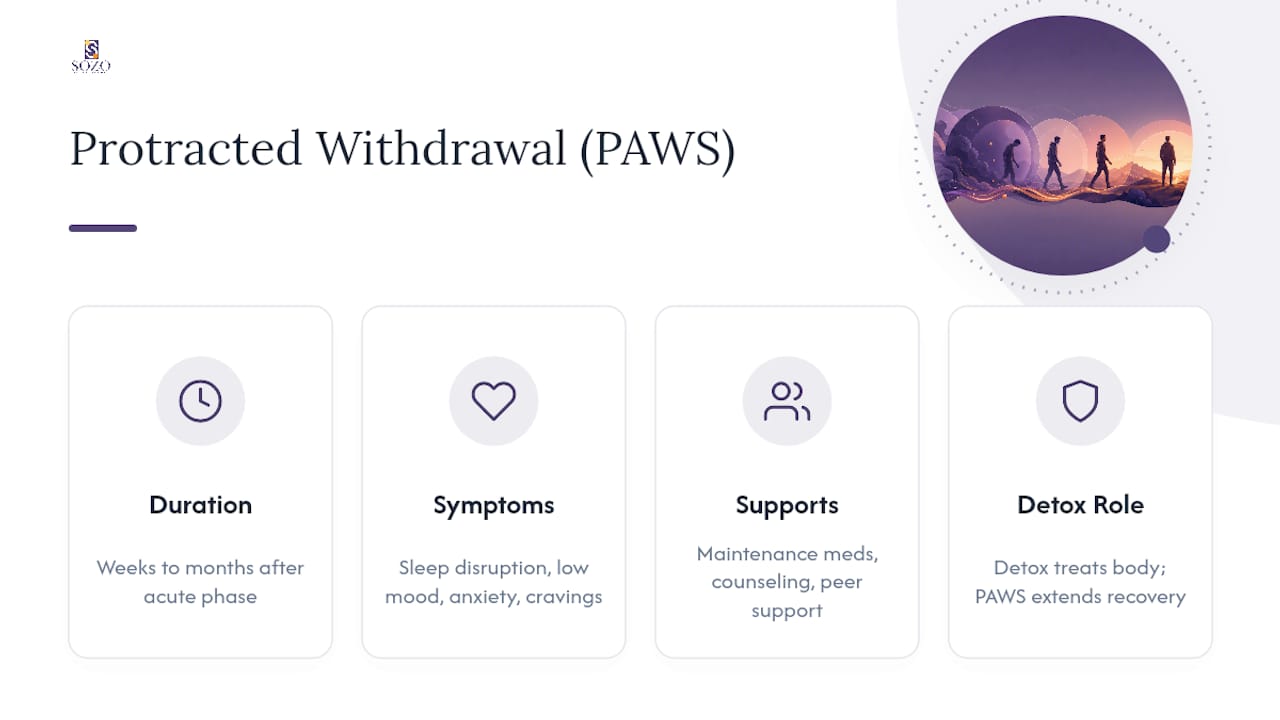
Post-acute withdrawal syndrome can persist for weeks to months after the acute phase ends, according to clinical withdrawal guidelines. It shows up mostly as sleep disruption, low mood, anxiety, and cravings that resurface without warning. Maintenance medication, counseling, and peer support all reduce relapse risk during this stretch. Detox handles the body. PAWS is a reminder that recovery is a longer process than the withdrawal calendar suggests.
Choosing the Right Setting for Opioid Detox
Men with pregnancy, high-dose or methadone use, serious co-occurring health conditions, or polysubstance use generally need supervised or inpatient care rather than a home taper. Outpatient medication-assisted induction still requires monitoring, usually with COWS scoring, to time buprenorphine safely. A typical admission includes symptom scoring, medication initiation, and discharge planning that includes naloxone and a follow-up care plan.
A Faith-Informed Perspective on Detox and What Comes After
Detox is the doorway, not the destination. At Sozorecoverycenter, treatment planning follows ASAM criteria alongside dual-diagnosis care, because a man’s body clearing opioids doesn’t mean his mind or spirit has caught up yet.
— Ty
Get Medically Informed Support After Withdrawal
Sozorecoverycenter gives men a path forward that most standalone detox programs never offer: a direct line from medical stabilization into structured, faith-integrated treatment, without gaps in care where relapse risk spikes highest. Located in Hot Springs, Arkansas, the center coordinates medical detox referrals, then moves men into residential, outpatient, or dual-diagnosis care built around ASAM criteria and biblical principles woven into the 12-step model.
Before calling admissions, have a few things ready: recent medication history, any co-occurring mental health diagnoses, and insurance information (Sozorecoverycenter works with private pay and major providers including BlueCross BlueShield, Ambetter, and QualChoice). A short call is enough to find out which level of care fits. Start the admissions process today and get a real answer about what comes next.
This article is general information, not a substitute for advice from a qualified doctor. Consult a qualified healthcare professional about your own circumstances before acting on anything here.
Sources
- Withdrawal Management – Clinical Guidelines (NCBI Bookshelf)
- Opioid withdrawal — MyPCNow fast fact
- Review on post-detox overdose risk — PMC
FAQ
How long do opiate withdrawals last?
Short-acting opioids typically produce withdrawal lasting 4 to 10 days, while long-acting opioids like methadone can take 10 to 20 days to resolve, according to clinical guidelines.
Does Benadryl help with opioid withdrawal symptoms?
Benadryl (diphenhydramine) isn’t a standard treatment for opioid withdrawal; it may ease insomnia or mild allergy-like symptoms but doesn’t address the core autonomic or gastrointestinal symptoms the way clonidine or loperamide do.
What is the recommended taper schedule for oxycodone?
There’s no single fixed schedule. A clinician typically designs an individualized, gradual dose reduction based on current dose, duration of use, and overall health, since a slow taper carries far less symptom severity than stopping abruptly.
What medications are used to treat opioid withdrawal symptoms?
Methadone and buprenorphine address the underlying withdrawal, lofexidine is the first FDA-approved non-opioid option, and clonidine, loperamide, ondansetron, and ibuprofen manage specific symptoms like sweating, diarrhea, nausea, and aches.
Is opioid withdrawal dangerous on its own?
Withdrawal itself is rarely life-threatening, but severe dehydration, uncontrollable vomiting, or the period right after detox, when overdose risk rises due to lowered tolerance, both require medical attention.