


Pack light, pack smart, and call the facility before you leave home. The essentials are a photo ID, insurance card, all prescriptions in original pharmacy bottles, several days of modest clothing, and alcohol-free toiletries. A written list of emergency contacts belongs in your bag too. Most items beyond that may get restricted or held at intake, so admissions staff can confirm the exact rules before you arrive.
TL;DR:
- Bring all prescriptions in their original pharmacy-labeled bottles to ensure proper inventory and avoid refusals at intake.
- Prepare a list of emergency contacts and health information to streamline admissions and facilitate treatment planning.
- Limit personal belongings to one suitcase and a carry bag with essentials, avoiding restricted items like alcohol, weapons, and aerosol products.
- Confirm with the facility about medical devices, storage requirements, and medication compatibility, especially for insulin or CPAP machines.
- Expect to surrender personal electronics early in treatment and replace phone access with offline alternatives like an MP3 player or printed contact list.
Table of Contents
- What to Bring to Rehab: The Category-by-Category Checklist
- How Do Medications and Medical Devices Work at Intake?
- What Documents Should You Bring to Rehab?
- What Items Are Not Allowed in Rehab?
- Can I Bring My Phone to Rehab?
- What Clothes Should You Pack for Rehab?
- What Toiletries Are Allowed in Rehab?
- What Comfort Items Can You Bring to Rehab?
- What Happens on Admission Day?
- How Can Family Help With Rehab Packing?
- Why Thoughtful Packing Sets the Tone for Treatment
- Ready to Start Treatment? Here’s Your Next Step
- Sources
- FAQ
What to Bring to Rehab: The Category-by-Category Checklist
One suitcase and one small carry bag usually covers it. The carry bag should hold anything you’ll need in the first hour, since intake staff often ask for documents and medications before you even unpack.
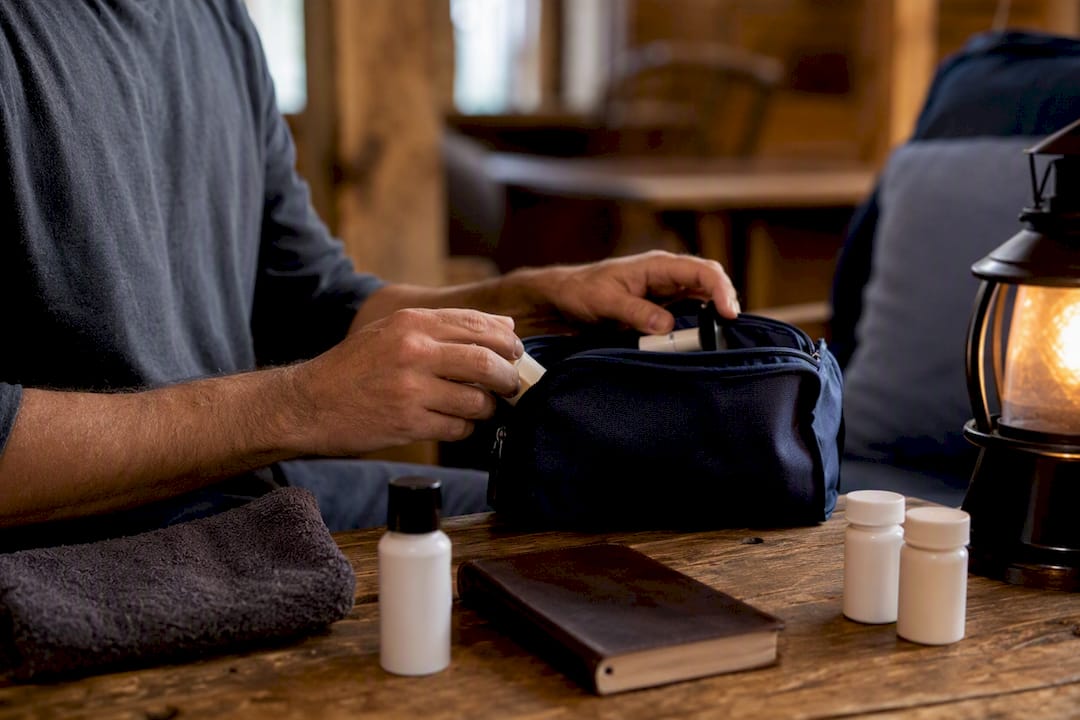
Start with a single folder for paperwork. Keep photo copies on your phone or in the cloud as backup, since a folder can get misplaced during a stressful morning. Medications belong in your carry-on, not a checked bag, along with a written medication list and your pharmacy insurance card.
Here’s a working list to build from:
- Documents: driver’s license or passport, insurance card, medication list, emergency contact sheet
- Money: a small amount of cash (usually under $50) and one debit or credit card
- Medications: all prescriptions in original, pharmacy-labeled bottles
- Clothing: about a week’s worth of modest, comfortable outfits, since many programs offer laundry once a week
- Toiletries: alcohol-free, non-aerosol products. Some facilities require them unopened
That last point trips up more people than any other item on this rehab packing list. A bottle of mouthwash or a can of dry shampoo looks harmless at home, but it can mean a trip back to the car or a staff member holding it until discharge. Building your rehab necessities around these categories, rather than packing on instinct, cuts down on wasted space and awkward surprises at the front desk.
How Do Medications and Medical Devices Work at Intake?
Every prescription needs to arrive in its original, pharmacy-labeled container. Staff will inventory each bottle and take over dosing on a set schedule, which means loose pills in a daily organizer or unlabeled bags typically get flagged or refused outright.

A written medication list speeds this process considerably. Include the drug name, dose, prescriber, and the date of your last refill, plus your RX ID, BIN, and PCN numbers from your insurance card. That detail helps the facility handle prior authorization and inpatient refills without a gap in your treatment.
Pro Tip: Call ahead if you use insulin, a CPAP machine, or another device requiring power or refrigeration. Most centers accommodate these needs, but they need advance notice to set up the right room or storage.
- Bring device manuals and charging cords for any medical equipment
- Expect controlled substances to be counted, logged, and dispensed under supervision
- Keep everything in carry-on luggage if traveling by plane, and notify airport security ahead of screening
What Documents Should You Bring to Rehab?
Admissions will ask for the same core paperwork whether you’re checking into residential care or starting an outpatient program. Having it organized in one folder, with a spare copy at home, prevents the kind of delay that turns a smooth check-in into a stressful afternoon.
- Photo ID: driver’s license, state ID, or passport
- Insurance card: with RX ID, BIN, and PCN visible for pharmacy coordination
- Emergency contact list: names, relationships, and phone numbers, written on paper in case your phone is unavailable
- Pre-arrival tasks: confirm insurance authorization, get medical clearance if your program requires it, arrange care for pets and bills, and tell your employer you’re entering treatment
That last step matters more than most people realize. The Family and Medical Leave Act can protect your job for up to 12 weeks during treatment if you meet eligibility requirements, so it’s worth a conversation with HR before you go rather than after.
What Items Are Not Allowed in Rehab?
Every facility bans a similar core list, and the reasoning is straightforward: these items introduce risk, either to your recovery or to someone else’s. Alcohol, illegal drugs, weapons, lighters, candles, and aerosol cans are off the table almost everywhere. Glass containers get restricted for safety reasons, and outside food is often limited due to allergy and contamination concerns.
- Illegal drugs, alcohol, and drug paraphernalia
- Weapons of any kind, including pocketknives
- Aerosol cans, lighters, matches, and candles
- Pornography or sexually explicit material
- Glass containers and outside food
Beyond that hard list, expect scrutiny around CBD products, kratom, mouthwash containing alcohol, certain supplements, and expensive jewelry. Confiscated items typically go into secure storage, get handed to a family member, or are mailed home, depending on the facility’s policy.
Can I Bring My Phone to Rehab?

Most inpatient programs restrict personal electronics, at least at first. Three models are common: full surrender during early stabilization, surrender with scheduled return, or restricted daily windows once you’re a few days in. Device policies exist to cut down on outside distractions and protect the privacy of everyone else in treatment, not to punish you for needing your phone.
Bring alternatives that don’t require a signal. An MP3 player without Wi-Fi, an offline e-reader, a printed list of phone numbers, or a prepaid calling card all work well when screen access is limited.
- Wired headphones and chargers, since Bluetooth devices are sometimes restricted
- A paper contact list in case your phone is stored away
- An offline e-reader or MP3 player loaded before you arrive
Pro Tip: Write down the numbers you’ll need most before you leave home. Losing phone access for a week feels a lot less disorienting when you already have your sponsor, your spouse, and your kids’ school written on paper.
What Clothes Should You Pack for Rehab?
Plan for about a week’s worth of modest, comfortable clothing, since most programs handle laundry weekly rather than daily. Overpacking clothes is one of the most common mistakes on any rehab packing list for men, since closet space in shared rooms is limited.
- Sneakers for group activities and one pair of shower shoes or slip-ons
- Sleepwear, underwear, and socks for the full stay
- One nicer outfit for family visits or off-site appointments
- A jacket and a couple of layers, adjusted for the season
Skip backless sandals, flip-flops as everyday shoes, or anything with laces long enough to raise safety concerns. If your program includes outdoor recreation, pack for it. Hot Springs weather shifts fast between seasons, and one bad packing decision can mean a week of borrowed clothes.
What Toiletries Are Allowed in Rehab?
The rule of thumb is alcohol-free and non-aerosol. Toothpaste, a toothbrush, alcohol-free shampoo and conditioner, non-aerosol deodorant, and feminine hygiene products all clear intake at nearly every facility. Some programs require these items to arrive unopened, so buy new rather than packing from your bathroom cabinet.
- Non-alcohol mouthwash, if the facility permits it at all
- Alcohol-free shampoo, conditioner, and lotion
- Non-aerosol deodorant and feminine hygiene products
- Sharps like scissors, razors, and nail clippers, which are commonly held by staff and issued as needed
Label every bottle with your name. Shared bathrooms mean shared shelf space, and a labeled bottle is one less thing to lose track of. Ask admissions whether the facility supplies basics like toothpaste, since some do and packing less matters more than most people expect.
What Comfort Items Can You Bring to Rehab?
A few personal touches make a shared room feel less clinical. Small photographs without glass frames, a journal and a couple of pens, paperback books, recovery literature, and a deck of cards are typically welcome.
- Photos, a journal, and paperback books
- Recovery workbooks or devotional materials
- A deck of cards or a coloring book for downtime
Keep quantities modest and content non-triggering. If family wants to send a care package once you’re settled, they should confirm the contents with admissions first, since food and prohibited items get turned away regardless of intention.
What Happens on Admission Day?
Intake typically runs 3 to 6 hours, and knowing the sequence ahead of time takes the edge off the wait.
- Medical exam and vitals: a nurse or physician checks your baseline health
- Psychiatric assessment: especially important for dual-diagnosis care, where mental health and addiction are treated together
- Drug screening: standard at nearly every facility regardless of program type
- Belongings inventory: staff log and store anything restricted, then walk you through the daily schedule
Eat beforehand if you’re allowed to, and keep your documents and medications within easy reach rather than buried in a suitcase. Phone use is commonly limited for the first one to seven days while you settle into the program’s structure, so don’t count on making calls the moment you walk in.
How Can Family Help With Rehab Packing?
Family members play a real role here, and a five minute phone call to admissions saves everyone a headache. Confirm what’s allowed, what timing works for drop-offs, and whether items can be delivered after intake rather than on day one.
- Call admissions before bringing or mailing anything
- Stick to non-food comfort items and recovery literature for care packages
- Ask how confiscated items get returned, whether that’s family pickup or mail
If a loved one already surrendered an item at intake, it typically gets held for a family member to collect rather than mailed automatically. Understanding when someone needs help in the first place often shapes how a family approaches this whole process, from the first phone call through the packing list itself.
Why Thoughtful Packing Sets the Tone for Treatment
Packing well isn’t about having the right gear. It’s about walking through the door with one less thing to think about, so the first conversation with a counselor isn’t interrupted by a confiscated bottle of mouthwash or a missing insurance card.
Faith plays a real role in this too, as explained in this guide to spiritual help after trauma. A Bible, a rosary, or devotional material isn’t a fringe request. Programs built around spiritual renewal tend to welcome these items as part of individualized care, alongside the medical devices someone might need for a chronic condition. None of that replaces a phone call to admissions, though. Every facility’s list looks a little different, and the ten minutes it takes to confirm the details ahead of time is worth more than any packing list, including this one.
— Ty
Ready to Start Treatment? Here’s Your Next Step
Every packing list eventually comes down to one more phone call, and Sozorecoverycenter’s admissions team exists to answer exactly the questions this article can’t. Unlike a generic checklist pulled from a search result, Sozorecoverycenter builds packing guidance into a broader intake process shaped by dual-diagnosis care and a faith-based recovery model, so men arriving for treatment know their spiritual needs and medical requirements will be met from day one, not treated as afterthoughts.
If you or someone you love is preparing for residential or outpatient treatment, reach out to admissions for the facility-specific packing list and a walkthrough of what intake looks like at Sozorecoverycenter. A short call now means fewer surprises on arrival day, and a clearer path into the kind of personalized care that treats addiction and mental health together, not as separate problems handled one at a time.
This article is general information, not a substitute for advice from a qualified doctor. Consult a qualified healthcare professional about your own circumstances before acting on anything here.
Sources
- Preparing for Rehab: What to Bring, Expect & Do Before Treatment | RehabSearch
- What to Pack for Rehab: Checklist & What to Leave Home | Ojai Recovery
- What to bring to rehab | Texas Health Resources
FAQ
What Do You Pack to Go to Rehab?
Pack several days of modest clothing, a photo ID, insurance card, prescriptions in original bottles, a written medication list, and alcohol-free toiletries, then confirm any extras with admissions.
What Are You Allowed to Bring Into Rehab?
Most facilities allow clothing, alcohol-free toiletries, prescription medications in original containers, photos, books, and recovery literature, while banning weapons, alcohol, drugs, and aerosol products.
What Should You Bring When Visiting Someone in Rehab?
Check the facility’s visiting policy in advance, since most restrict outside food and require any gifts, like books or photos, to go through a staff review before reaching the patient.
What Is the 3-Hour Rule for Rehab?
There’s no universal “3-hour rule,” but intake itself commonly runs 3 to 6 hours, covering medical screening, psychiatric evaluation, and orientation before a patient settles into the daily schedule.
Can I Bring My Phone to Rehab?
Phone policies vary widely. Some programs restrict or surrender devices entirely during early stabilization, while others allow scheduled use after the first few days, so confirming with admissions ahead of time is the only reliable answer.