


Finding a faith-based rehab center that truly integrates spiritual principles with clinical addiction treatment remains confusing for families seeking the right fit. Many established programs split clinical care and spiritual support into separate tracks or fail to publish real costs, making unity and financial clarity hard to achieve. This list compares pricing, admission details, and treatment focus so families, men, and women can match their spiritual values and recovery needs to an Arkansas provider before reaching out.
Table of Contents
- SOZO Recovery Center
- Adult & Teen Challenge Arkansas (ATCAR)
- Natural State Recovery Centers
- Shalom Reclaimed
- Recovery Centers of Arkansas Oasis Renewal Center
- Serenity Park Recovery Center
- Comparison of alternatives
SOZO Recovery Center
At a Glance
According to the center, SOZO holds CARF accreditation. The program serves adult men in Hot Springs, Arkansas, and integrates Christian principles with clinical care. It advertises a mix of residential treatment, outpatient programs, sober living, and coordination with partner detox facilities.
Core Features
The center reports treatment plans informed by the ASAM Continuum model, and it emphasizes personalized plans that address medical and spiritual needs. The vendor advertises LegitScript certification and state licensure alongside dual diagnosis care for co-occurring mental health disorders. Marketing materials state the program combines the 12-step recovery method with biblical principles and a structured continuum from detox coordination to sober living.
Key Differentiator
SOZO’s main strength is pairing explicit Christian practice with clinically oriented care inside an accredited framework. That combination shapes therapy selection, peer group formats, and spiritual disciplines alongside clinical assessments and treatment goals. The result reads as a single, faith-integrated pathway rather than separate spiritual and clinical tracks.
Pros
The program groups spiritual guidance, group fellowship, and clinical treatment into a unified regimen tailored for men. Accreditation and ASAM-informed planning give third-party signals about process and clinical alignment. The center also advertises support for dual diagnosis and offers a full continuum of care from residential stays to sober living and outpatient follow-up, which helps keep treatment consistent across settings.
Cons
- Limited to adult men; no women or adolescent programs are offered.
Who It’s For
Men in Arkansas seeking a recovery program that places Christian practice at the center of care will find SOZO relevant. Families who want an accredited provider with dual diagnosis experience will also consider it. People seeking secular treatment or women should look elsewhere.
Unique Value Proposition
CARF accreditation plus ASAM-informed individualized plans shape daily treatment and discharge planning at SOZO. That structure lets staff coordinate transitions from a partner detox to residential care and then to sober living with a shared clinical framework. For a man who wants spiritual formation alongside clinical therapy, that coordination reduces gaps between program phases.
Real World Use Case
A man struggling with alcohol and opioid misuse in Arkansas enrolls in a faith-based residential program. He receives a personalized plan that treats his depression alongside addiction and participates in daily group meetings that follow 12-step and biblical study. After residential care he moves into sober living while attending outpatient therapy and volunteer activities with peer support.
Pricing
Not applicable. The site functions as informational only and does not list program rates publicly. Insurance coverage may vary by plan, and families should contact the center directly to confirm benefits and out-of-pocket costs.
Website: https://sozorecoverycenter.com
Adult & Teen Challenge Arkansas (ATCAR)
At a Glance
ATCAR traces its local operation back to since 1969 and links to the larger network since 1958, giving it decades of faith based program experience. The center runs residential care with 24/7 supervision, outpatient tracks, and long term discipleship that moves clients from stabilization into sustained community support. The program targets both adolescents and adults and positions spiritual formation at the core of treatment.
Core Features
The service combines residential treatment with 24/7 supervision, counseling, and psychiatric support, plus partial hospitalization and outpatient tracks for stepped care. It offers long term discipleship and aftercare modules intended to keep people connected after formal treatment ends. The organization states it uses evidence based therapeutic approaches and accepts insurance including Medicaid for eligible clients in Arkansas.
Key Differentiator
ATCAR pairs overt spiritual formation with multi level clinical care inside a national network that dates back to 1958. That historical network focus means programs emphasize discipleship and community roles alongside clinical stabilization. This orientation will resonate with people seeking recovery explicitly rooted in Christian practice and long term faith communities.
Pros
The program benefits from decades of organizational continuity and a clearly defined faith based model that many families prefer. Multiple care levels let clinicians tailor treatment intensity from full residential support to outpatient follow up and sober living transitions. Insurance acceptance, including Medicaid for Arkansas residents, lowers financial barriers for eligible people and helps families plan for longer term care.
Cons
- Limited detail on specific therapeutic modalities on the public pages makes it hard to compare clinical methods.
- Demand for beds may cause longer wait times during busy seasons.
- The faith centered model may not match the needs of people seeking secular treatment.
When It May Not Fit
People who want strictly secular clinical care or who prioritize modern outpatient telehealth over in person discipleship will find ATCAR a poor match. Those living outside Arkansas without local family or church support may struggle to access the long term community emphasis. Applicants needing explicit detail on therapy techniques will need to request clinical documentation directly.
Who It’s For
Adults and teens who want addiction treatment integrated with Christian discipleship will find ATCAR appropriate. Families seeking structured residential options that transition into community based aftercare will value the program model. People who need Medicaid or major insurer coverage in Arkansas will also find practical benefit.
Real World Use Case
A man with alcohol dependence enters the residential track for medical stabilization and daily counseling, then moves to partial hospitalization while returning to a sober living home. Staff coordinate psychiatric follow up and spiritual mentorship during each phase, and the client transitions into the long term discipleship group for ongoing accountability and service opportunities. Continued aftercare meetings and community ties support his maintenance of sobriety.
Pricing
Not applicable. The site functions as informational only and does not publish standard rates. Financial coverage depends on individual insurance plans and eligibility for Medicaid in Arkansas.
Website: https://atcar.org
Natural State Recovery Centers
At a Glance
Natural State Recovery Centers reports serving more than 2,500 clients since 2018. The family-owned Arkansas provider coordinates medical detox, residential, PHP, IOP, and outpatient care within one organization. The center’s materials state CARF accreditation and LegitScript approval.
Core Features
Natural State runs the full continuum of addiction services from medical detox through outpatient support, with admissions coordinating transitions between levels of care. Staff create individualized treatment plans after a comprehensive clinical assessment, and the program pairs clinical work with amenities such as recreation, chef-prepared meals, and animal therapy. Locations in North Little Rock, Little Rock, and Conway simplify access for Arkansas residents and they accept most major insurance plans.
Key Differentiator
The defining feature is care kept local and integrated. Natural State places medical detox, residential treatment, partial hospitalization program, intensive outpatient, and standard outpatient services under one operational umbrella. That structure reduces administrative handoffs and aims to keep patients with clinicians familiar with Arkansas community needs.
Pros
Local governance and clinician-led decisions support referrals and follow-up within Arkansas communities. Housing multiple care levels inside the same organization reduces delays when a patient needs a higher or lower level of care. The facility highlights comfort-focused amenities that support day-to-day life beyond clinical sessions, and the site lists accreditation and third-party approval as markers of regulatory oversight.
Cons
- Limited public detail on specific or alternative treatment modalities beyond standard addiction services.
- No clear description of personalized specialty tracks for distinct populations, such as veterans or adolescents.
- No publicly listed pricing or program fee information, which makes out-of-pocket planning harder for families.
When It May Not Fit
Programs seeking specialty therapies or niche modalities may find limited evidence of those offerings here. Regional or out-of-state families will face travel and logistics since services concentrate in three Arkansas locations. Organizations that require transparent, published fee schedules for procurement will need to request that information directly from admissions.
Who It’s For
Arkansas residents and nearby families who want treatment inside a local, clinician-governed organization. People who prefer care that keeps detox, residential, and outpatient clinicians connected will find this model practical. Employers and referral partners seeking an accredited, locally based provider for employees can consider it for regional placements.
Real World Use Case
A family in Conway notices escalating substance use and calls admissions to schedule an assessment. The clinician recommends medical detox followed by residential care, then a step-down to IOP and outpatient therapy, all coordinated by the same clinical team. That continuity keeps records and care teams aligned through each transition.
Website: https://naturalstaterecovery.com
Shalom Reclaimed
At a Glance
Shalom Reclaimed reports treatment at only 25% of the cost of typical inpatient rehab. The center delivers faith based residential care in Hot Springs, Arkansas, with recovery training and transitional support. Website errors on detailed program pages limit online comparison for clinicians and families.
Core Features
Programs blend a Christ centered approach with modern residential treatment and relapse prevention training. Transitional support helps people move from inpatient care into community based resources and continued recovery work. Staff personalize plans and the site emphasizes affordable out of pocket options without insurance requirements.
Key Differentiator
The standout claim is that low cost together with no insurance requirement makes residential care more reachable for people paying out of pocket. That price figure combined with a faith oriented model narrows the audience while expanding access for those without coverage. The focus is affordability plus spiritual emphasis rather than an array of published clinical protocols.
Pros
Low out of pocket cost and the lack of insurance requirements reduce barriers for many families seeking inpatient care. The Christ centered program adds spiritual direction alongside clinical elements in a residential setting. Transitional programs and a supportive staff network aim to help people maintain progress after discharge.
Cons
- Limited online detail on specific therapies and program length because several detailed pages return errors.
- The site does not list evidence based therapies or staff credentials, which makes clinical comparison difficult.
- Program content appears faith oriented and may not suit people seeking strictly secular treatment.
When It May Not Fit
If you need a center that publishes specific therapy protocols or clinician credentials, this option may fall short. People who prefer secular clinical programs will likely find the faith oriented model mismatched. Those seeking telehealth or remote programming will also find limited online service detail.
Who It’s For
People in Arkansas who want an affordable, faith based residential option will find this center aligned with their needs. Families looking to avoid insurance hurdles will value the advertised pricing model. Men and women seeking spiritual emphasis with residential care are the primary fit.
Real World Use Case
A person struggling with substance abuse travels to Hot Springs for residential care, receives relapse prevention training, and then enters transitional support to return to work. Family members who could not secure insurance coverage pay out of pocket and use the center as a bridge to local meetings. The model supports ongoing community reintegration after discharge.
Pricing
The pricing field is listed as Not applicable — informational only, yet the center reports treatment at 25% of typical inpatient costs and states it does not require insurance or complex payment plans. Prospective clients should contact the center directly for current rates and payment details.
Website: https://shalomreclaimed.com
Recovery Centers of Arkansas Oasis Renewal Center
At a Glance
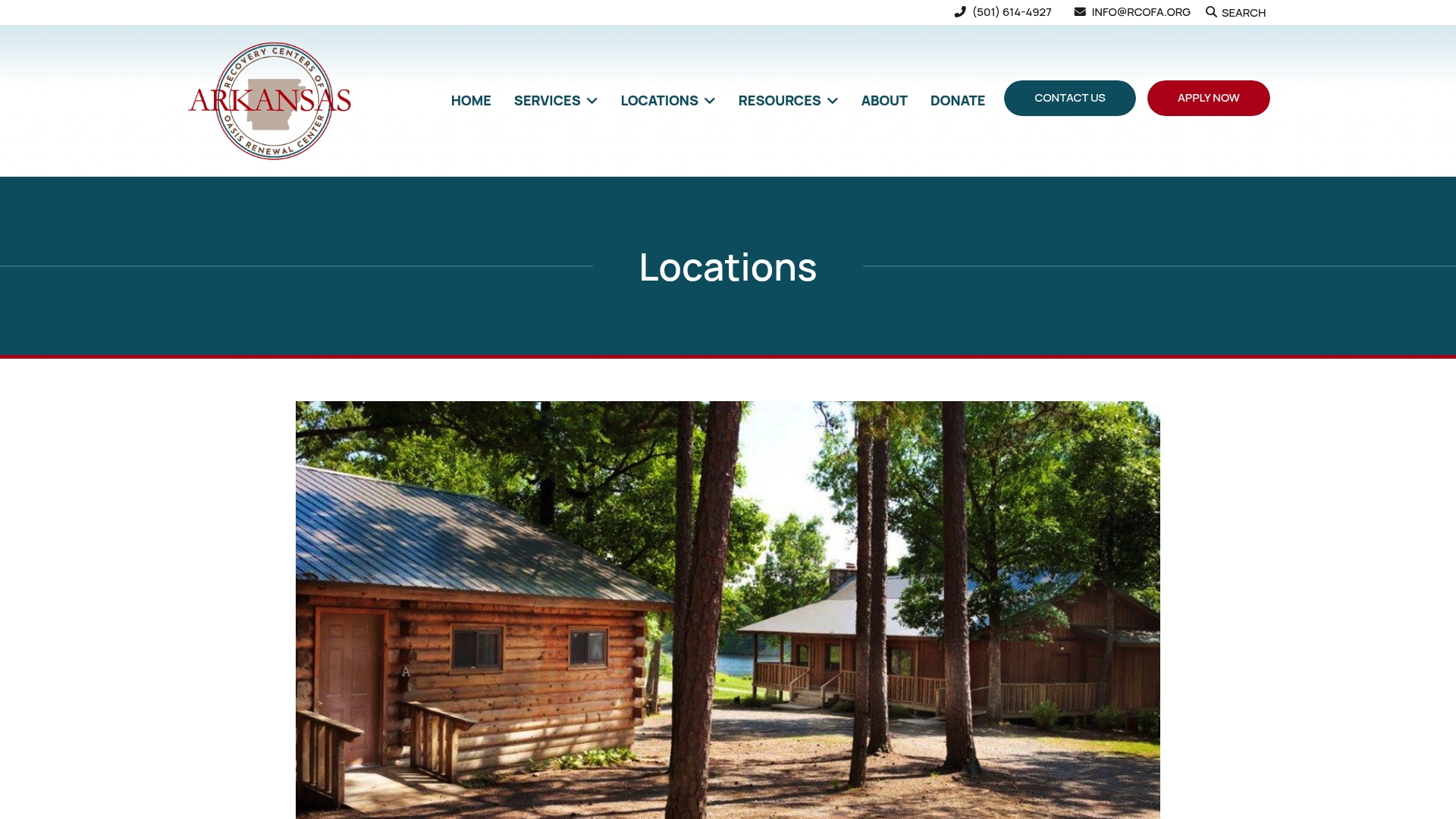
48 acres of woodland surround Oasis Renewal Center in West Little Rock, offering lakes, trails, and rustic log-cabin housing. The site runs co-ed residential care plus partial hospitalization and intensive outpatient programs. The center accepts private pay and most major insurances and offers payment plans to lower upfront cost.
Core Features
Oasis combines residential programming with PHP and IOP tracks so members can step down intensity without changing providers. Clinical care includes CBT, DBT, mindfulness training, and 12-step facilitation alongside psychiatric evaluation and medication management. Family education, on-site group and individual therapy, and a faith or spiritual component round out treatment in a woodland setting.
Key Differentiator
The property itself defines the model. Treatment happens on a private 48-acre campus that the staff uses intentionally as part of care to reduce triggers and encourage reflective time. That natural setting pairs with evidence-based therapies and spiritual supports to create a program focused on relapse prevention and family reintegration.
Pros
The woodland campus creates a quiet environment that many members find less distracting than urban facilities. Multiple levels of care are available within one program so a member can move from residential to PHP and then to IOP while keeping clinical continuity. Clinical offerings list standard therapies including CBT and DBT plus psychiatric care and medication management, which helps when mental health conditions co-occur with substance use. Family education is built into the schedule, and the center reports acceptance of most major insurances and payment plans to reduce financial barriers for insured members.
Cons
- No on-site medical detox. Members must complete detox elsewhere before admission, which adds a coordination step.
- Remote campus location may create transportation challenges for families and outpatient follow-up visits.
- Cost could be a barrier for uninsured or underinsured adults, even with payment plans in place.
When It May Not Fit
If you need medically supervised detox the center will not meet that need directly and another provider is required first. The remote location makes frequent family commuting and same-day outpatient access harder for people without reliable transport. People who require city-based aftercare options or strong local community links may prefer a program inside Little Rock.
Who It’s For
Adults in Arkansas who want treatment in a quiet, natural setting will find Oasis appealing. Members who value a mix of evidence-based therapy, spiritual care, and family education will fit the program model. The program is best for people who can arrange detox before arrival and who can travel to a campus outside the city.
Real World Use Case
A mid-30s professional from Little Rock spends a month in residential care on the woodland campus, then steps down to PHP for daytime structure. Weekly family education helps relatives understand relapse triggers and support routines. The member transitions into IOP while continuing psychiatric follow-up and community meetings.
Website: https://rcofa.org/locations/oasis-renewal-center
Serenity Park Recovery Center
At a Glance
Wearable and biotech devices collect real-time health data to tailor treatment at Serenity Park Recovery Center. The center reports offering evidence-based care and says it is accredited and licensed. Programs concentrate on men and place clear emphasis on family support and education.
Core Features
Residential care pairs medically assisted detoxification with individual and group therapy, and includes mindfulness, yoga, and recreational activities as complementary practices. Staff integrate wearable health monitoring into treatment plans to inform clinical decisions and personalize daily programming. Family support programs supply resources and education for loved ones during and after residential stays.
Key Differentiator
The defining element is the integration of biotech tools for real-time health tracking to personalize and enhance treatment on an individual basis. That data is used to refine therapy pacing and to inform clinical observations during residential stays. This tech focus sets Serenity Park apart from centers that rely only on routine clinical check ins.
Pros
Serenity Park combines clinical therapy with experiential practices and technology to address physical and psychological needs in one setting. Family support and educational resources extend recovery work beyond the resident and into the home environment. Staff experience and the founder legacy give the program a clearly stated philosophical and practical lineage, and that accreditation claim supports the facility’s safety narrative.
Cons
-
Limited publicly available detail on outpatient or longer term community support beyond residential programs.
-
Focus on men’s recovery means services described are not available for women or coed groups.
-
Specific pricing and insurance coverage details are not provided, so financial planning requires outreach and verification.
When It May Not Fit
If you need ongoing outpatient case management or a community forum for extended peer support, this offering may not meet your needs. If you require a coed program or services specifically for women, choose a provider that lists those options. People who must confirm insurance coverage before admission should contact the center directly because pricing specifics are not posted.
Who It’s For
Men in Little Rock seeking a structured residential option with technology assisted monitoring will find this program aligned with their needs. Families who want formal education and involvement during treatment will appreciate the support offerings. Those looking for outpatient continuity or women focused services should look elsewhere.
Real World Use Case
A man struggling with alcohol addiction enrolls in the residential program and receives medically assisted detoxification followed by individual therapy and group sessions. Biometric monitoring informs adjustments to his daily plan while family members access education and support to sustain recovery at home.
Website: https://serenityparkrecovery.com
Comparison of alternatives
Choosing the most suitable faith-based addiction treatment depends on aligning clinical and spiritual recovery needs. The Arkansas-based centers reviewed offer distinct approaches in their integration of medical support, spiritual guidance, and specialty programs.
Cost and Accessibility
Shalom Reclaimed excels in affordability, reportedly offering treatment at 25% of typical inpatient costs while eliminating insurance requirements. This makes it a practical option for families seeking lower out-of-pocket expenses. In contrast, Oasis Renewal Center accepts various insurances and offers payment plans; however, their higher standard cost may pose a barrier for those without insurance.
Integrated Services
Natural State Recovery Centers effectively consolidate detoxification, residential care, and outpatient services under one operational framework, providing transitions between care levels. Serenity Park Recovery Center uniquely integrates wearable health tracking technology to adapt treatment plans dynamically based on real-time data, enhancing personalized care during residential programs. SOZO Recovery Center, while not incorporating advanced technologies, delivers uniquely integrated faith-based and clinical treatments specifically designed for adult men undergoing recovery.
Best fit
- Men in Arkansas seeking faith-centered treatment for addiction recovery that addresses co-occurring mental health conditions will value SOZO Recovery Center’s dual diagnosis expertise and ASAM-guided methodologies aligned with Christian principles.
- Families facing financial barriers and needing lower-cost inpatient programs will find Shalom Reclaimed’s 25% discounted treatment rates without the need for insurance appealing.
- Residents of Arkansas or nearby areas interested in community-focused and locally governed centers offering care across detox, residential, PHP, IOP, and outpatient levels will appreciate Natural State Recovery Centers.
- Adults or teens focused on building long-term community connections rooted in faith can explore Adult & Teen Challenge Arkansas for its extended discipleship model.
- Adult men wanting advanced health monitoring technologies to aid recovery programs may opt for Serenity Park Recovery Center.
Our pick
SOZO Recovery Center remains the preferred option where a clinically integrated faith-based approach for dual diagnosis care is prioritized. The center uniquely combines spiritual formation with clinical methods, providing continuity for men transitioning through stages of treatment from detox coordination to sober living. However, individuals prioritizing low-cost options or broader audience programs might explore other alternatives highlighted.
Faith-based addiction treatment programs offer unique integrated approaches to recovery. The following table compares five such centers in Arkansas based on key features and offerings:
| Center Name | Key Features | Who It’s For | Pricing | Notable Limitation |
|---|---|---|---|---|
| Sozorecoverycenter | CARF accredited, ASAM Continuum model-based | Adult men seeking Christian-integrated recovery in Arkansas | Price not published | No programs for women or adolescents |
| ATCAR | Long-term care, Medicaid acceptance | Adults and teens seeking structured Christian rehabilitation | Price not published | Wait times during high-demand periods |
| Natural State Recovery | Full continuum care, three Arkansas locations | Arkansas residents seeking local, integrated treatment | Price not published | No specialty tracks for specific populations |
| Shalom Reclaimed | Faith-based residential care, low-cost options | Participants seeking affordable, insurance-free options | 25% of typical inpatient | Limited therapy detail due to site issues |
| Serenity Park Recovery | Biotech-integrated recovery, family support | Men needing personalized care with technological focus | Price not published | No outpatient or co-ed program availability |
Finding Balance Between Faith and Clinical Care at Holistic Rehab Centers
Men seeking recovery often face the challenge of aligning clinical treatment with spiritual support. Many programs offer faith-based care or dual diagnosis services separately, but few combine both into one personalized path. SOZO Recovery Center meets this need by weaving biblical principles with the ASAM Continuum-based clinical plans. This integration helps men address addiction and mental health together, strengthening their commitment to lasting sobriety and community involvement.
Those looking for a program focused on holistic recovery will find that SOZO Recovery Center blends the 12-step model with faith-guided therapy. The men’s program delivers spiritual renewal alongside effective clinical care, creating a unified experience rather than split tracks. For men in Arkansas who want a respected, accredited center that supports both personal growth and clinical progress, SOZO Recovery Center offers a distinctive choice.
Explore SOZO Recovery Center to learn how faith and treatment join forces. Visit the site to view detailed program options and contact the team for personalized intake information.
FAQ
What features make Sozorecoverycenter a strong choice for holistic rehab?
Sozorecoverycenter generates personalized treatment plans informed by both medical needs and spiritual growth. The center combines Christian principles with clinical care, supporting holistic recovery strategies. Interested individuals should consider reaching out for an assessment to see how these features can benefit their recovery process.
How does Sozorecoverycenter compare to Natural State Recovery Centers?
Natural State Recovery Centers offers a comprehensive range of services, including medical detox and outpatient care under one operational umbrella. For those seeking deep, faith-integrated support, Sozorecoverycenter’s focus on Christian practices alongside clinical care may provide a more meaningful experience. Make sure to weigh which approach aligns best with your needs before deciding.
Which centers provide dual diagnosis support alongside holistic rehab?
Sozorecoverycenter is noted for its dual diagnosis care, addressing both mental health and addiction issues. This integration ensures that clients receive a well-rounded treatment that tackles co-occurring conditions. Individuals seeking a complete approach may find this feature particularly supportive of their recovery efforts.
What kind of clients benefit most from Sozorecoverycenter’s programs?
Men looking for a recovery program that intertwines Christian practices with clinical support will find Sozorecoverycenter especially relevant. With its unique faith-based treatment model, clients can expect an environment that encourages both spiritual and personal healing. Follow up by discussing your specific needs during the initial consultation.
Does Sozorecoverycenter accommodate outpatient programs?
Sozorecoverycenter offers outpatient programs that complement its residential treatment options, allowing for a continuum of care. This flexibility can help maintain engagement with health supports while transitioning back to daily life. Individuals should evaluate how this outpatient option can facilitate smoother reintegration into their communities.