


Christian residential treatment centers for depression with dual diagnosis care give men something most outpatient programs cannot: a structured, immersive environment where clinical healing and spiritual renewal happen at the same time. These programs address both addiction and depression together, recognizing that the two rarely travel alone. A man entering this level of care typically receives psychiatric evaluation, medication management, individual and group therapy, and pastoral counseling, all woven into a daily schedule designed to stabilize him before anything deeper can begin.
What sets faith-based residential care apart from standard clinical programs is the intentional use of a man’s own beliefs as a therapeutic resource. Programs grounded in faith and counseling integration conduct client-centered faith assessments to tailor therapy using faith language and sacred symbols alongside medical and psychotherapeutic interventions. The result is care that speaks to the whole person, not just the diagnosis.
Key features of these programs include:
- Psychiatric evaluation and medication management on admission
- Evidence-based therapy, including Religious Cognitive Behavioral Therapy (RCBT)
- Individual, group, and pastoral counseling sessions
- 24-hour nursing and clinical monitoring
- Structured daily schedules integrating spiritual activities
- Dual diagnosis care addressing addiction and depression simultaneously
Sozorecoverycenter is one example of this model in practice, combining biblical principles with the 12-step framework and personalized treatment plans for men.
Table of Contents
- How faith-based dual diagnosis centers approach treatment
- Benefits of choosing faith-based residential care for depression and addiction
- How to choose the right Christian residential treatment center
- Sozorecoverycenter: a faith-based dual diagnosis program for men
- What types of depression do these programs treat?
- What daily life looks like in a residential center
- Sozorecoverycenter is ready when you are
- Key Takeaways
- FAQ
How faith-based dual diagnosis centers approach treatment
Dual diagnosis residential treatment typically begins with psychiatric evaluation and medication management overseen by board-certified medical professionals, followed by individual therapy, group process, and pastoral counseling. That sequence matters. A man cannot do meaningful spiritual or psychological work while his brain chemistry is in crisis. Stabilization comes first.
Once clinical safety is established, the program moves into skill-building phases that blend evidence-based therapy with faith principles. Religious Cognitive Behavioral Therapy is one of the most studied tools in this space. The RCBT model socializes clients into a therapeutic framework that reinforces both conventional CBT and religiously integrative CBT, using a man’s own faith language to reframe distorted thinking. Research confirms that RCBT is as effective as conventional CBT for treating depression.
Staff in these programs typically include licensed clinicians, board-certified psychiatric professionals, and pastoral counselors working as a coordinated team. Daily residential schedules balance therapy sessions with spiritual activities, community time, and structured rest. The four broad stages most programs follow are:
- Stabilization: Clinical safety, medication monitoring, breaking acute symptom cycles
- Skill-building: CBT, DBT, trauma-focused therapy, and faith-integrated tools
- Spiritual growth: Pastoral counseling, scripture-based reflection, community engagement
- Transition planning: Aftercare coordination, relapse prevention, sober living options
Benefits of choosing faith-based residential care for depression and addiction
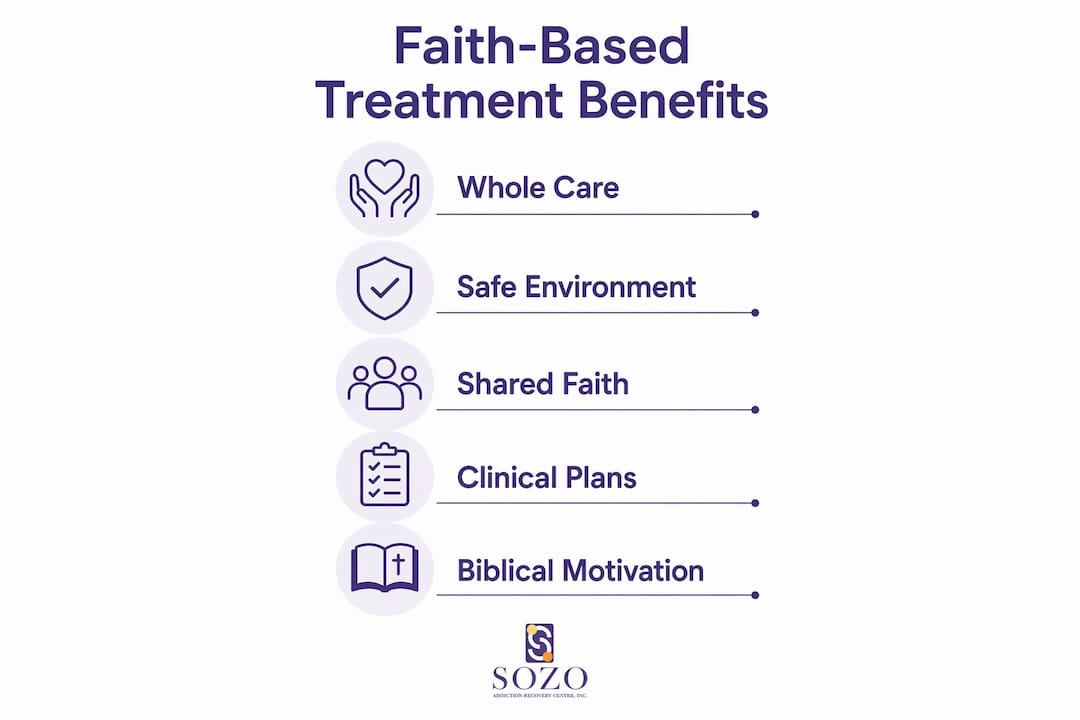
1. Care that treats the whole man
Clinical treatment addresses the brain. Spiritual care addresses meaning, purpose, and identity. When both run in parallel, a man is not just managing symptoms; he is rebuilding the foundation beneath them. Faith-based therapy holds clinical needs and spiritual life with equal care, affirming that depression is not a sign of weak faith.
2. A safe, immersive environment
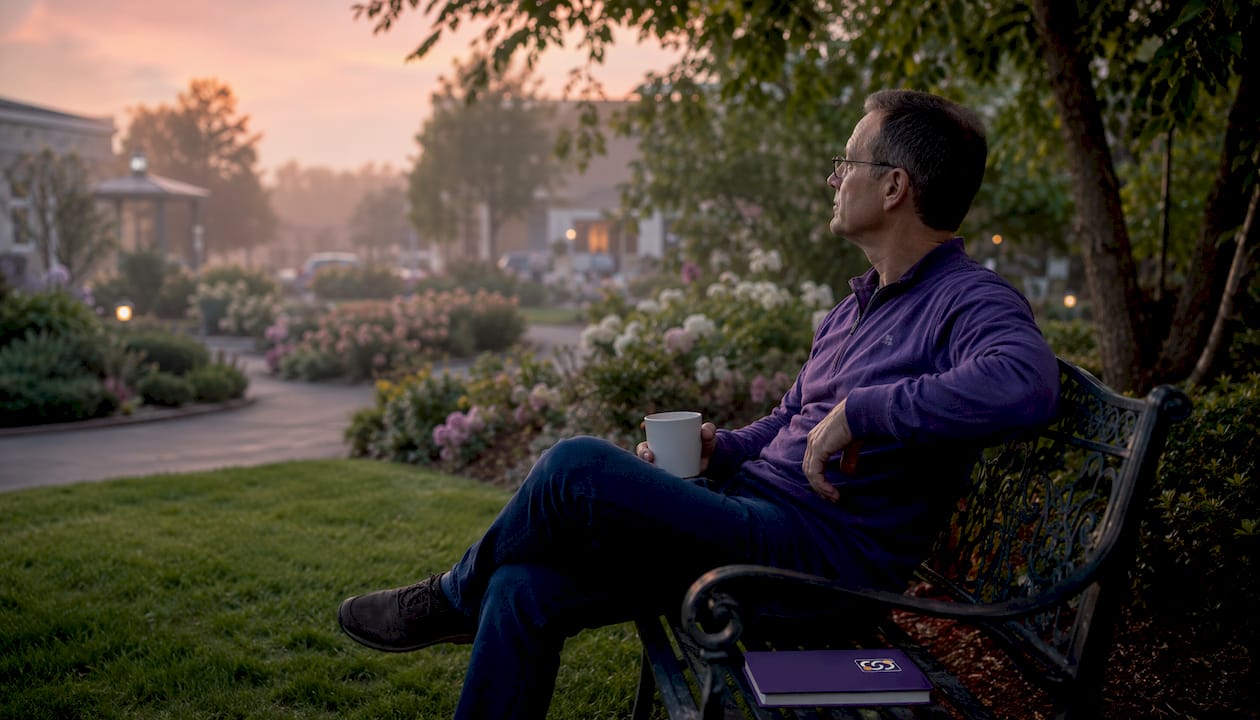
Residential care removes a man from the triggers, relationships, and environments that feed both addiction and depression. The 24-hour structure provides continuous monitoring, which is particularly necessary when dual diagnosis complexity makes outpatient care insufficient.
3. Community built around shared faith
Recovery does not happen in isolation. Faith-based residential programs build community through group therapy, shared meals, worship, and service, creating accountability structures that extend well beyond discharge.
4. Treatment plans shaped by clinical criteria
Programs using the ASAM Continuum model match each man’s level of care to his clinical needs. Clinical assessment determines appropriate level of care; residential treatment suits severe dual diagnosis cases, while some men may succeed in intensive outpatient programs.
5. Biblical principles that reinforce motivation
CBT and Christianity work together effectively through Christian-specific CBT tools, enhancing a man’s comfort with treatment and deepening his commitment to recovery. Faith gives the work a reason that goes beyond symptom relief.
How to choose the right Christian residential treatment center
Not every program that calls itself faith-based delivers the same depth of clinical care. When evaluating options, a man and his family should look for:
- Dual diagnosis specialization confirmed by licensed clinical staff and documented treatment protocols
- Evidence-based therapies such as RCBT, CBT, DBT, and trauma-focused approaches
- Psychiatric oversight including on-site evaluation and medication management
- Faith integration methods that align with the man’s own beliefs, not a one-size approach
- Men’s-only environment that reduces social distraction and builds focused peer accountability
- Insurance and payment options including private pay and accepted insurance plans
- Aftercare planning with sober living, outpatient step-down, and relapse prevention built in
Sozorecoverycenter accepts BlueCross BlueShield, Ambetter, and QualChoice, and offers a full continuum from residential through sober living. Reviewing dual diagnosis treatment options before admission helps a man understand what level of care fits his situation.
Pro Tip: Ask any program directly whether their clinical staff hold active state licensure and whether their faith integration is structured or informal. The answer tells you a great deal about the program’s depth.
Sozorecoverycenter: a faith-based dual diagnosis program for men
Sozorecoverycenter, located in Hot Springs, Arkansas, builds its program around the conviction that biblical principles and clinical care belong together. Treatment plans are personalized using ASAM criteria, meaning each man’s care level reflects his actual clinical picture rather than a standard template. The program integrates the 12-step model with scripture-based counseling, trauma-informed therapy, and community engagement through volunteer work and support groups.
Licensed Christian therapists at Sozorecoverycenter are trained in accelerated resolution therapy, CBT, DBT, and mindfulness-based approaches. Family involvement is part of the program, not an afterthought. Men who complete the program describe setting down weight they had carried for years, not just achieving sobriety but finding a renewed sense of purpose grounded in faith. The center also offers medical detox placement referrals for men who need that first step before residential care begins.
What types of depression do these programs treat?
Faith-based residential centers typically treat the full range of depressive disorders that co-occur with addiction. Major depressive disorder is the most common presentation, often accompanied by persistent low mood, sleep disruption, and loss of motivation. Persistent depressive disorder, sometimes called dysthymia, involves a longer and lower-grade depression that can be harder to recognize but equally disabling. Programs also treat depression tied to trauma histories, including PTSD-related depressive symptoms, as well as adjustment disorders and seasonal patterns that worsen substance use. When a man carries biblical healing scriptures as part of his coping practice, faith-integrated programs can weave that resource directly into his therapeutic work.
What daily life looks like in a residential center
A typical day in a Christian residential program is structured from morning to evening, with purpose built into every block of time. Mornings often begin with devotional time or group prayer, followed by breakfast and a clinical group session. Afternoons rotate between individual therapy, skills groups, and recreational or outdoor activity. Evenings may include 12-step meetings, pastoral counseling, or community service planning. Meals are shared, and the residential setting means a man is never navigating his hardest hours alone. That consistency, repeated day after day, is what allows the brain and spirit to begin healing together.
Sozorecoverycenter is ready when you are
Men who are managing both depression and addiction need more than a program that treats one and ignores the other. Sozorecoverycenter offers men’s-only dual diagnosis treatment in a residential setting that takes both the clinical and spiritual dimensions of recovery seriously. The program accepts private insurance, offers personalized ASAM-based care plans, and provides a full continuum from detox referral through sober living. If you are ready to take the next step, contact Sozorecoverycenter directly to discuss admissions and available programs for men in Arkansas and beyond.
Key Takeaways
Christian residential treatment centers for depression with dual diagnosis care deliver the most effective outcomes when clinical stabilization, evidence-based therapy, and faith integration work together from day one.
| Point | Details |
|---|---|
| Dual diagnosis is the standard | Effective programs treat depression and addiction together, not in sequence. |
| RCBT is clinically validated | Religious Cognitive Behavioral Therapy is as effective as conventional CBT for depression. |
| Stabilization comes first | Medication management and clinical safety precede spiritual and therapeutic growth phases. |
| Men’s-only settings matter | Gender-specific residential care reduces distraction and builds focused peer accountability. |
| Sozorecoverycenter fits this model | SOZO offers ASAM-based, faith-integrated dual diagnosis residential care for men in Hot Springs, Arkansas. |
FAQ
What makes Christian residential treatment different from standard rehab?
Christian residential treatment integrates pastoral counseling, scripture-based reflection, and faith-centered therapy alongside standard clinical care, addressing a man’s spiritual life as part of his recovery, not separate from it.
Is Religious Cognitive Behavioral Therapy evidence-based?
Yes. RCBT has been clinically shown to be as effective as conventional CBT for treating depression, making it a credible option for men who want faith integrated into their therapy.
How long does residential treatment for depression and addiction typically last?
Most residential programs vary in length depending on clinical severity, with step-down options including intensive outpatient and sober living following the residential phase.
Does Sozorecoverycenter accept insurance?
Sozorecoverycenter accepts BlueCross BlueShield, Ambetter, and QualChoice, and also offers private pay options for men seeking faith-based residential care in Arkansas.
Can a man enter residential treatment if he has not completed detox?
Sozorecoverycenter provides medical detox placement referrals for men who need that step first, ensuring clinical safety before the residential program begins.